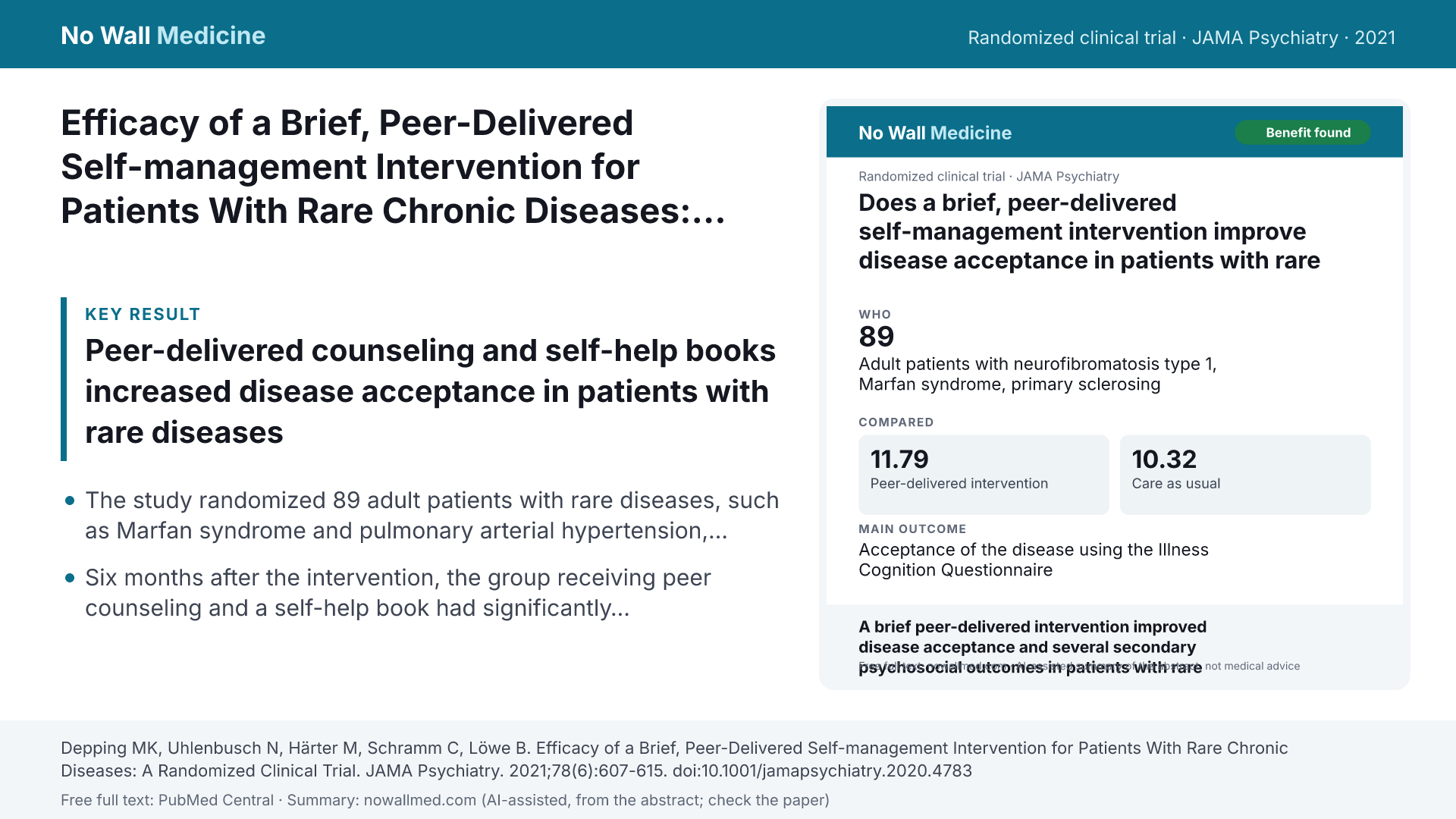
Peer-delivered counseling and self-help books increased disease acceptance in patients with rare diseases
Efficacy of a Brief, Peer-Delivered Self-management Intervention for Patients With Rare Chronic Diseases: A Randomized Clinical Trial
Randomized clinical trialBenefit found
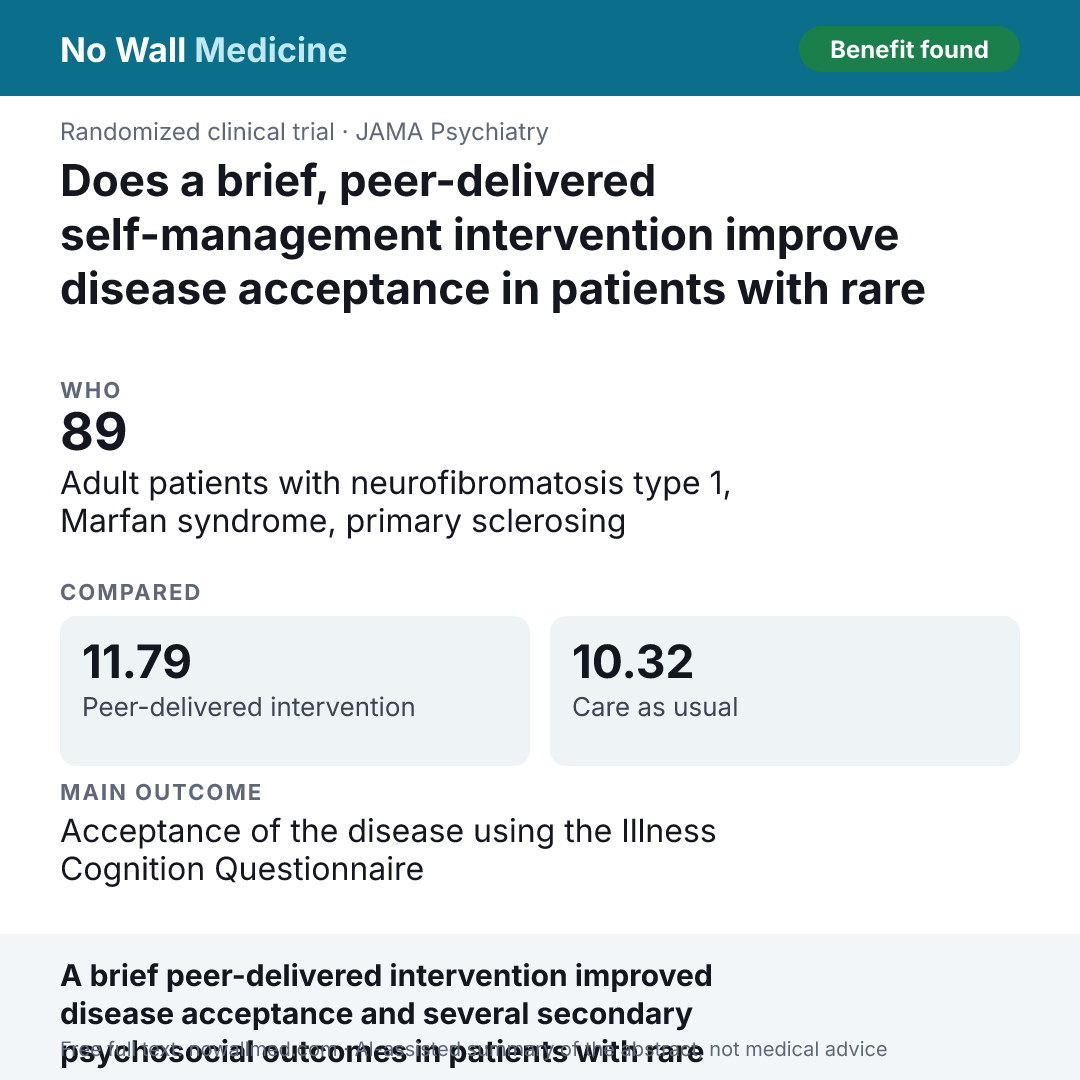
Does a brief, peer-delivered self-management intervention improve disease acceptance in patients with rare chronic diseases?
Who
89
Adult patients with neurofibromatosis type 1, Marfan syndrome, primary sclerosing cholangitis, or pulmonary arterial hypertension · Germany, specialized clinics and patient organizations, home
Compared
11.79Peer-delivered intervention (0.42)
10.32Care as usual (0.42)
Main outcome
Acceptance of the disease using the Illness Cognition Questionnaire
Result: mean difference of -1.47 (95% CI, -2.63 to -0.31)
Bottom line: A brief peer-delivered intervention improved disease acceptance and several secondary psychosocial outcomes in patients with rare chronic diseases.
JAMA Psychiatry · 2021-02-25 · Save PNG
Clinical question: Does a brief, peer-delivered self-management intervention improve disease acceptance in patients with rare chronic diseases?
Why it matters: Patients living with rare diseases often lack the psychosocial support necessary to manage their conditions.
Key points
- The study randomized 89 adult patients with rare diseases, such as Marfan syndrome and pulmonary arterial hypertension, to receive either a peer-delivered intervention or standard care.
- Six months after the intervention, the group receiving peer counseling and a self-help book had significantly higher disease acceptance scores than the standard care group.
- The intervention group also showed significantly higher scores for social support, coping strategies, and mental quality of life compared to the control group.
Headline and key points written with AI from the paper’s abstract, with every number checked against it. Read the paper before relying on them.
Was this summary helpful?
Subject terms
Headline, design, result, key points, caveat and citation as plain text.
Cite this article
Depping MK, Uhlenbusch N, Härter M, Schramm C, Löwe B. Efficacy of a Brief, Peer-Delivered Self-management Intervention for Patients With Rare Chronic Diseases: A Randomized Clinical Trial. JAMA Psychiatry. 2021. doi:10.1001/jamapsychiatry.2020.4783
Spotted a mistake? Suggest a correction