Randomized trialJAMA Otolaryngology–Head & Neck Surgery · Dec 2, 2022

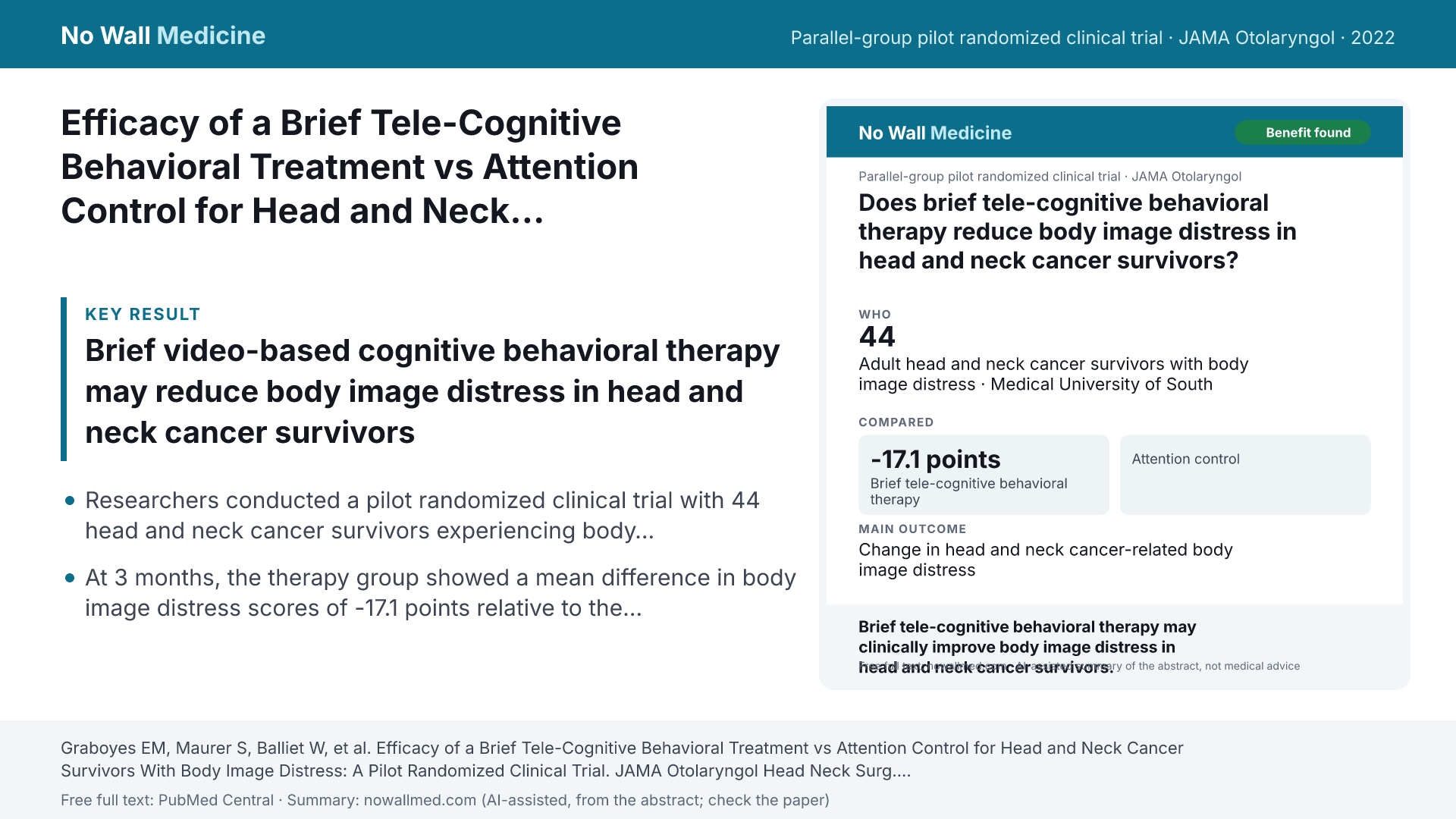
Brief video-based cognitive behavioral therapy may reduce body image distress in head and neck cancer survivors

Efficacy of a Brief Tele-Cognitive Behavioral Treatment vs Attention Control for Head and Neck Cancer Survivors With Body Image Distress: A Pilot Randomized Clinical Trial

Graboyes EM, Maurer S, Balliet W, Li H, Williams AM, Osazuwa-Peters N, et al
ENT (Otolaryngology)OncologyAdult
Parallel-group pilot randomized clinical trialBenefit found
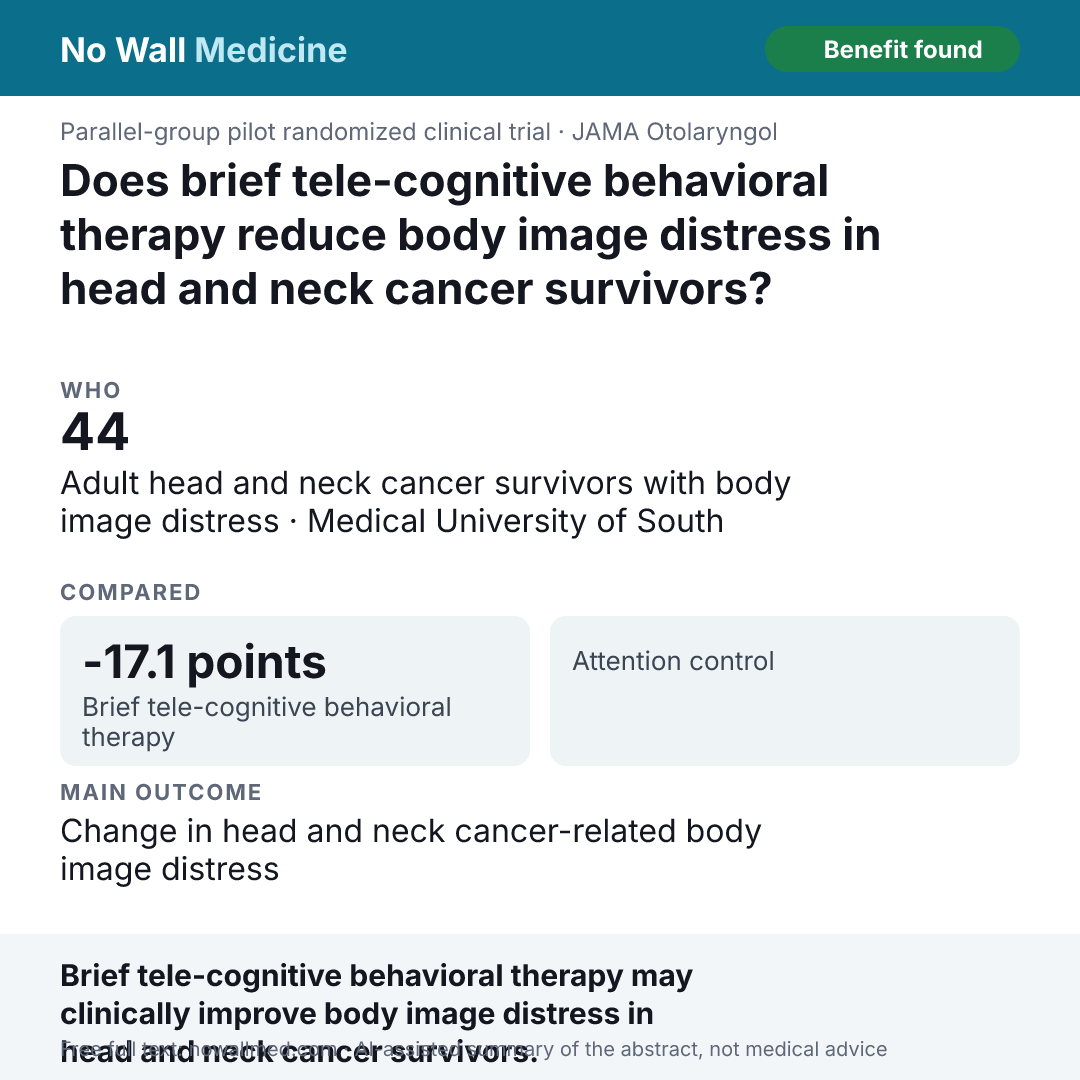
Does brief tele-cognitive behavioral therapy reduce body image distress in head and neck cancer survivors?
Who
44
Adult head and neck cancer survivors with body image distress · Medical University of South Carolina clinic
Compared
-17.1 pointsBrief tele-cognitive behavioral therapy
Attention control
Main outcome
Change in head and neck cancer-related body image distress
Result: odds ratio 6.6 (90% CI, 2.0-21.8)
Bottom line: Brief tele-cognitive behavioral therapy may clinically improve body image distress in head and neck cancer survivors.
JAMA Otolaryngol · 2022-12-02 · Save PNG
Why it matters: Effective psychosocial interventions are currently lacking for the 1 in 4 head and neck cancer survivors who experience clinically significant body image distress.

Headline and visual abstract written with AI from the paper’s abstract, with every number checked against it. Read the paper before relying on them.

Was this summary helpful?
Read the full paper free at PubMed Central ↗⬇ Slide🖨 Handout

Subject terms

Adult; Humans; Female; Middle Aged; Aged; Aged, 80 and over; Male; Quality of Life; Body Image; Pilot Projects; Head and Neck Neoplasms; Survivors

DOI: 10.1001/jamaoto.2022.3700 · PubMed: 36454561 · Registered: NCT03831100

Headline, design, result, bottom line, caveat and citation as plain text.

Cite this article

Graboyes EM, Maurer S, Balliet W, et al. Efficacy of a Brief Tele-Cognitive Behavioral Treatment vs Attention Control for Head and Neck Cancer Survivors With Body Image Distress: A Pilot Randomized Clinical Trial. JAMA Otolaryngol Head Neck Surg. 2023;149(1):54-62. doi:10.1001/jamaoto.2022.3700

RIS (EndNote, Zotero, Mendeley)BibTeX

Spotted a mistake? Suggest a correction

Top ENT (Otolaryngology) studies every Monday

The week’s key trials and guidelines, free to read, in one short email. No account; unsubscribe in one click.

Choose specialties and topics

Similar articles

Meta-analysis · Head Neck · Sep 19, 2022 · ENT (Otolaryngology), Oncology

67% of head and neck cancer patients returned to work after treatment

Systematic review · Head Neck · Jul 18, 2022 · ENT (Otolaryngology), Oncology

Systematic review shows most interventions for head and neck cancer survivors focus on physical effects

Research · Head Neck · Apr 10, 2026 · ENT (Otolaryngology), Oncology

Intensive Swallowing Rehabilitation for Head and Neck Cancer Survivors With Chronic Dysphagia: Outcomes From a Prospective Multicentre Cohort Study With 6-Month Follow-Up

Research · Lancet Digit Health · Apr 15, 2026 · Digital Health & AI, Oncology

Joint probability framework for the development and validation of a prognostic model for the conditional outcome of quality of life: a retrospective study in historical European cohorts of survivors of head and neck cancer

Randomized trial n = 24 · J Med Internet Res · Jun 26, 2026 · Digital Health & AI, Oncology

Seven-week remote exercise program shows feasibility and preliminary benefits for breast cancer survivors