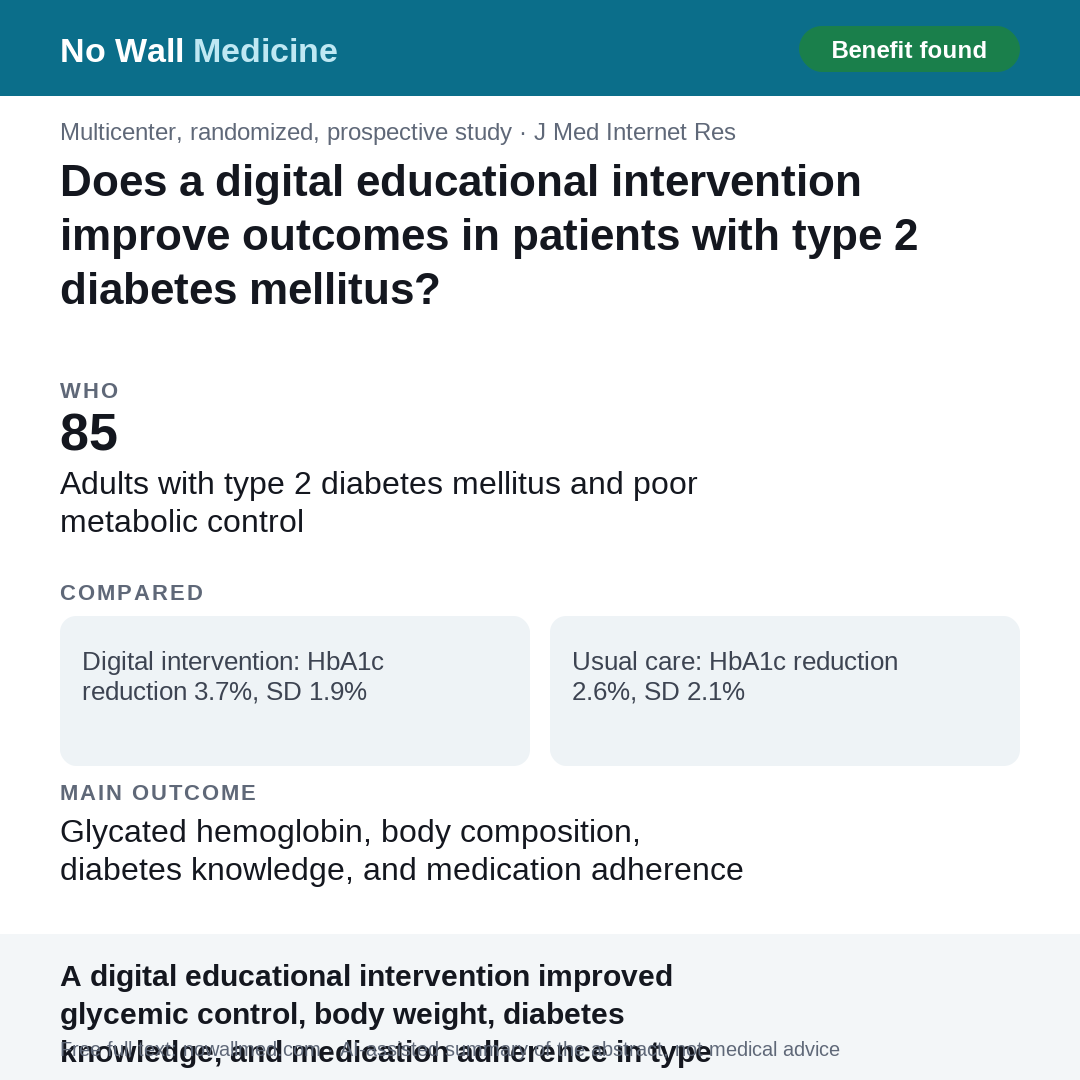
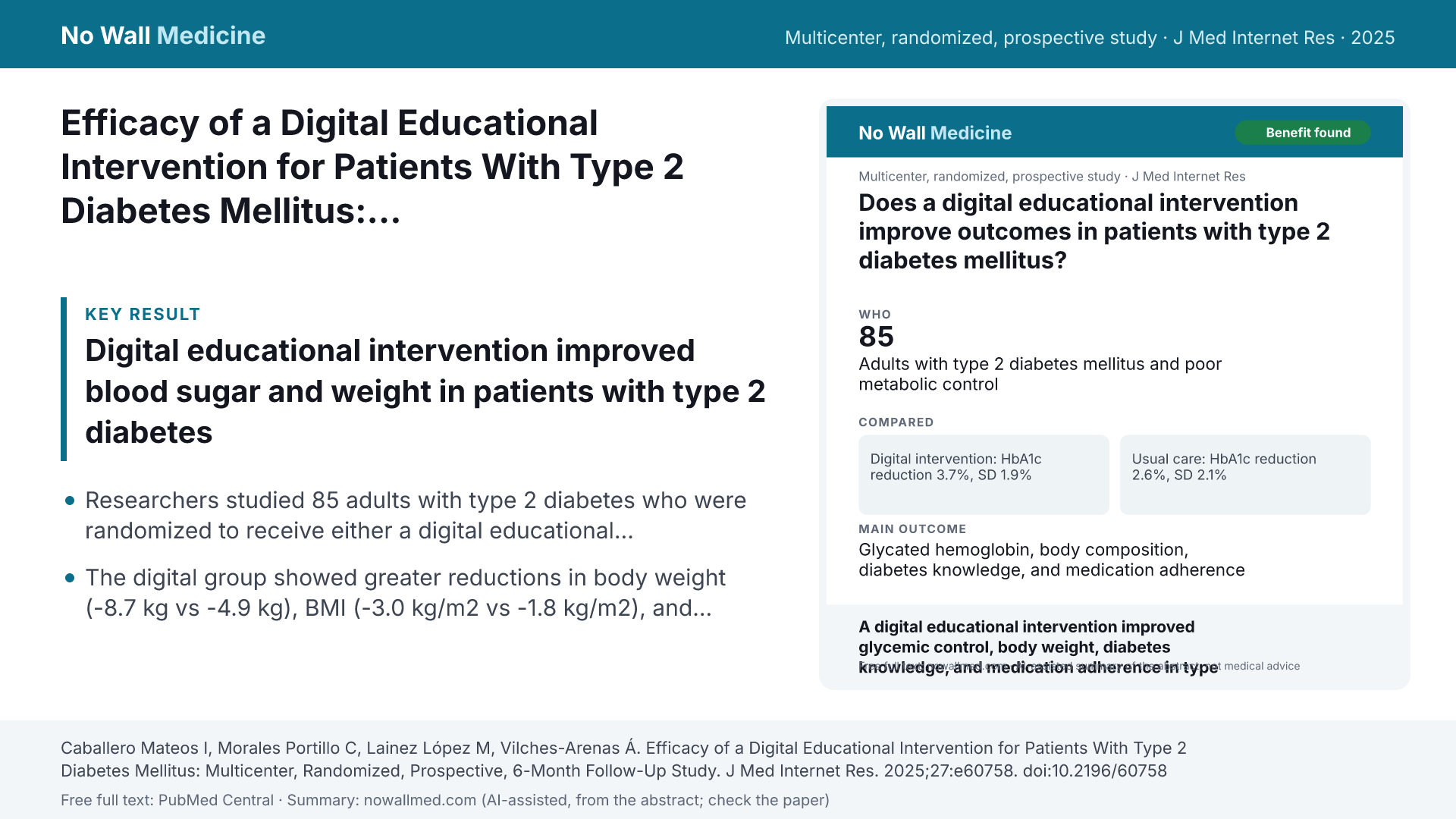
Digital educational intervention improved blood sugar and weight in patients with type 2 diabetes
Efficacy of a Digital Educational Intervention for Patients With Type 2 Diabetes Mellitus: Multicenter, Randomized, Prospective, 6-Month Follow-Up Study
Multicenter, randomized, prospective studyBenefit found
Does a digital educational intervention improve outcomes in patients with type 2 diabetes mellitus?
Who
85
Adults with type 2 diabetes mellitus and poor metabolic control
Compared
Digital intervention: HbA1c reduction 3.7%, SD 1.9%
Usual care: HbA1c reduction 2.6%, SD 2.1%
Main outcome
Glycated hemoglobin, body composition, diabetes knowledge, and medication adherence
Bottom line: A digital educational intervention improved glycemic control, body weight, diabetes knowledge, and medication adherence in type 2 diabetes patients.
J Med Internet Res · 2025-04-10Download image
Clinical question: Does a digital educational intervention improve outcomes in patients with type 2 diabetes mellitus?
Why it matters: Adherence to therapies and metabolic control remain challenging for patients with type 2 diabetes mellitus.
Key points
- Researchers studied 85 adults with type 2 diabetes who were randomized to receive either a digital educational intervention or usual care for 6 months.
- The digital group showed greater reductions in body weight (-8.7 kg vs -4.9 kg), BMI (-3.0 kg/m2 vs -1.8 kg/m2), and HbA1c (3.7% vs 2.6%).
- The intervention group also had greater improvements in fasting plasma glucose, diabetes knowledge, medication adherence, and patient satisfaction scores.
Headline and key points written with AI from the paper’s abstract, with every number checked against it. Read the paper before relying on them.
Was this summary helpful?
Subject terms
Cite this article
Caballero Mateos I, Morales Portillo C, Lainez López M, Vilches-Arenas Á. Efficacy of a Digital Educational Intervention for Patients With Type 2 Diabetes Mellitus: Multicenter, Randomized, Prospective, 6-Month Follow-Up Study. J Med Internet Res. 2025. doi:10.2196/60758
Spotted a mistake? Suggest a correction