Artificial intelligence delivered cognitive behavioral therapy shows limited efficacy for anxiety and depressive symptoms
Efficacy of AI-delivered cognitive behavioral therapy interventions for anxiety and depressive symptoms: a systematic review
Systematic review of randomized controlled trialsMixed results
Are artificial intelligence delivered cognitive behavioral therapy effective for anxiety and depressive symptoms?
Who
Individuals with anxiety or depressive symptoms
Compared
Artificial intelligence delivered cognitive behavioral therapy
Control
Main outcome
Anxiety and depressive symptoms
Bottom line: Artificial intelligence delivered cognitive behavioral therapy showed limited efficacy for anxiety and depressive symptoms across reviewed studies.
Limitation: Study quality raised concerns and evidence remains highly preliminary.
NPJ Digit Med · 2026-05-29Download image
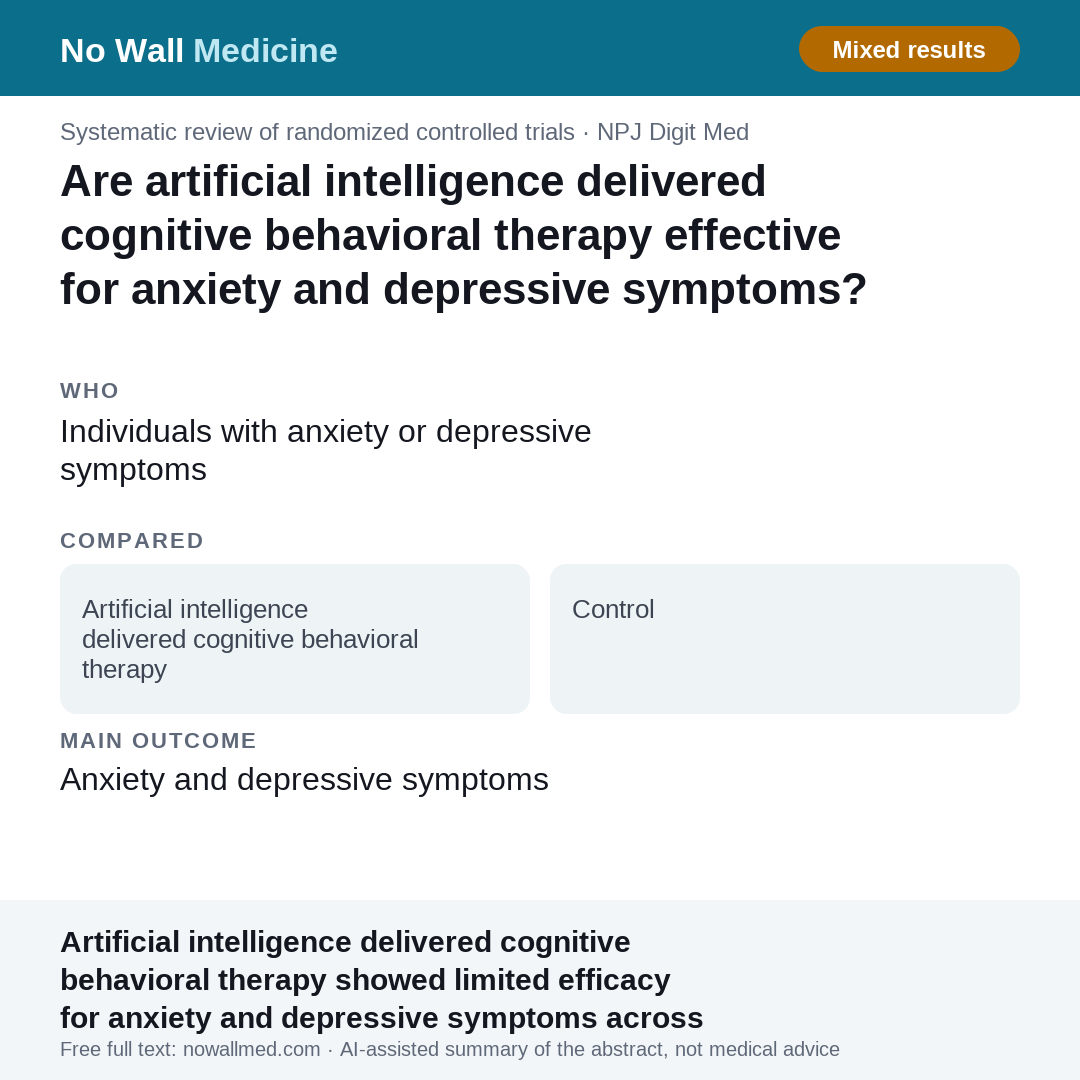
Clinical question: Are artificial intelligence delivered cognitive behavioral therapy effective for anxiety and depressive symptoms?
Why it matters: Many individuals lack access to evidence-based treatments for anxiety and depression due to workforce shortages, systemic barriers, and cultural differences.
Key points
- Researchers reviewed 16 randomized controlled trials published from 2016 onward to evaluate the effectiveness of artificial intelligence delivered cognitive behavioral therapy.
- Only 1 of 14 studies reported significant improvements for anxiety, and only 4 of 16 studies showed significant improvements for depressive symptoms.
- Preliminary evidence suggests these digital interventions show less promise for older adults, and personalization or human support did not reliably improve outcomes.
Limitation the authors note: The authors noted that study quality raised concerns and that current evidence remains fragmented and lacks diversity.
Headline and key points written with AI from the paper’s abstract, with every number checked against it. Read the paper before relying on them.
Cite this article
Yip WLT, Yambao Yang Y, Wang ZL, Stuckler D. Efficacy of AI-delivered cognitive behavioral therapy interventions for anxiety and depressive symptoms: a systematic review. NPJ Digit Med. 2026. doi:10.1038/s41746-026-02744-w
Spotted a mistake? Suggest a correction