Combined visual and scent training showed no significant difference in smell test scores compared to other methods
Efficacy of Combined Visual-Olfactory Training With Patient-Preferred Scents as Treatment for Patients With COVID-19 Resultant Olfactory Loss: A Randomized Clinical Trial
Randomized, single-blinded, 2-by-2 factorial trialMixed results
Does bimodal visual-olfactory training with patient-preferred scents improve COVID-19 olfactory loss?
Who
275
Adults 18 to 71 years old with COVID-19 olfactory loss
Compared
53%Bimodal, patient-preferred
24%Control
Main outcome
Postintervention change in University of Pennsylvania Smell Identification Test score
Result: difference of 29% (95% CI, 4%-54%)
Bottom line: Bimodal visual-olfactory training with patient-preferred scents showed potential advantages over controls for olfactory improvement.
JAMA Otolaryngol · 2022-12-30Download image
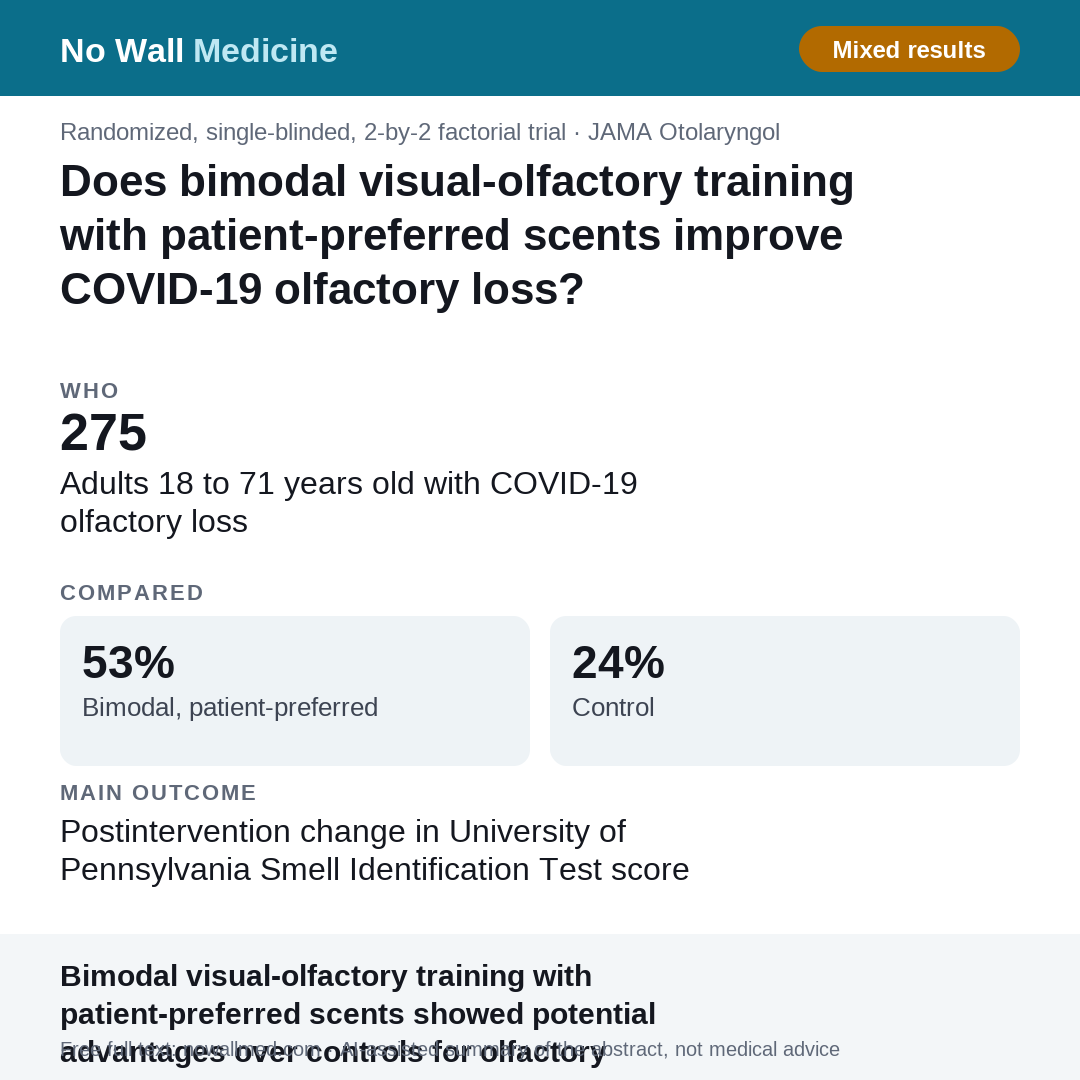
Clinical question: Does bimodal visual-olfactory training with patient-preferred scents improve COVID-19 olfactory loss?
Why it matters: It is unknown whether combining visual images with patient-chosen scents during training is more effective than using single-sensory training with physician-assigned scents for COVID-19 related smell loss.
Key points
- The trial studied 275 adults with long-term smell loss from COVID-19, comparing bimodal training with preferred scents against other training methods and a control group.
- The change in University of Pennsylvania Smell Identification Test scores was similar across all training arms, with a marginal mean difference of 0.73 for preferred versus assigned scents.
- In the bimodal, patient-preferred group, 53% of participants showed clinically important improvement on the smell test compared to 24% in the control group.
Headline and key points written with AI from the paper’s abstract, with every number checked against it. Read the paper before relying on them.
Was this summary helpful?
Subject terms
Cite this article
Khan AM, Piccirillo J, Kallogjeri D, Piccirillo JF. Efficacy of Combined Visual-Olfactory Training With Patient-Preferred Scents as Treatment for Patients With COVID-19 Resultant Olfactory Loss: A Randomized Clinical Trial. JAMA Otolaryngol. 2022. doi:10.1001/jamaoto.2022.4112
Spotted a mistake? Suggest a correction
Top studies every Monday
The week’s key trials and guidelines in your specialties, plus any topics you follow. By email, free.
Get the weekly digest