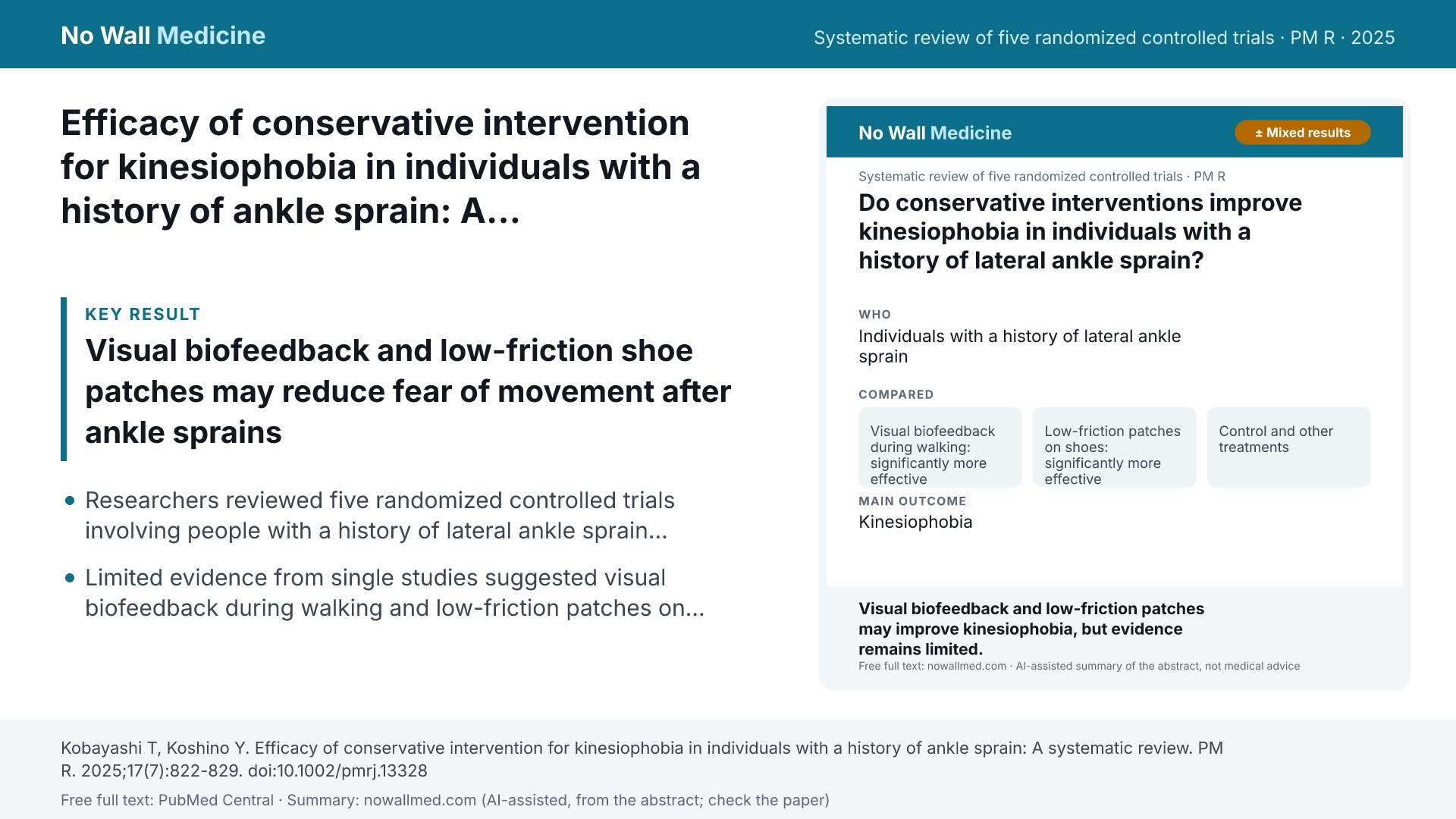
Visual biofeedback and low-friction shoe patches may reduce fear of movement after ankle sprains
Efficacy of conservative intervention for kinesiophobia in individuals with a history of ankle sprain: A systematic review
Systematic review of five randomized controlled trialsMixed results
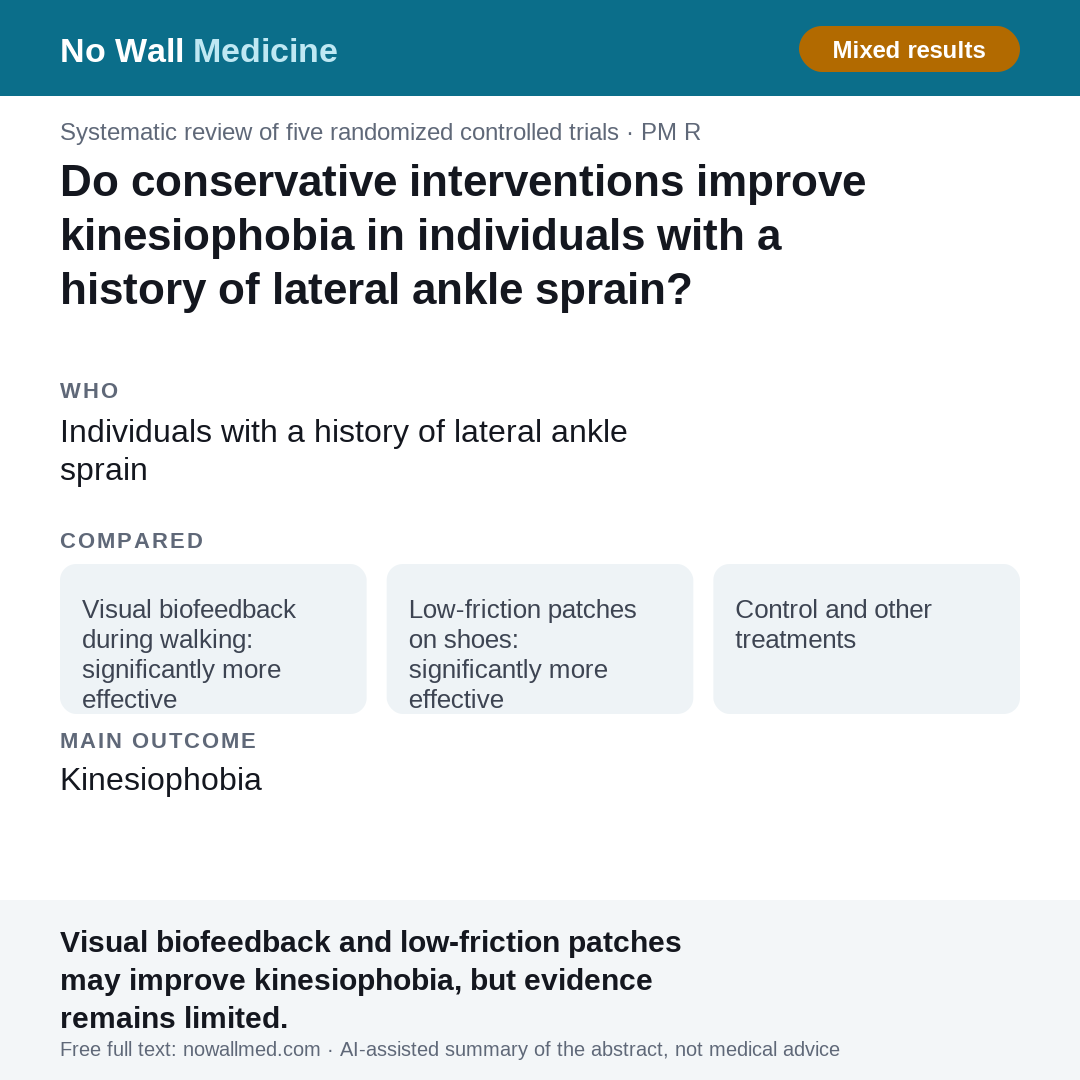
Do conservative interventions improve kinesiophobia in individuals with a history of lateral ankle sprain?
Who
Individuals with a history of lateral ankle sprain
Compared
Visual biofeedback during walking: significantly more effective
Low-friction patches on shoes: significantly more effective
Control and other treatments
Main outcome
Kinesiophobia
Bottom line: Visual biofeedback and low-friction patches may improve kinesiophobia, but evidence remains limited.
Limitation: Limited evidence from single studies and data synthesis through meta-analysis was not performed.
PM R · 2025-02-19Download image
Clinical question: Do conservative interventions improve kinesiophobia in individuals with a history of lateral ankle sprain?
Why it matters: It is unknown which conservative interventions are most effective for addressing kinesiophobia, or the fear-avoidance belief regarding exercise, in individuals with a history of lateral ankle sprain.
Key points
- Researchers reviewed five randomized controlled trials involving people with a history of lateral ankle sprain or chronic ankle instability.
- Limited evidence from single studies suggested visual biofeedback during walking and low-friction patches on shoes were more effective than control treatments for kinesiophobia, which is the fear of movement during exercise.
- A meta-analysis, which is a statistical method to combine results from multiple studies, was not performed because the intervention and control groups differed between the studies.
Limitation the authors note: The evidence is limited because the intervention and control groups differed between studies, preventing a meta-analysis.
Headline and key points written with AI from the paper’s abstract, with every number checked against it. Read the paper before relying on them.
Was this summary helpful?
Subject terms
Cite this article
Kobayashi T, Koshino Y. Efficacy of conservative intervention for kinesiophobia in individuals with a history of ankle sprain: A systematic review. PM R. 2025. doi:10.1002/pmrj.13328
Spotted a mistake? Suggest a correction