Internet-based cognitive behavioral therapy reduces depressive symptoms in older adults in long-term care
Efficacy of Internet-Based Cognitive Behavioral Therapy for Subthreshold Depression Among Older Adults in Institutional Long-Term Care Settings: Pragmatic Randomized Controlled Trial
Pragmatic randomized controlled trialBenefit found
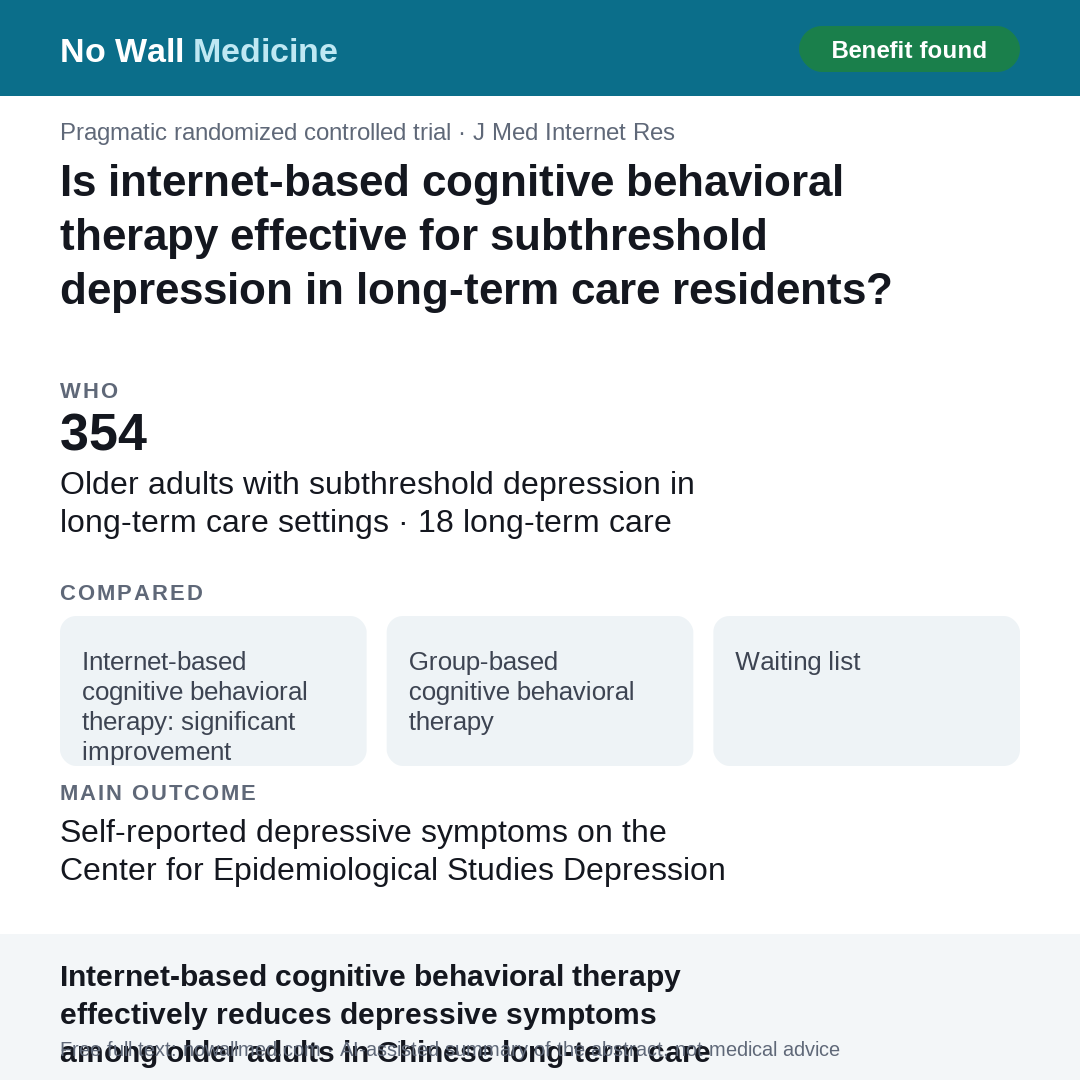
Is internet-based cognitive behavioral therapy effective for subthreshold depression in long-term care residents?
Who
354
Older adults with subthreshold depression in long-term care settings · 18 long-term care institutions in China
Compared
Internet-based cognitive behavioral therapy: significant improvement
Group-based cognitive behavioral therapy
Waiting list
Main outcome
Self-reported depressive symptoms on the Center for Epidemiological Studies Depression Scale
Result: Cohen d=0.07 (95% CI 0.04-0.09)
Bottom line: Internet-based cognitive behavioral therapy effectively reduces depressive symptoms among older adults in Chinese long-term care settings.
J Med Internet Res · 2024-03-01Download image
Clinical question: Is internet-based cognitive behavioral therapy effective for subthreshold depression in long-term care residents?
Why it matters: It is unknown if internet-based cognitive behavioral therapy is effective or acceptable for older adults with subthreshold depression living in long-term care settings in China.
Key points
- Researchers randomized 354 residents from 18 long-term care institutions to internet-based cognitive behavioral therapy, group-based cognitive behavioral therapy, or a waiting list.
- Internet-based therapy showed significant improvements in depressive symptoms at 12-month follow-up compared to the waiting list.
- Internet-based therapy had stronger effects than group-based therapy on Patient Health Questionnaire-9 and Generalized Anxiety Disorder 7-Item scores at postintervention and during follow-up.
Headline and key points written with AI from the paper’s abstract, with every number checked against it. Read the paper before relying on them.
Topics
Cite this article
Kong F, Yu L, Hou Y, Zhu L, Zhou J, Huang L. Efficacy of Internet-Based Cognitive Behavioral Therapy for Subthreshold Depression Among Older Adults in Institutional Long-Term Care Settings: Pragmatic Randomized Controlled Trial. J Med Internet Res. 2024. doi:10.2196/40187
Spotted a mistake? Suggest a correction
Top studies every Monday
The week’s key trials and guidelines in your specialties, plus any topics you follow. By email, free.
Get the weekly digest