Mobile-based cognitive behavioral therapy was associated with lower cholesterol in patients with cardiovascular disease
Efficacy of Mobile-Based Cognitive Behavioral Therapy on Lowering Low-density Lipoprotein Cholesterol Levels in Patients With Atherosclerotic Cardiovascular Disease: Multicenter, Prospective Randomized Controlled Trial
Multicenter, prospective, randomized controlled trialBenefit found
Does mobile-based cognitive behavioral therapy lower low-density lipoprotein cholesterol in patients with atherosclerotic cardiovascular disease?
Who
296
Patients with atherosclerotic cardiovascular disease · Multicenter
Compared
Mobile-based cognitive behavioral therapy: β=-10.026 (95% CI -18.111 to -1.940)
Control group
Main outcome
low-density lipoprotein cholesterol levels
Result: β=-10.026 (95% CI -18.111 to -1.940)
Bottom line: Mobile-based cognitive behavioral therapy effectively reduces low-density lipoprotein cholesterol and improves self-efficacy and quality of life.
J Med Internet Res · 2023-04-12Download image
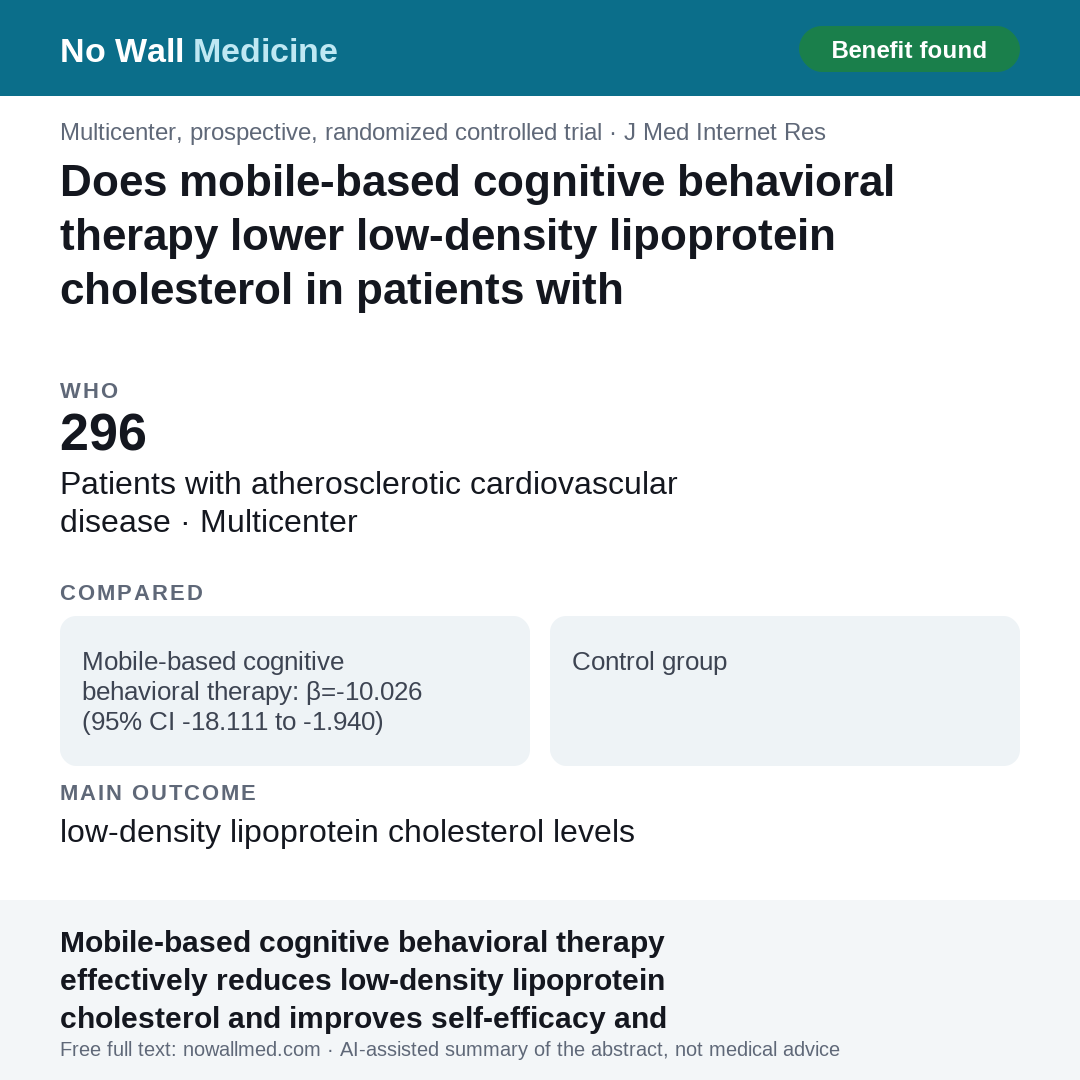
Clinical question: Does mobile-based cognitive behavioral therapy lower low-density lipoprotein cholesterol in patients with atherosclerotic cardiovascular disease?
Why it matters: Low adherence to medication and lifestyle management limits the benefits of lowering cholesterol levels in patients with atherosclerotic cardiovascular disease.
Key points
- Researchers studied 296 patients with atherosclerotic cardiovascular disease, comparing a mobile-based cognitive behavioral therapy intervention to routine health education over 6 months.
- The mobile-based cognitive behavioral therapy group showed a significantly greater reduction in low-density lipoprotein cholesterol levels at the 6-month follow-up (β=-10.026, 95% CI -18.111 to -1.940).
- The intervention was also associated with increased scores for general self-efficacy and quality of life at 1, 3, and 6 months.
Headline and key points written with AI from the paper’s abstract, with every number checked against it. Read the paper before relying on them.
Topics
Cite this article
Li D, Xu T, Xie D, Wang M, Sun S, Wang M. Efficacy of Mobile-Based Cognitive Behavioral Therapy on Lowering Low-density Lipoprotein Cholesterol Levels in Patients With Atherosclerotic Cardiovascular Disease: Multicenter, Prospective Randomized Controlled Trial. J Med Internet Res. 2023. doi:10.2196/44939
Spotted a mistake? Suggest a correction
Top studies every Monday
The week’s key trials and guidelines in your specialties, plus any topics you follow. By email, free.
Get the weekly digest