Electrical nerve stimulation improved bladder function and voiding symptoms in patients with neurogenic dysfunction
Efficacy of peripheral electrical nerve stimulation on improvements of urodynamics and voiding diary in patients with neurogenic lower urinary tract dysfunction: a systematic review and meta-analysis
Systematic review and meta-analysisBenefit found
Is peripheral electrical nerve stimulation effective for neurogenic lower urinary tract dysfunction?
Who
464
Patients with neurogenic lower urinary tract dysfunction
Compared
Electrostimulation
Control
Main outcome
Urodynamic outcomes and voiding diary parameters
Result: maximum cystometric capacity MD=55.72 (95% CI 15.73, 95.72)
Bottom line: Peripheral electrical nerve stimulation may effectively improve urodynamic outcomes and voiding diary parameters in patients with neurogenic lower urinary tract dysfunction.
Int J Surg · 2023-05-01Download image
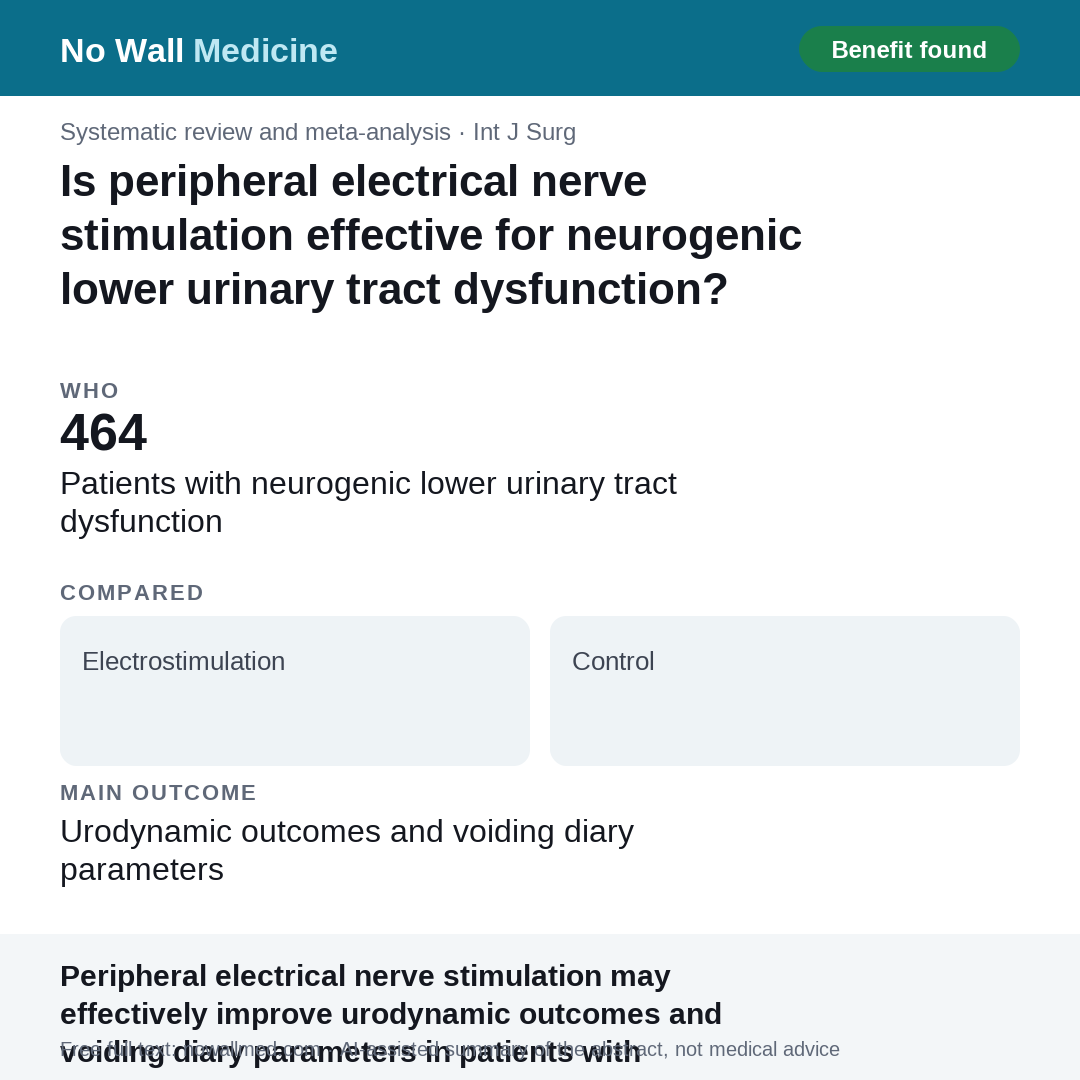
Clinical question: Is peripheral electrical nerve stimulation effective for neurogenic lower urinary tract dysfunction?
Why it matters: It was unknown if peripheral electrical nerve stimulation is an effective and safe treatment for patients with neurogenic lower urinary tract dysfunction.
Key points
- Researchers analyzed 10 studies involving 464 subjects and 8 studies involving 400 patients to evaluate peripheral electrical nerve stimulation for neurogenic lower urinary tract dysfunction.
- Electrostimulation was associated with a maximum cystometric capacity increase of 55.72, a maximum flow rate increase of 4.71, and a voided volume increase of 58.14.
- The treatment was associated with a decrease in incontinence episodes per 24 h by 2.45 and an overactive bladder symptom score reduction of 4.46.
Limitation the authors note: More reliable data from large-scale randomized controlled trials are necessary to strengthen the concept.
Headline and key points written with AI from the paper’s abstract, with every number checked against it. Read the paper before relying on them.
Was this summary helpful?
Subject terms
Cite this article
Ge Q, Xu H, Fan Z, Li W, Chen Z, Yue D. Efficacy of peripheral electrical nerve stimulation on improvements of urodynamics and voiding diary in patients with neurogenic lower urinary tract dysfunction: a systematic review and meta-analysis. Int J Surg. 2023. doi:10.1097/JS9.0000000000000168
Spotted a mistake? Suggest a correction
Top studies every Monday
The week’s key trials and guidelines in your specialties, plus any topics you follow. By email, free.
Get the weekly digest