Efficacy of technology-based interventions in psychosis: a systematic review and network meta-analysis
Systematic review and network meta-analysisBenefit found
Are technology-based interventions effective compared to face-to-face interventions in psychosis?
Who
Patients with psychosis
Compared
Technology-based interventions
Face-to-face interventions
Main outcome
Neurocognition, functioning, social cognition, and quality of life
Result: g = 0.16, p ≤ 0.0001
Bottom line: Technology-based interventions are effective complements to treatment as usual for managing psychosis outcomes.
Psychol Med · 2022-12-06Download image
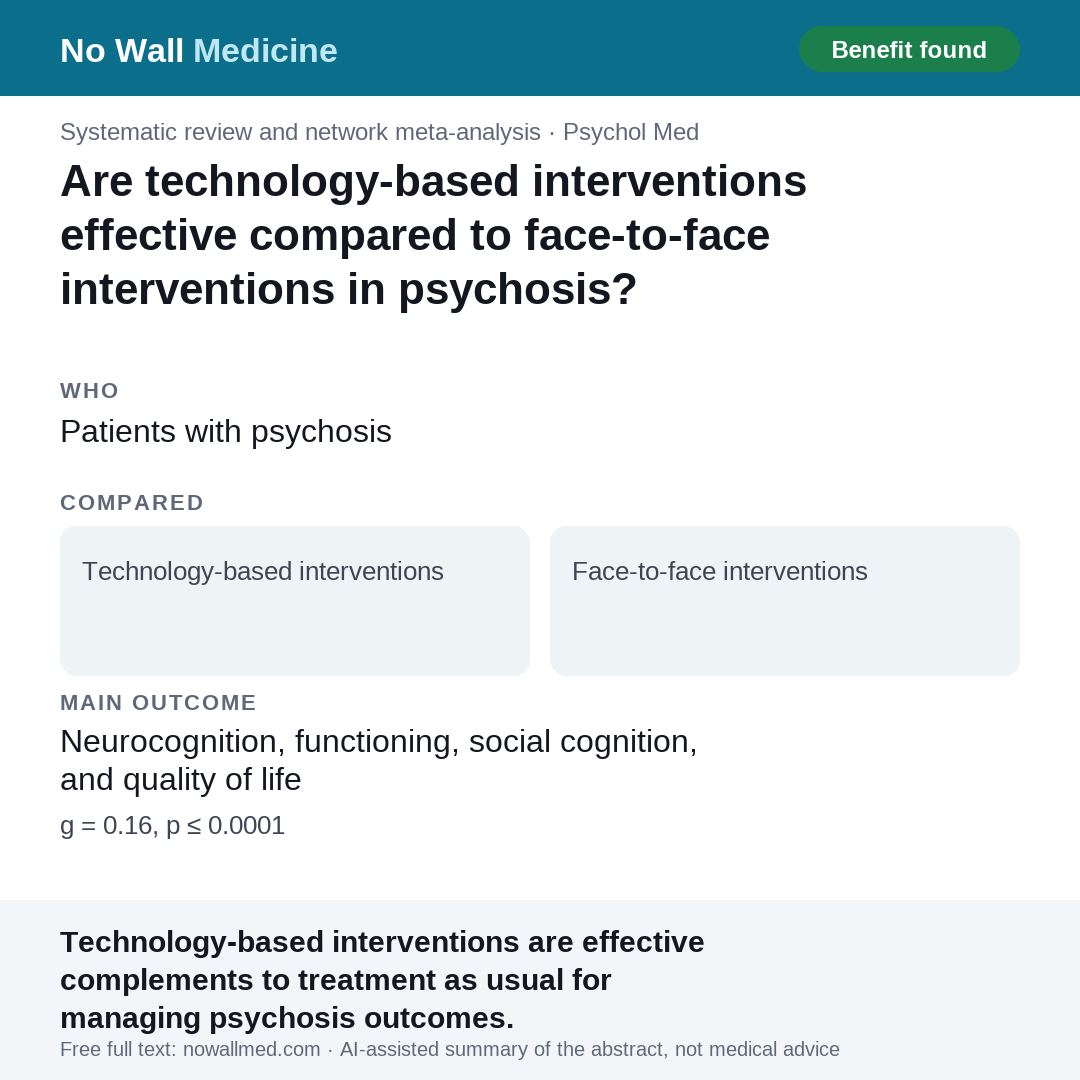
Clinical question: Are technology-based interventions effective compared to face-to-face interventions in psychosis?
Abstract
Background
Technology-based interventions (TBIs) are a useful approach when attempting to provide therapy to more patients with psychosis. Methods
Randomized controlled trials of outcomes of TBIs v. face-to-face interventions in psychosis were identified in a systematic search conducted in PubMed/Ovid MEDLINE. Data were extracted independently by two researchers, and standardized mean changes were pooled using a three-level model and network meta-analysis. Results
Fifty-eight studies were included. TBIs complementing treatment as usual (TAU) were generally superior to face-to-face interventions (g = 0.16, p ≤ 0.0001) and to specific outcomes, namely, neurocognition (g = 0.13, p ≤ 0.0001), functioning (g = 0.25, p = 0.006), and social cognition (g = 0.32, p ≤ 0.05). Based on the network meta-analysis, the effect of two TBIs differed significantly from zero; these were the TBIs cognitive training for the neurocognitive outcome [g = 0.16; 95% confidence interval (CI) 0.09-0.23] and cognitive behavioral therapy for quality of life (g = 1.27; 95% CI 0.46-2.08). The variables educational level, type of medication, frequency of the intervention, and contact during the intervention moderated the effectiveness of TBIs over face-to-face interventions in neurocognition and symptomatology. Conclusions
TBIs are effective for the management of neurocognition, symptomatology, functioning, social cognition, and quality of life outcomes in patients with psychosis. The results of the network meta-analysis showed the efficacy of some TBIs for neurocognition, symptomatology, and quality of life. Therefore, TBIs should be considered a complement to TAU in patients with psychosis.
Subject terms
Cite this article
Morales-Pillado C, Fernández-Castilla B, Sánchez-Gutiérrez T, González-Fraile E, Barbeito S, Calvo A. Efficacy of technology-based interventions in psychosis: a systematic review and network meta-analysis. Psychol Med. 2022. doi:10.1017/S0033291722003610
Spotted a mistake? Suggest a correction
Top studies every Monday
The week’s key trials and guidelines in your specialties, plus any topics you follow. By email, free.
Get the weekly digest