Web-based communication program improved emotional acceptance and strategy use in first-time hearing aid users
Efficacy of the Web-Based Swedish Individualized Active Communication Education (I-ACE) Program in First-Time Hearing Aid Users: Randomized Controlled Trial
Randomized controlled trialBenefit found
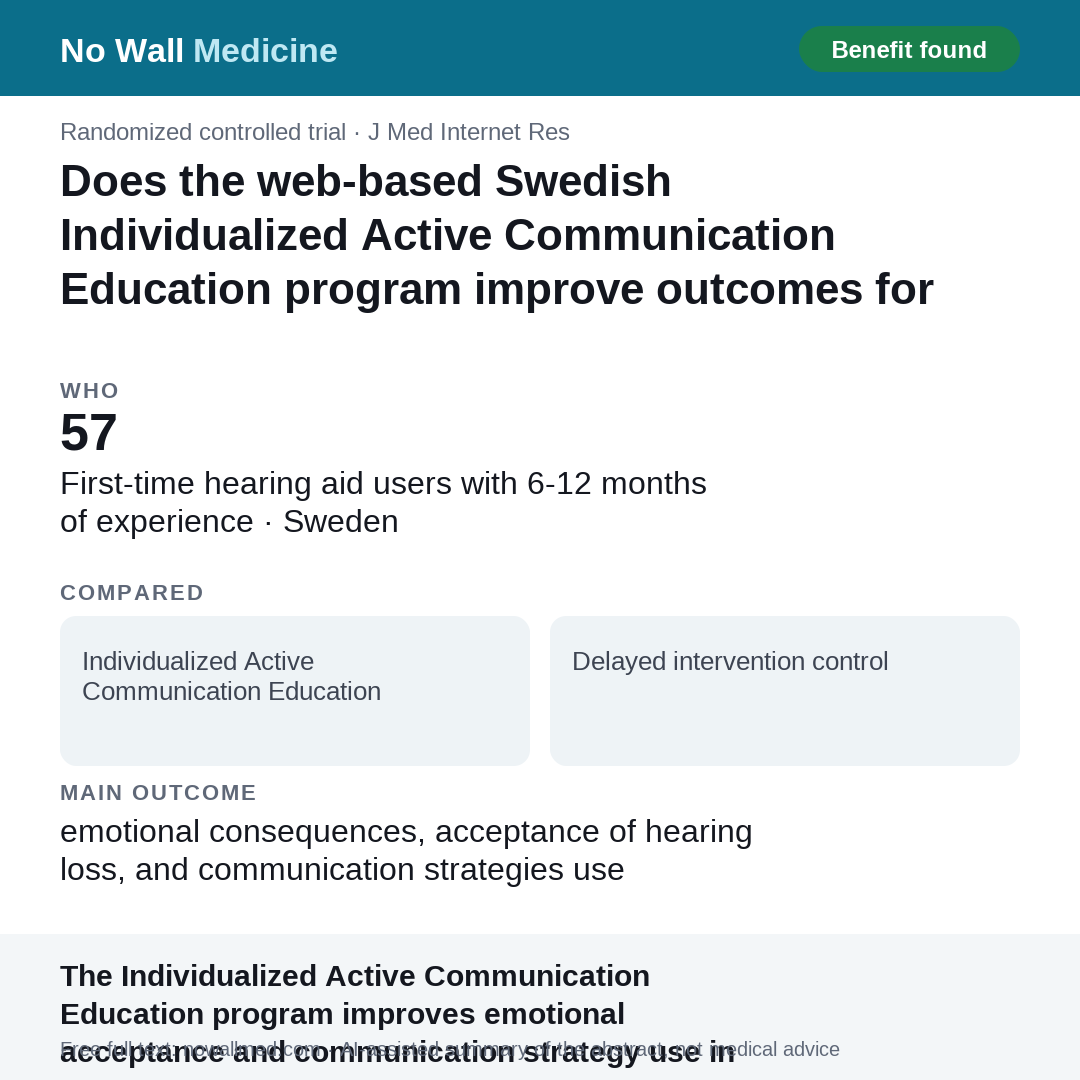
Does the web-based Swedish Individualized Active Communication Education program improve outcomes for first-time hearing aid users?
Who
57
First-time hearing aid users with 6-12 months of experience · Sweden
Compared
Individualized Active Communication Education
Delayed intervention control
Main outcome
emotional consequences, acceptance of hearing loss, and communication strategies use
Bottom line: The Individualized Active Communication Education program improves emotional acceptance and communication strategy use in first-time hearing aid users.
J Med Internet Res · 2025-07-25Download image
Clinical question: Does the web-based Swedish Individualized Active Communication Education program improve outcomes for first-time hearing aid users?
Why it matters: Many people using hearing aids still struggle with communication difficulties that may require additional intervention beyond the device itself.
Key points
- The study randomized 57 first-time hearing aid users to either a web-based individualized communication program or a delayed intervention control group.
- The intervention group showed improvements in emotional consequences and acceptance of hearing loss and the use of communication strategies compared to the control group.
- No differences were found between the two groups regarding perceived hearing difficulties or hearing aid efficacy, and all outcomes remained stable at 6 months.
Headline and key points written with AI from the paper’s abstract, with every number checked against it. Read the paper before relying on them.
Topics
Cite this article
Werther L, Sundewall Thorén E, Brännström J, Andersson G, Öberg M. Efficacy of the Web-Based Swedish Individualized Active Communication Education (I-ACE) Program in First-Time Hearing Aid Users: Randomized Controlled Trial. J Med Internet Res. 2025. doi:10.2196/71975
Spotted a mistake? Suggest a correction
Top studies every Monday
The week’s key trials and guidelines in your specialties, plus any topics you follow. By email, free.
Get the weekly digest