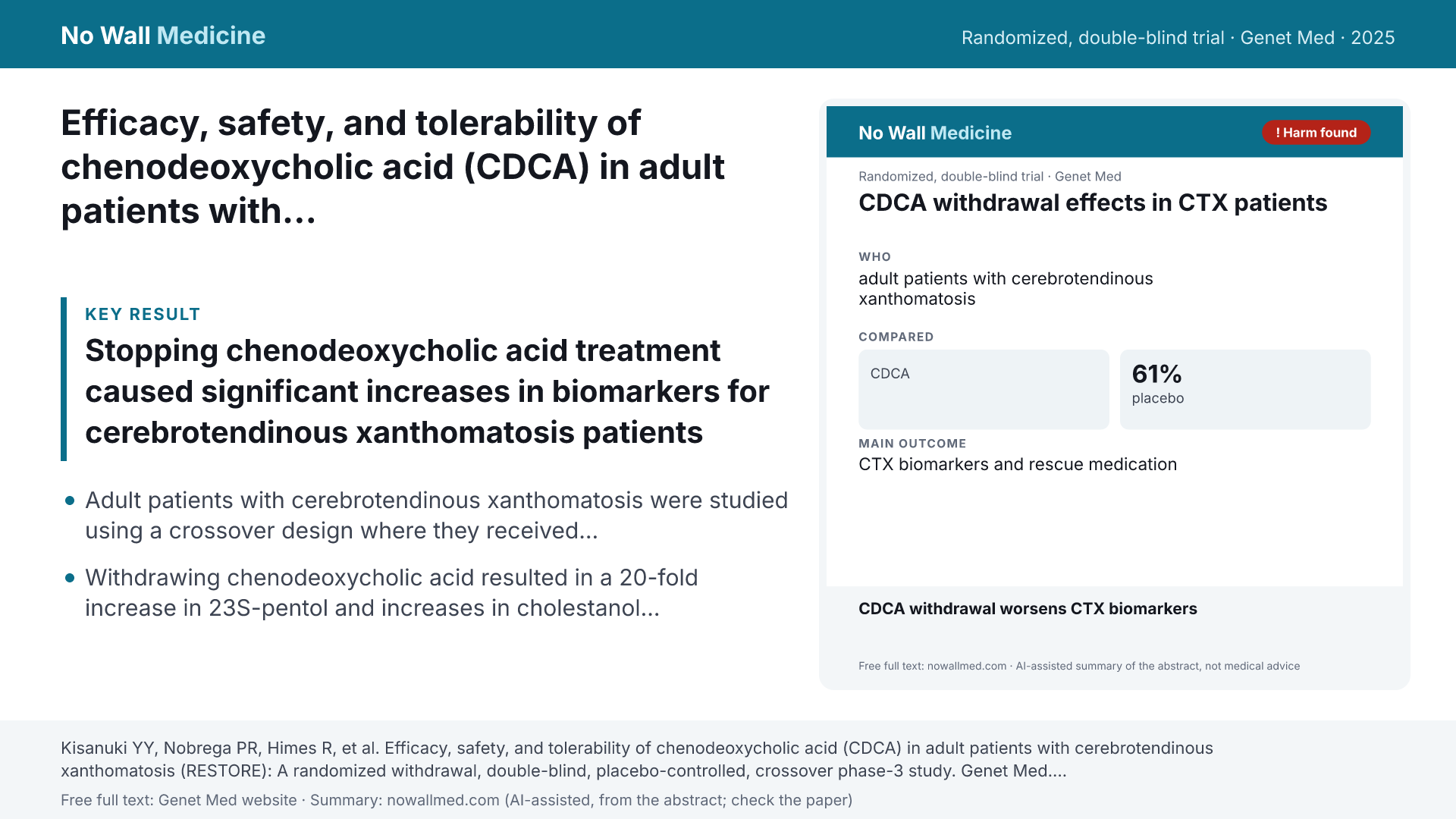
Stopping chenodeoxycholic acid treatment caused significant increases in biomarkers for cerebrotendinous xanthomatosis patients
Efficacy, safety, and tolerability of chenodeoxycholic acid (CDCA) in adult patients with cerebrotendinous xanthomatosis (RESTORE): A randomized withdrawal, double-blind, placebo-controlled, crossover phase-3 study
Randomized, double-blind trialHarm found
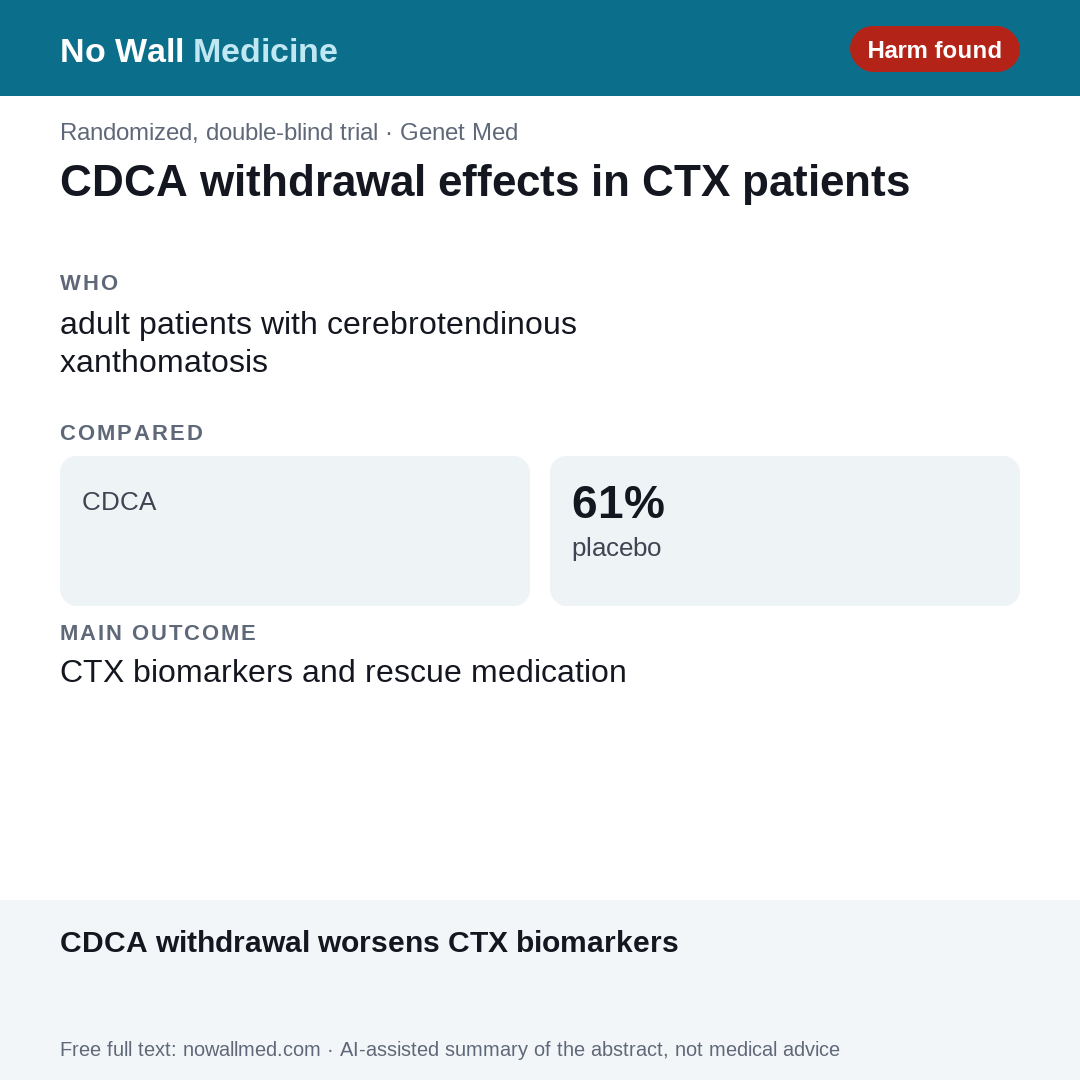
CDCA withdrawal effects in CTX patients
Who
adult patients with cerebrotendinous xanthomatosis
Compared
CDCA
61%placebo (required rescue)
Main outcome
CTX biomarkers and rescue medication
Bottom line: CDCA withdrawal worsens CTX biomarkers
Genet Med · 2025-04-25Download image
Why it matters: It was unknown how withdrawing chenodeoxycholic acid affects biochemical markers and the need for rescue medication in adults with cerebrotendinous xanthomatosis.
Key points
- Adult patients with cerebrotendinous xanthomatosis were studied using a crossover design where they received either chenodeoxycholic acid or a placebo.
- Withdrawing chenodeoxycholic acid resulted in a 20-fold increase in 23S-pentol and increases in cholestanol (2.8-fold), 7αC4 (50-fold), and 7α12αC4 (14-fold).
- During the placebo periods, 61% of participants required rescue medication, while the most common side effects were diarrhea and headache.
Headline and key points written with AI from the paper’s abstract, with every number checked against it. Read the paper before relying on them.
Was this summary helpful?
Subject terms
Cite this article
Kisanuki YY, Nobrega PR, Himes R, et al. Efficacy, safety, and tolerability of chenodeoxycholic acid (CDCA) in adult patients with cerebrotendinous xanthomatosis (RESTORE): A randomized withdrawal, double-blind, placebo-controlled, crossover phase-3 study. Genet Med. 2025. doi:10.1016/j.gim.2025.101449
Spotted a mistake? Suggest a correction