Efficiency of 6-month PrEP dispensing with HIV self-testing in Kenya: an open-label, randomised, non-inferiority, implementation trial
Key result: Six-month HIV prevention drug dispensing with self-testing was non-inferior to standard three-month clinic visits
Key points
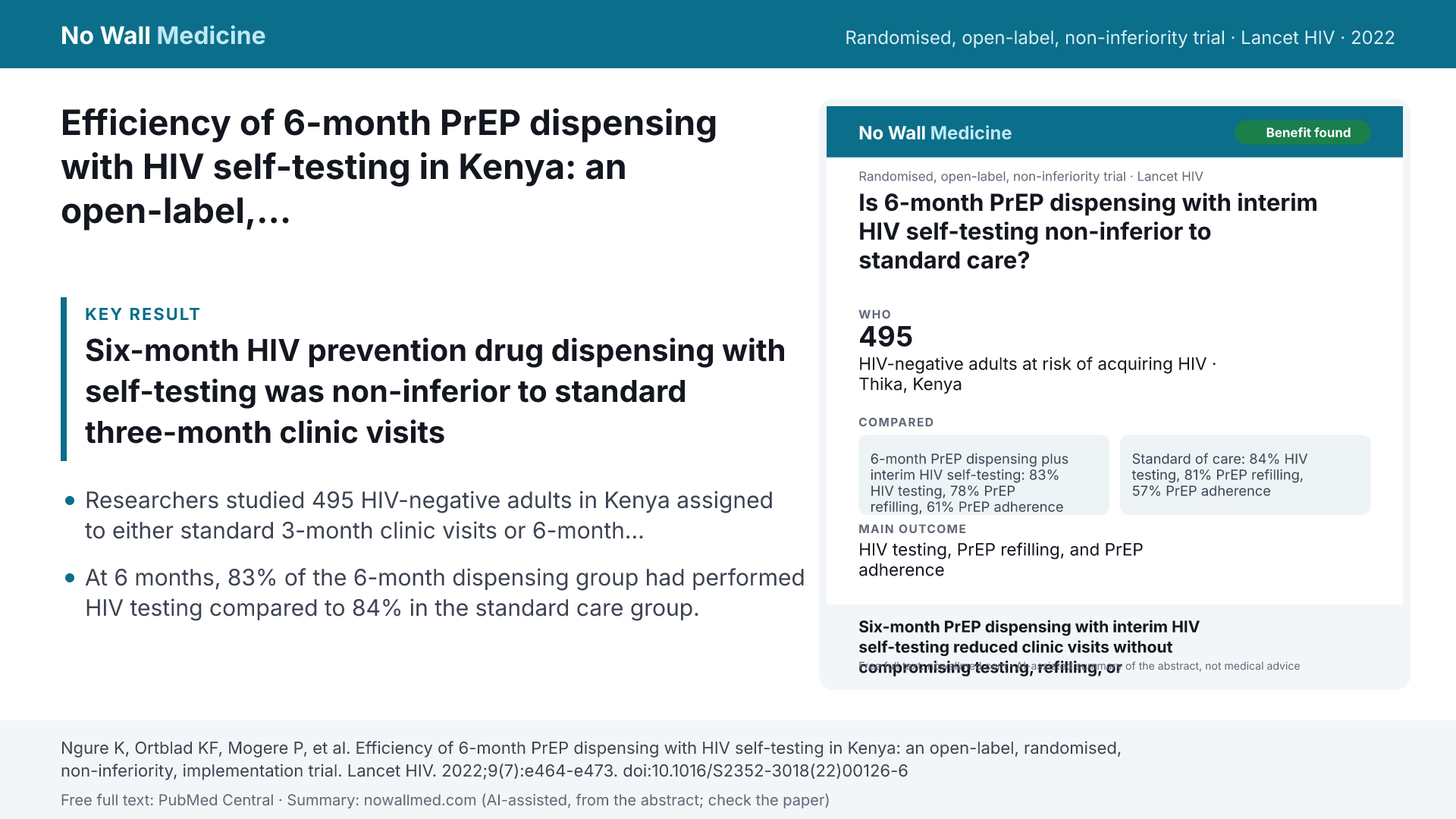
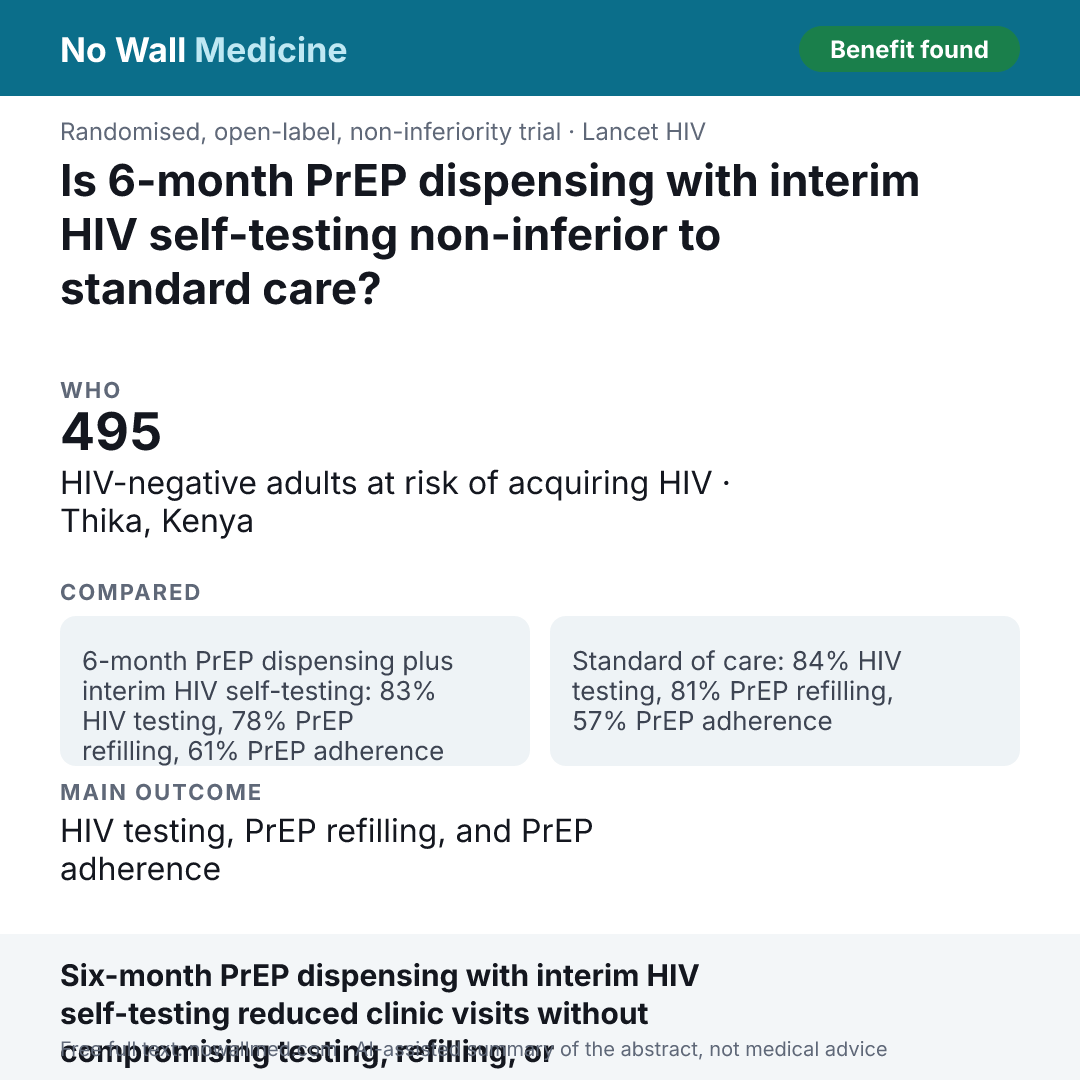
- Researchers studied 495 HIV-negative adults in Kenya assigned to either standard 3-month clinic visits or 6-month drug dispensing combined with home-based HIV self-testing.
- At 6 months, 83% of the 6-month dispensing group had performed HIV testing compared to 84% in the standard care group.
- PrEP refilling was 78% in the 6-month dispensing group versus 81% in standard care, while adherence was 61% versus 57%.
In absolute numbers: 6-month PrEP dispensing plus interim HIV self-testing 83% vs Standard of care 84%, a difference of 1 percentage points (about 100 people treated for one more to benefit).
Why it matters: Barriers to clinic-based delivery of HIV prevention medication remain a challenge for large-scale implementation in sub-Saharan Africa.
Discussion prompts
- Would these patients look like yours? Who was left out?
- Is the main outcome one that matters to patients?
- Is the difference large enough to change what you do?
Cite: Ngure K, Ortblad KF, Mogere P, et al. Efficiency of 6-month PrEP dispensing with HIV self-testing in Kenya: an open-label, randomised, non-inferiority, implementation trial. Lancet HIV. 2022;9(7):e464-e473. doi:10.1016/S2352-3018(22)00126-6
Free full text: PubMed Central · Summary and visual abstract: nowallmed.com/a/efficiency-of-6-month-prep-dispensing-with-hiv-self-testing-in-kenya-122guko/ (AI-assisted from the abstract; check the paper before relying on it).