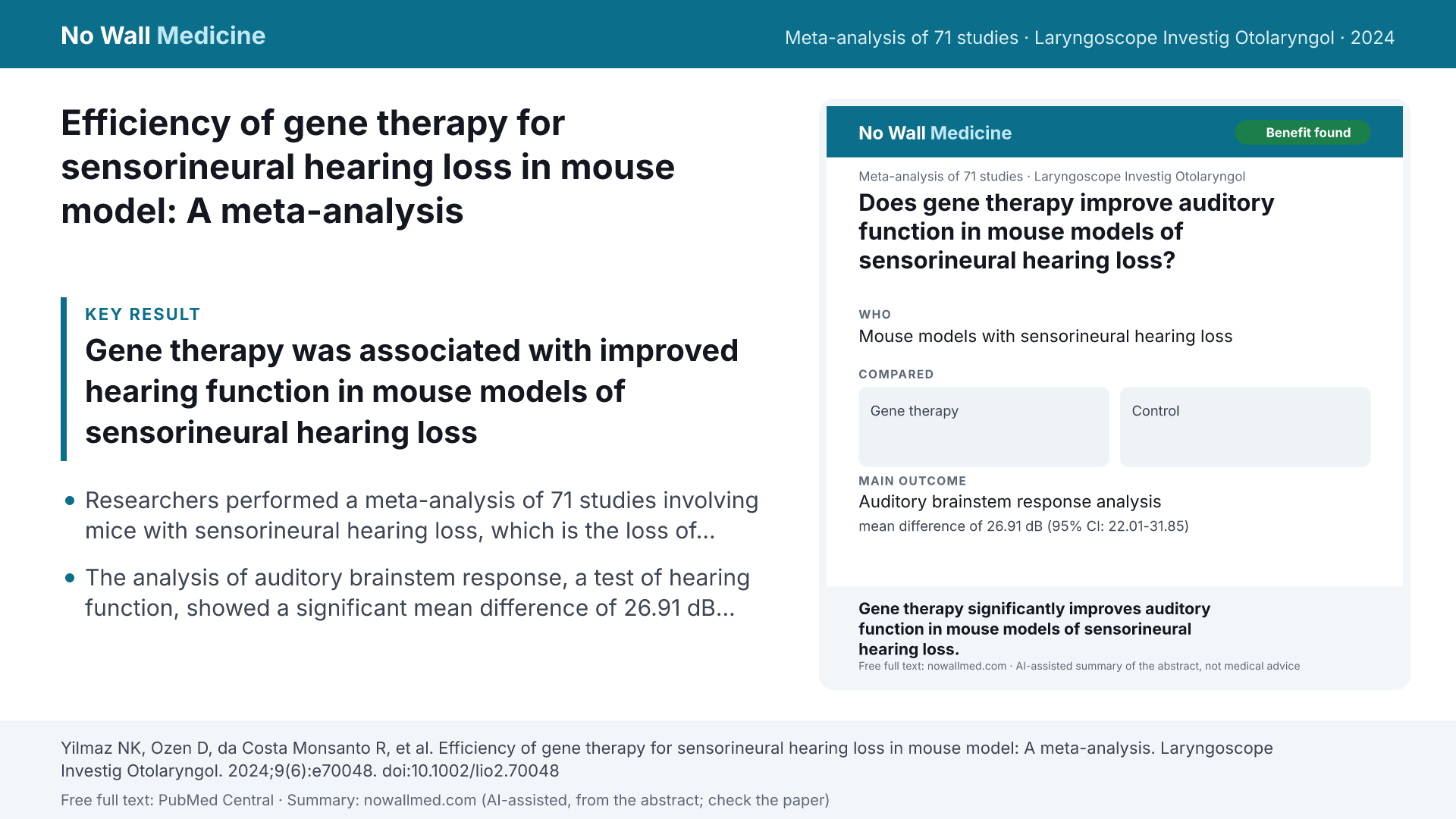
Gene therapy was associated with improved hearing function in mouse models of sensorineural hearing loss
Efficiency of gene therapy for sensorineural hearing loss in mouse model: A meta-analysis
Meta-analysis of 71 studiesBenefit found
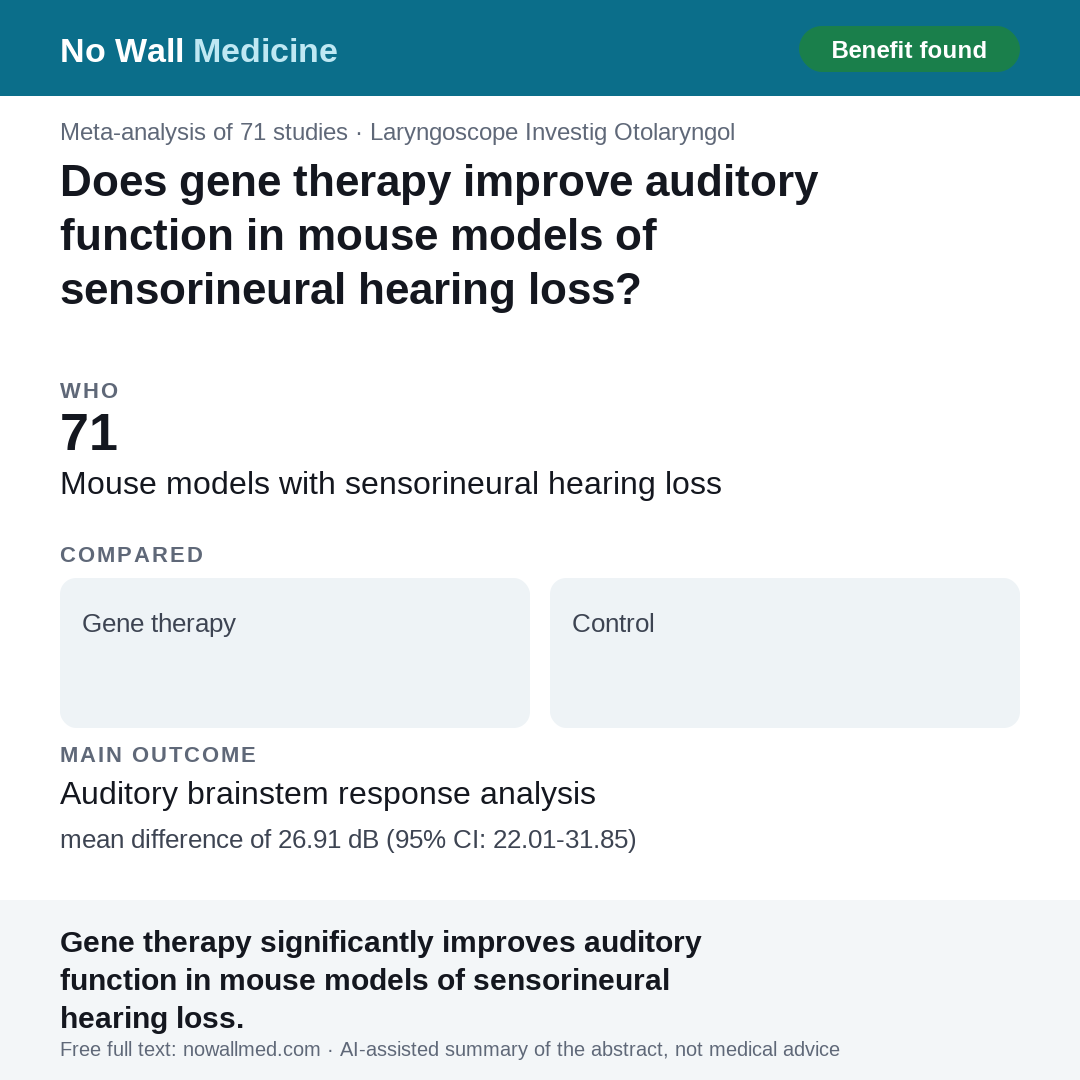
Does gene therapy improve auditory function in mouse models of sensorineural hearing loss?
Who
71
Mouse models with sensorineural hearing loss
Compared
Gene therapy
Control
Main outcome
Auditory brainstem response analysis
Result: mean difference of 26.91 dB (95% CI: 22.01-31.85)
Bottom line: Gene therapy significantly improves auditory function in mouse models of sensorineural hearing loss.
Laryngoscope Investig Otolaryngol · 2024-12-09Download image
Clinical question: Does gene therapy improve auditory function in mouse models of sensorineural hearing loss?
Why it matters: The potential effectiveness of gene therapy for restoring auditory function in various genetic models of sensorineural hearing loss needed evaluation.
Key points
- Researchers performed a meta-analysis of 71 studies involving mice with sensorineural hearing loss, which is the loss of hair cells or auditory nerve function.
- The analysis of auditory brainstem response, a test of hearing function, showed a significant mean difference of 26.91 dB (95% CI: 22.01-31.85) in favor of the gene therapy groups.
- The included studies targeted various genes including TMC1, VGLUT3, USH1C, CLRN1, WHRN, and PJVK using different inner ear injection methods.
Headline and key points written with AI from the paper’s abstract, with every number checked against it. Read the paper before relying on them.
Was this summary helpful?
Cite this article
Yilmaz NK, Ozen D, da Costa Monsanto R, et al. Efficiency of gene therapy for sensorineural hearing loss in mouse model: A meta-analysis. Laryngoscope Investig Otolaryngol. 2024. doi:10.1002/lio2.70048
Spotted a mistake? Suggest a correction