eHealth-Based Psychosocial Interventions for Adults With Insomnia: Systematic Review and Meta-analysis of Randomized Controlled Trials
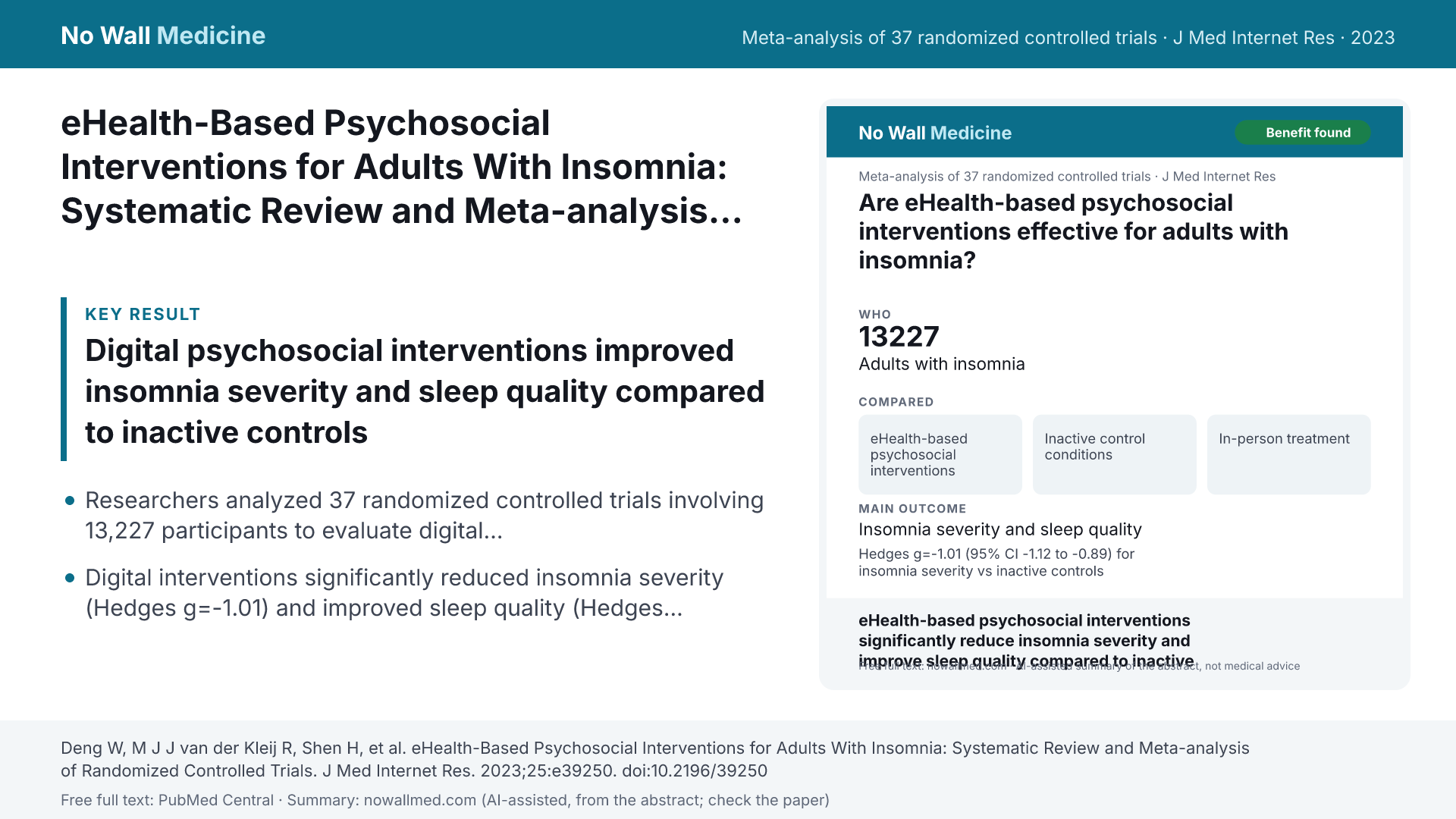
Key result: Digital psychosocial interventions improved insomnia severity and sleep quality compared to inactive controls
Key points
- Researchers analyzed 37 randomized controlled trials involving 13,227 participants to evaluate digital psychosocial interventions for insomnia.
- Digital interventions significantly reduced insomnia severity (Hedges g=-1.01) and improved sleep quality (Hedges g=-0.58) compared to inactive controls.
- Compared to in-person treatment, digital interventions showed no significant difference in insomnia severity (Hedges g=0.41) but were less effective for sleep quality (Hedges g=0.56).
Why it matters: The quantitative effectiveness of digital psychosocial interventions for insomnia across different study characteristics and intervention features was not previously integrated.
Discussion prompts
- Would these patients look like yours? Who was left out?
- Is the main outcome one that matters to patients?
- Is the difference large enough to change what you do?
Cite: Deng W, M J J van der Kleij R, Shen H, et al. eHealth-Based Psychosocial Interventions for Adults With Insomnia: Systematic Review and Meta-analysis of Randomized Controlled Trials. J Med Internet Res. 2023;25:e39250. doi:10.2196/39250
Free full text: PubMed Central · Summary and visual abstract: nowallmed.com/a/ehealth-based-psychosocial-interventions-for-adults-with-insomnia-3gmfkw/ (AI-assisted from the abstract; check the paper before relying on it).