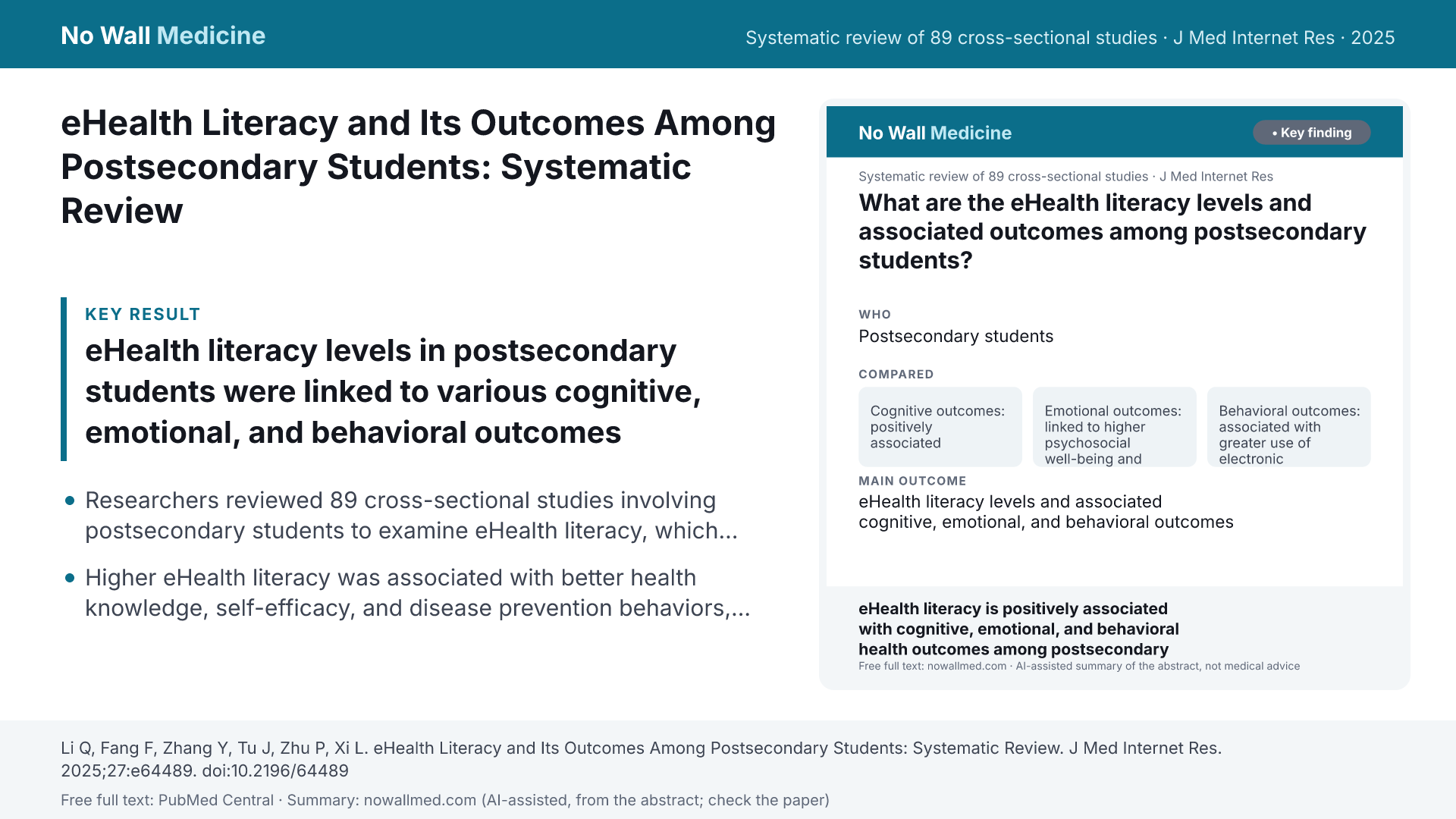
eHealth literacy levels in postsecondary students were linked to various cognitive, emotional, and behavioral outcomes
eHealth Literacy and Its Outcomes Among Postsecondary Students: Systematic Review
Systematic review of 89 cross-sectional studiesKey finding
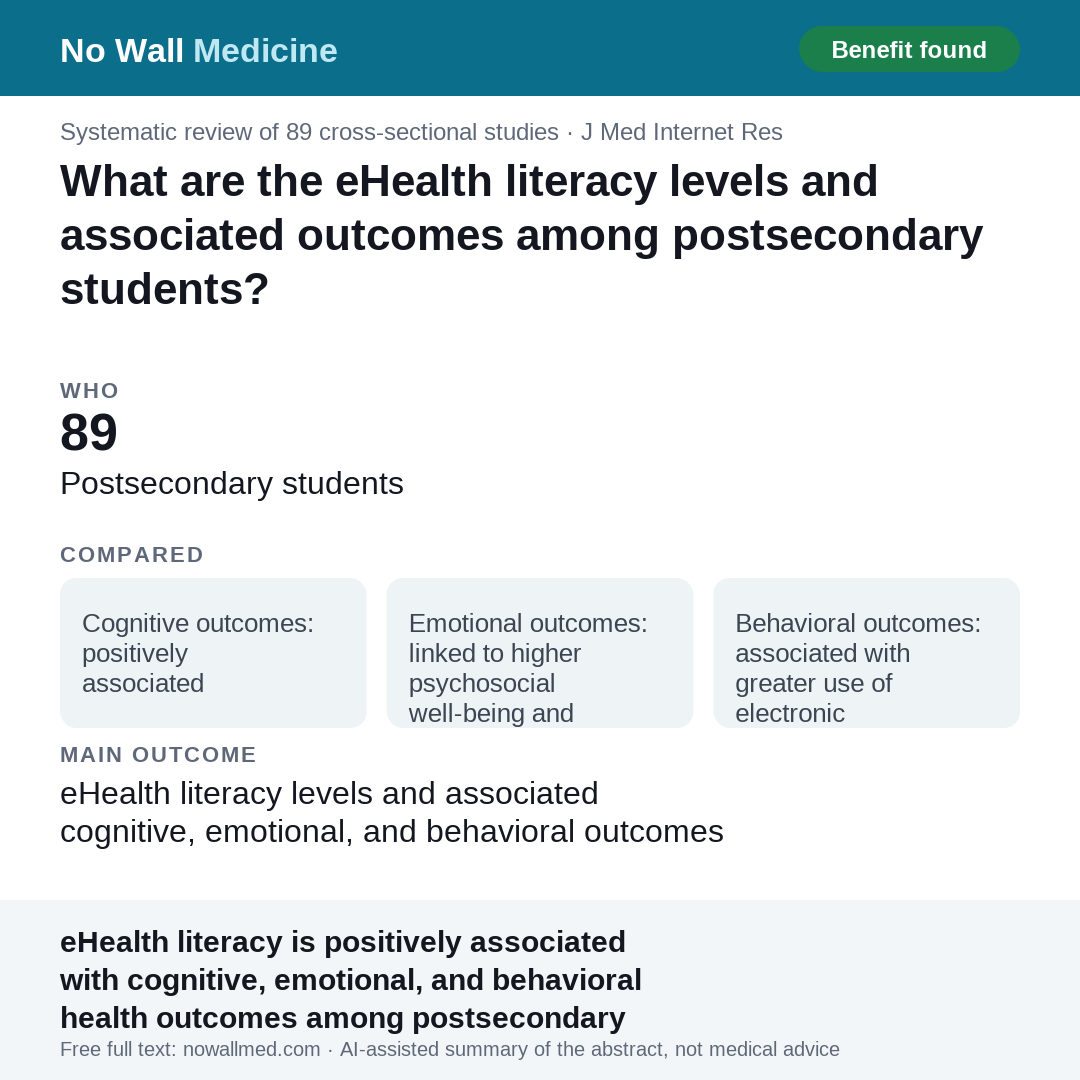
What are the eHealth literacy levels and associated outcomes among postsecondary students?
Who
Postsecondary students
Compared
Cognitive outcomes: positively associated
Emotional outcomes: linked to higher psychosocial well-being and positive emotions
Behavioral outcomes: associated with greater use of electronic information and disease prevention
Main outcome
eHealth literacy levels and associated cognitive, emotional, and behavioral outcomes
Bottom line: eHealth literacy is positively associated with cognitive, emotional, and behavioral health outcomes among postsecondary students.
Limitation: Variations in results due to inconsistent assessment tools.
J Med Internet Res · 2025-07-02Download image
Clinical question: What are the eHealth literacy levels and associated outcomes among postsecondary students?
Why it matters: Few studies have systematically reviewed the specific levels of eHealth literacy and its related outcomes among postsecondary students.
Key points
- Researchers reviewed 89 cross-sectional studies involving postsecondary students to examine eHealth literacy, which is the ability to find and use health information online.
- Higher eHealth literacy was associated with better health knowledge, self-efficacy, and disease prevention behaviors, as well as greater use of electronic information.
- EHealth literacy was linked to higher psychosocial well-being and more positive emotions, but its associations with depression and COVID-19 fear were inconclusive.
Limitation the authors note: The studies used various assessment tools, including the eHealth Literacy Scale in 56/89 (63%) cases, leading to variations in reported literacy levels.
Headline and key points written with AI from the paper’s abstract, with every number checked against it. Read the paper before relying on them.
Was this summary helpful?
Subject terms
Headline, design, result, key points, caveat and citation as plain text.
Cite this article
Li Q, Fang F, Zhang Y, Tu J, Zhu P, Xi L. eHealth Literacy and Its Outcomes Among Postsecondary Students: Systematic Review. J Med Internet Res. 2025. doi:10.2196/64489
Spotted a mistake? Suggest a correction