Hippocampal electric field strength is linked to antidepressant response and cognitive side effects in electroconvulsive therapy
Electroconvulsive therapy, electric field, neuroplasticity, and clinical outcomes
Randomized clinical trialMixed results
How do hippocampal electric field strength and neuroplasticity relate to antidepressant and cognitive outcomes?
Who
Patients with depressive episodes
Compared
Right unilateral 600 mA
Right unilateral 700 mA
Right unilateral 800 mA
Main outcome
Antidepressant and cognitive outcomes
Bottom line: Hippocampal electric field strength relates to neuroplasticity and antidepressant outcomes, but also impacts cognitive safety.
Mol Psychiatry · 2021-12-01Download image
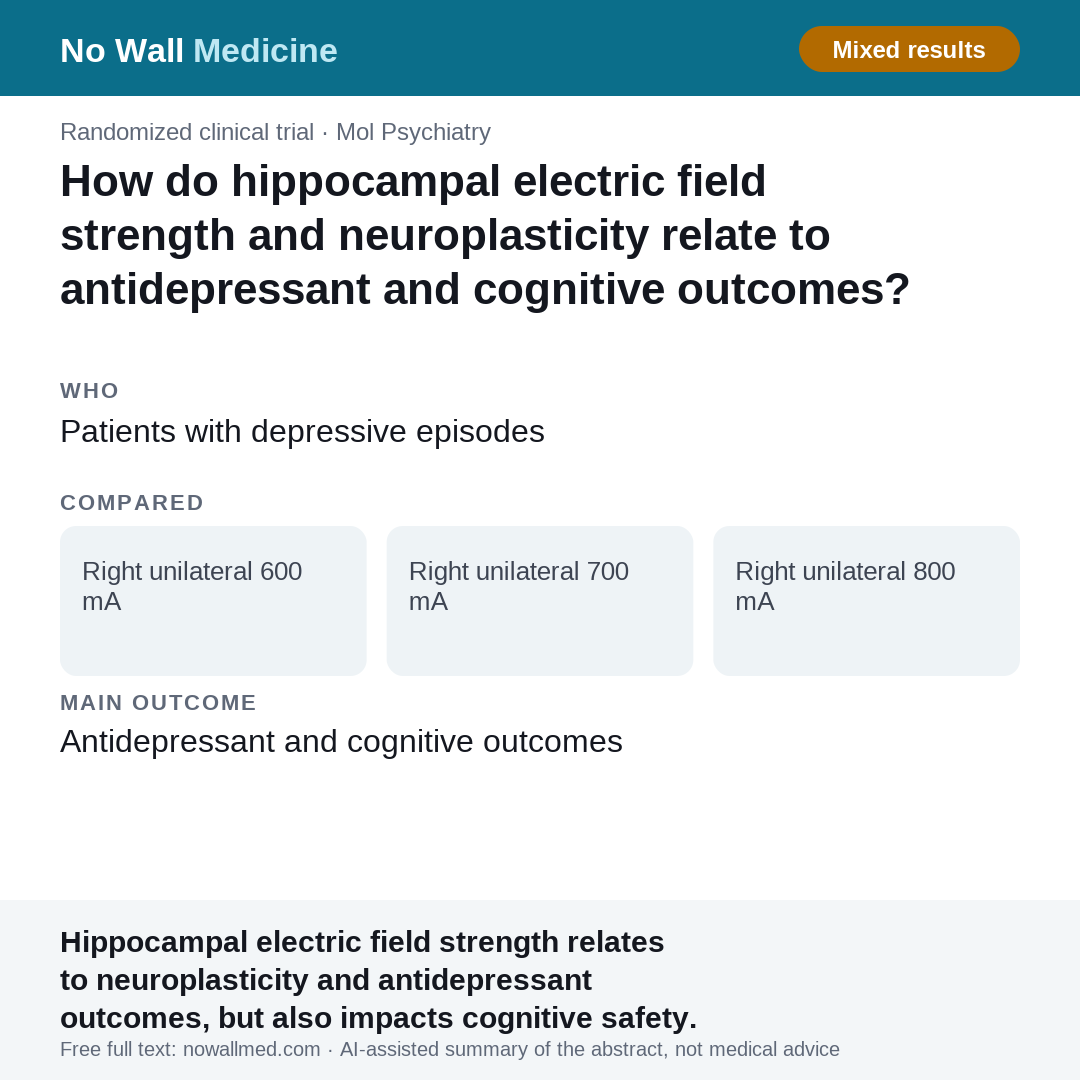
Clinical question: How do hippocampal electric field strength and neuroplasticity relate to antidepressant and cognitive outcomes?
Why it matters: The underlying mechanisms for how electroconvulsive therapy produces antidepressant responses and cognitive side effects remain unknown.
Key points
- Researchers analyzed data from a randomized clinical trial comparing right unilateral electrode placement with pulse amplitudes of 600, 700, and 800 mA.
- Right hippocampal electric field strength was linked to right hippocampal neuroplasticity, which mediated the relationship between the electric field and antidepressant outcomes.
- Right hippocampal electric field was directly related to cognitive outcomes measured by phonemic fluency, with a maximal field of 112.5 V/m associated with cognitive safety.
Headline and key points written with AI from the paper’s abstract, with every number checked against it. Read the paper before relying on them.
Was this summary helpful?
Subject terms
Cite this article
Deng ZD, Argyelan M, Miller J, Quinn DK, Lloyd M, Jones TR. Electroconvulsive therapy, electric field, neuroplasticity, and clinical outcomes. Mol Psychiatry. 2021. doi:10.1038/s41380-021-01380-y
Spotted a mistake? Suggest a correction
Top studies every Monday
The week’s key trials and guidelines in your specialties, plus any topics you follow. By email, free.
Get the weekly digest