Electronic patient-reported outcome measures show mixed results for chronic disease management in primary care
Electronic Implementation of Patient-Reported Outcome Measures in Primary Health Care: Mixed Methods Systematic Review
Mixed methods systematic reviewMixed results
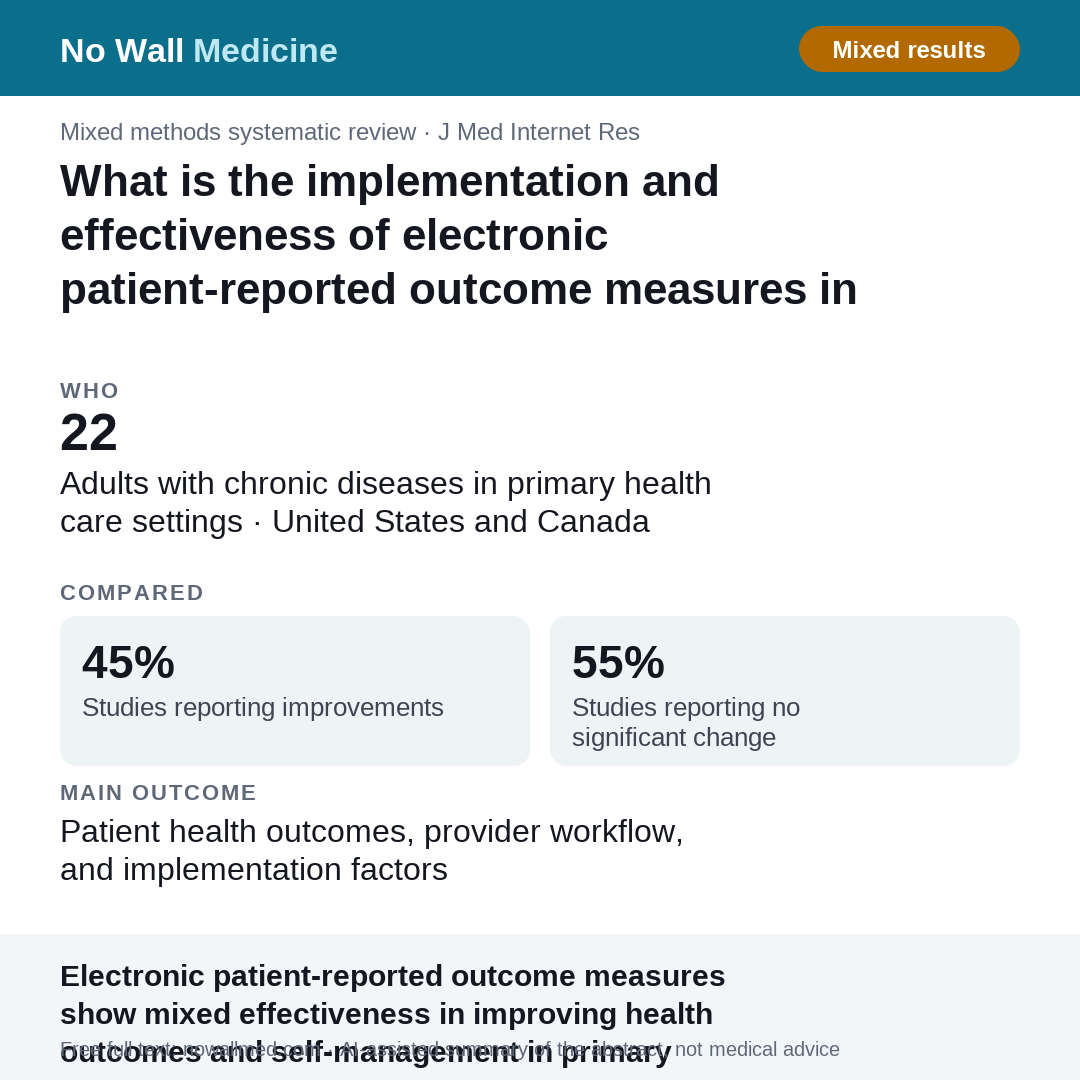
What is the implementation and effectiveness of electronic patient-reported outcome measures in primary health care?
Who
22
Adults with chronic diseases in primary health care settings · United States and Canada
Compared
45%Studies reporting improvements
55%Studies reporting no significant change
Main outcome
Patient health outcomes, provider workflow, and implementation factors
Bottom line: Electronic patient-reported outcome measures show mixed effectiveness in improving health outcomes and self-management in primary health care.
Limitation: Long-term cost-effectiveness and sustainability remain uncertain.
J Med Internet Res · 2025-05-05Download image
Clinical question: What is the implementation and effectiveness of electronic patient-reported outcome measures in primary health care?
Why it matters: The implementation of electronic patient-reported outcome measures in primary health care remains limited with significant variability in effectiveness and adoption.
Key points
- Researchers reviewed 22 studies involving adults with chronic diseases to evaluate electronic patient-reported outcome measures, which are digital tools used by patients to report their own health status.
- While 45% of studies reported improvements in patient health outcomes and self-management, 55% of the studies indicated no significant change.
- Implementation barriers included digital literacy gaps, challenges integrating tools into clinical workflows, and increased workload for healthcare providers.
Headline and key points written with AI from the paper’s abstract, with every number checked against it. Read the paper before relying on them.
Was this summary helpful?
Subject terms
Cite this article
Sasseville M, Supper W, Gartner JB, Layani G, Amil S, Sheffield P. Electronic Implementation of Patient-Reported Outcome Measures in Primary Health Care: Mixed Methods Systematic Review. J Med Internet Res. 2025. doi:10.2196/63639
Spotted a mistake? Suggest a correction
Top studies every Monday
The week’s key trials and guidelines in your specialties, plus any topics you follow. By email, free.
Get the weekly digest