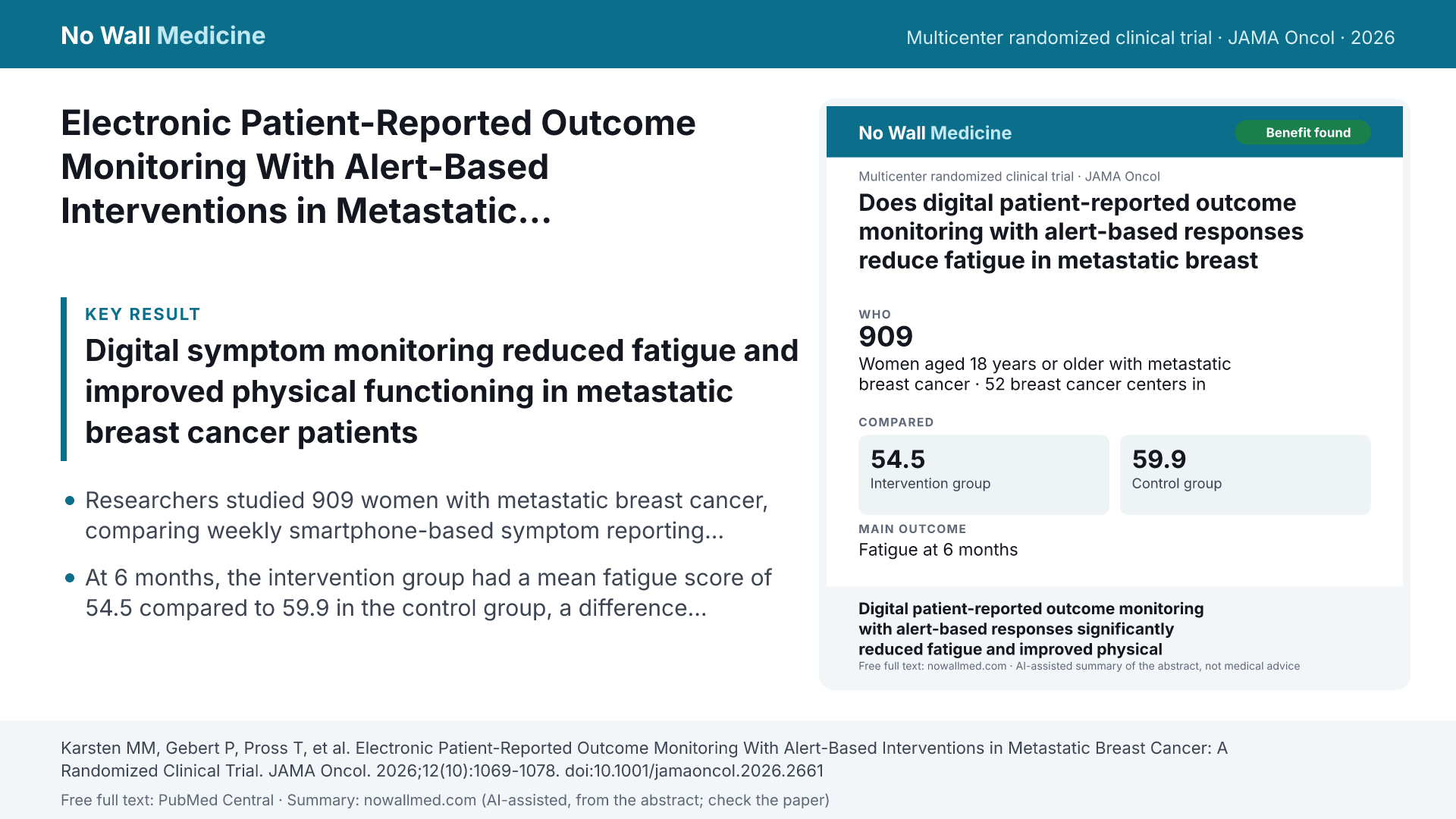
Electronic Patient-Reported Outcome Monitoring With Alert-Based Interventions in Metastatic Breast Cancer: A Randomized Clinical Trial
Key result: Digital symptom monitoring reduced fatigue and improved physical functioning in metastatic breast cancer patients
Key points
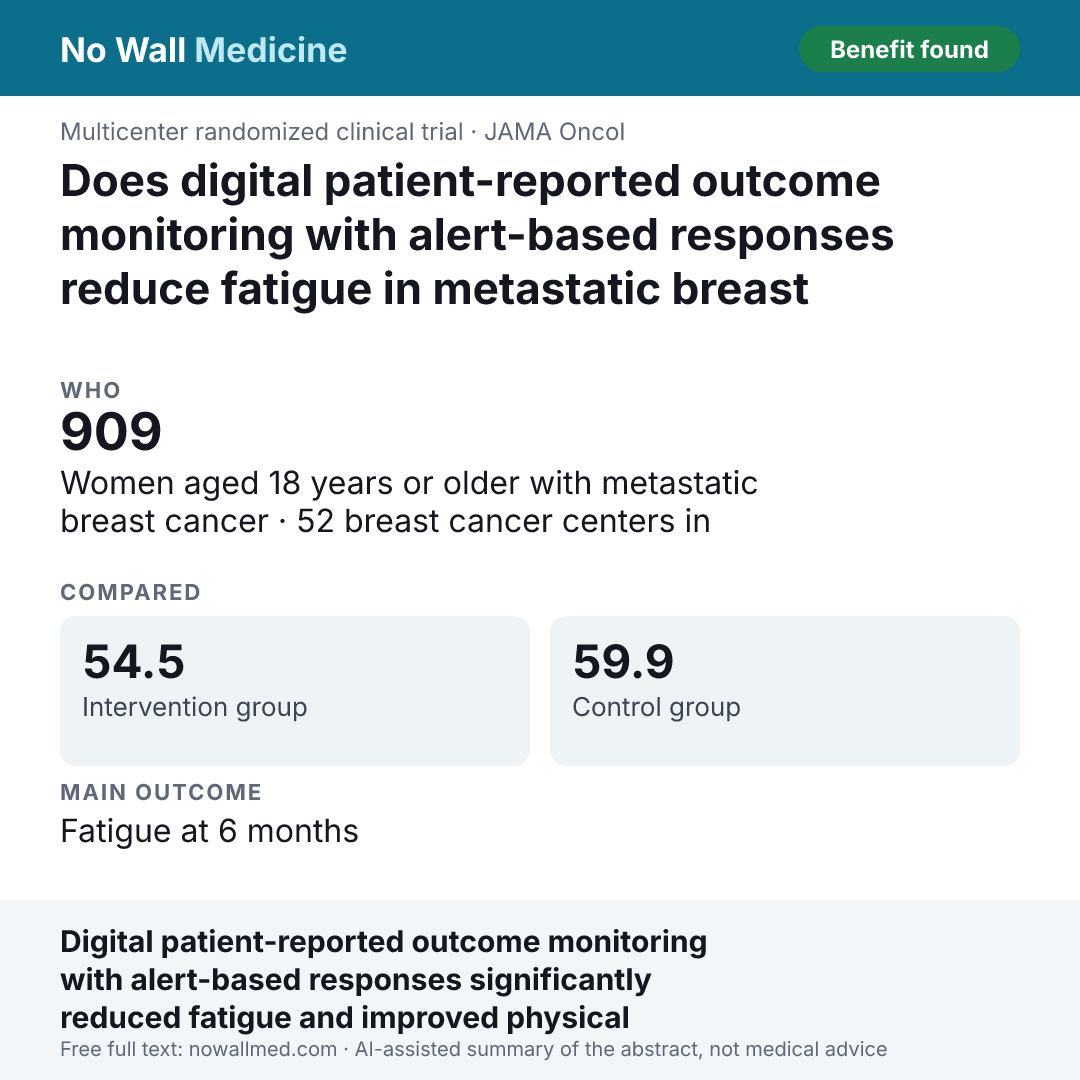
- Researchers studied 909 women with metastatic breast cancer, comparing weekly smartphone-based symptom reporting with automated alerts to usual care with quarterly questionnaires.
- At 6 months, the intervention group had a mean fatigue score of 54.5 compared to 59.9 in the control group, a difference of -5.4 points.
- The digital monitoring group also showed higher physical functioning at 6 months with a mean difference of 4.0 points compared to the control group.
Why it matters: Data specific to metastatic breast cancer regarding whether digital symptom monitoring with alert-based responses reduces fatigue remain limited.
Discussion prompts
- Would these patients look like yours? Who was left out?
- Is the main outcome one that matters to patients?
- Is the difference large enough to change what you do?
Cite: Karsten MM, Gebert P, Pross T, et al. Electronic Patient-Reported Outcome Monitoring With Alert-Based Interventions in Metastatic Breast Cancer: A Randomized Clinical Trial. JAMA Oncol. 2026;12(10):1069-1078. doi:10.1001/jamaoncol.2026.2661
Free full text: PubMed Central · Summary and visual abstract: nowallmed.com/a/electronic-patient-reported-outcome-monitoring-with-alert-based-1xpjp98/ (AI-assisted from the abstract; check the paper before relying on it).