Emerging Role of Long Noncoding RNAs in Perioperative Neurocognitive Disorders and Anesthetic-Induced Developmental Neurotoxicity
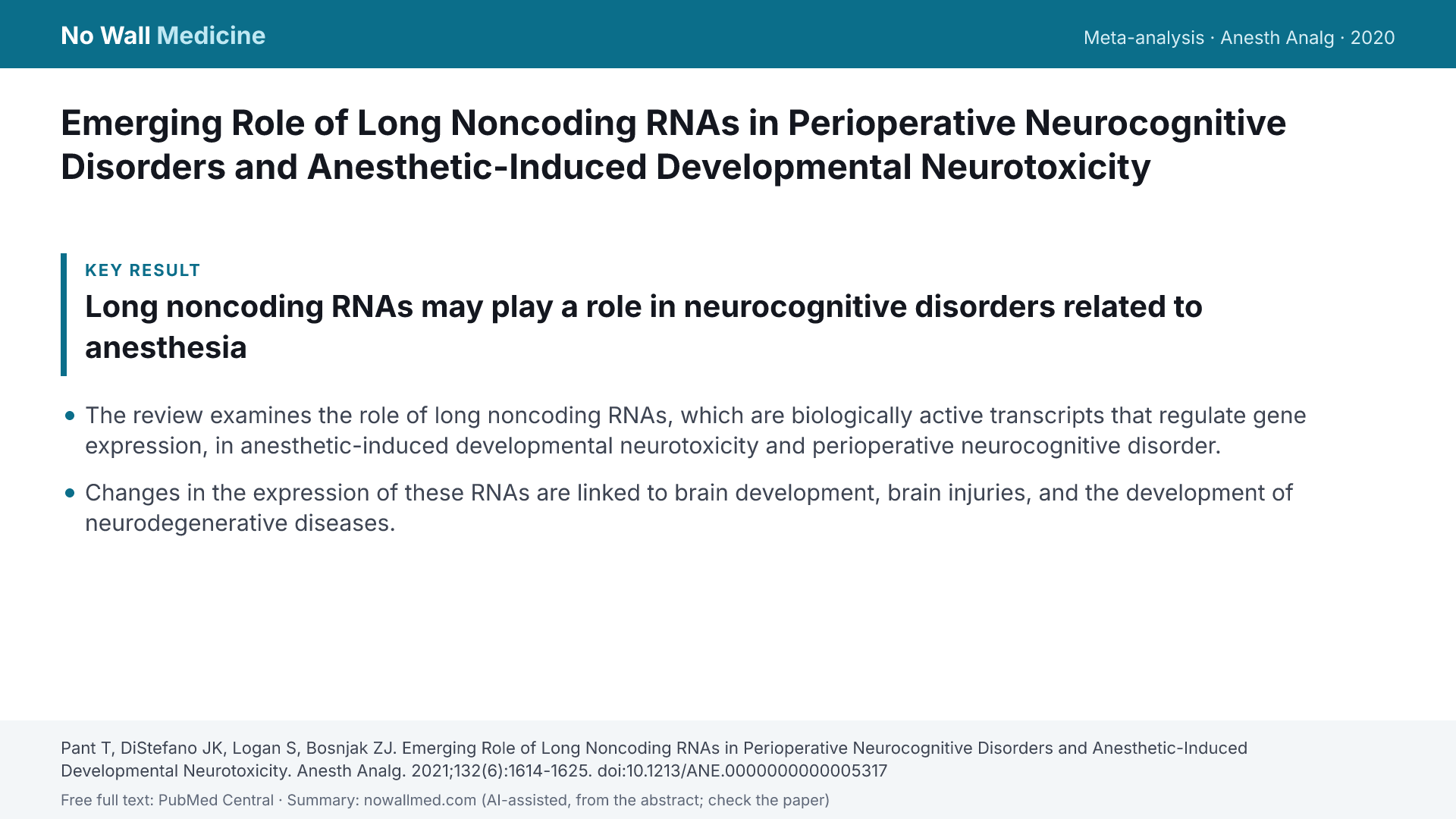
Key result: Long noncoding RNAs may play a role in neurocognitive disorders related to anesthesia
Key points
- The review examines the role of long noncoding RNAs, which are biologically active transcripts that regulate gene expression, in anesthetic-induced developmental neurotoxicity and perioperative neurocognitive disorder.
- Changes in the expression of these RNAs are linked to brain development, brain injuries, and the development of neurodegenerative diseases.
Why it matters: The mechanisms by which early life exposure to anesthetics affects brain function remain poorly understood, which limits diagnostic and therapeutic options in humans.
Discussion prompts
- Would these patients look like yours? Who was left out?
- Is the main outcome one that matters to patients?
- Is the difference large enough to change what you do?
Cite: Pant T, DiStefano JK, Logan S, Bosnjak ZJ. Emerging Role of Long Noncoding RNAs in Perioperative Neurocognitive Disorders and Anesthetic-Induced Developmental Neurotoxicity. Anesth Analg. 2021;132(6):1614-1625. doi:10.1213/ANE.0000000000005317
Free full text: PubMed Central · Summary and visual abstract: nowallmed.com/a/emerging-role-of-long-noncoding-rnas-in-perioperative-neurocognitive-lxbfza/ (AI-assisted from the abstract; check the paper before relying on it).