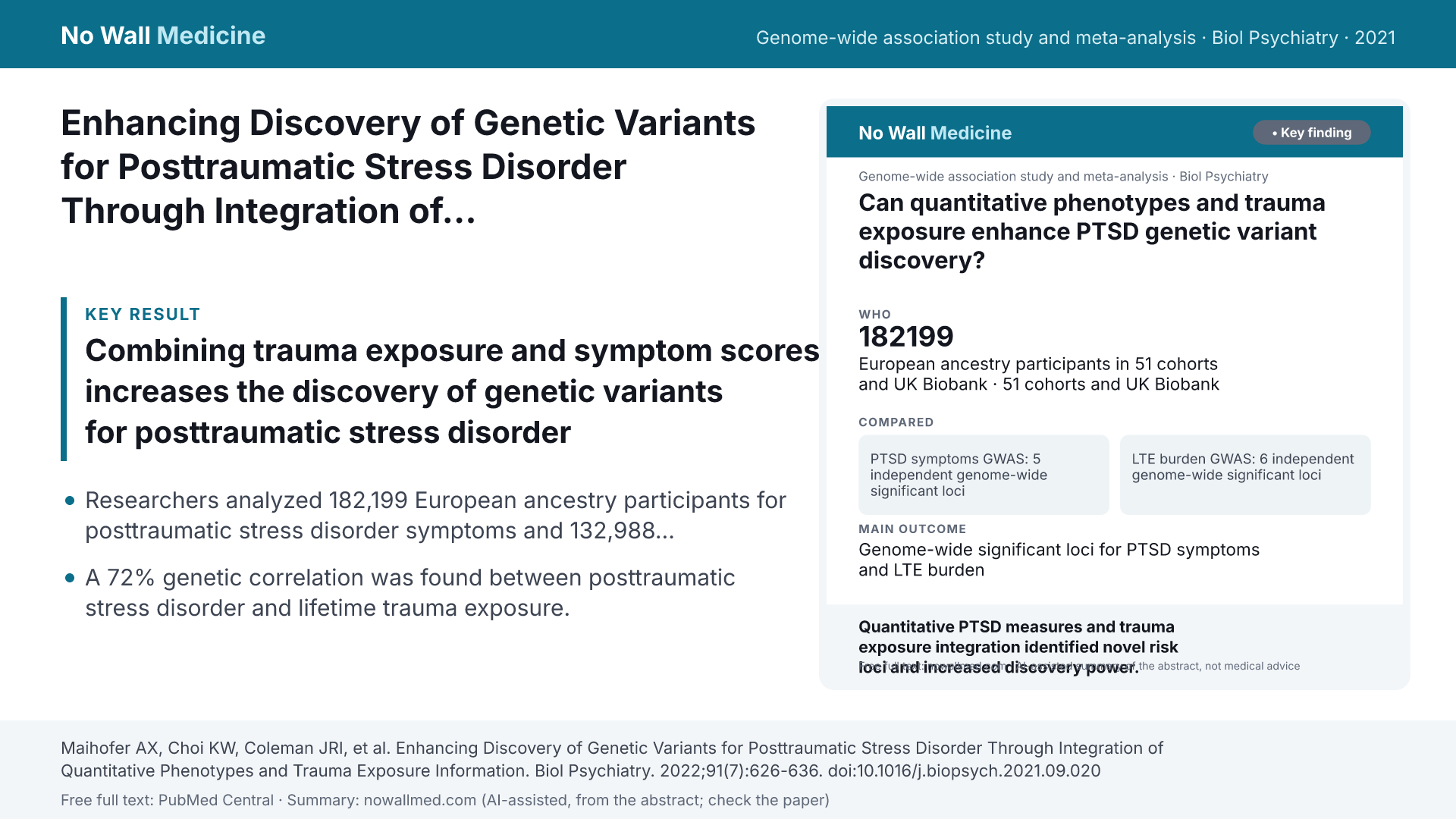
Combining trauma exposure and symptom scores increases the discovery of genetic variants for posttraumatic stress disorder
Enhancing Discovery of Genetic Variants for Posttraumatic Stress Disorder Through Integration of Quantitative Phenotypes and Trauma Exposure Information
Why it matters: It was unknown if using quantitative symptom measurements and lifetime trauma exposure information could increase the power to find genetic variants for posttraumatic stress disorder.
Key points
- Researchers analyzed 182,199 European ancestry participants for posttraumatic stress disorder symptoms and 132,988 individuals for lifetime trauma exposure burden.
- A 72% genetic correlation was found between posttraumatic stress disorder and lifetime trauma exposure.
- Using multivariate analysis increased the effective sample size for posttraumatic stress disorder studies by 20% and identified 4 additional genetic loci.
Headline and key points written with AI from the paper’s abstract, with every number checked against it. Read the paper before relying on them.
Was this summary helpful?
Subject terms
Cite this article
Maihofer AX, Choi KW, Coleman JRI, et al. Enhancing Discovery of Genetic Variants for Posttraumatic Stress Disorder Through Integration of Quantitative Phenotypes and Trauma Exposure Information. Biol Psychiatry. 2021. doi:10.1016/j.biopsych.2021.09.020
Spotted a mistake? Suggest a correction