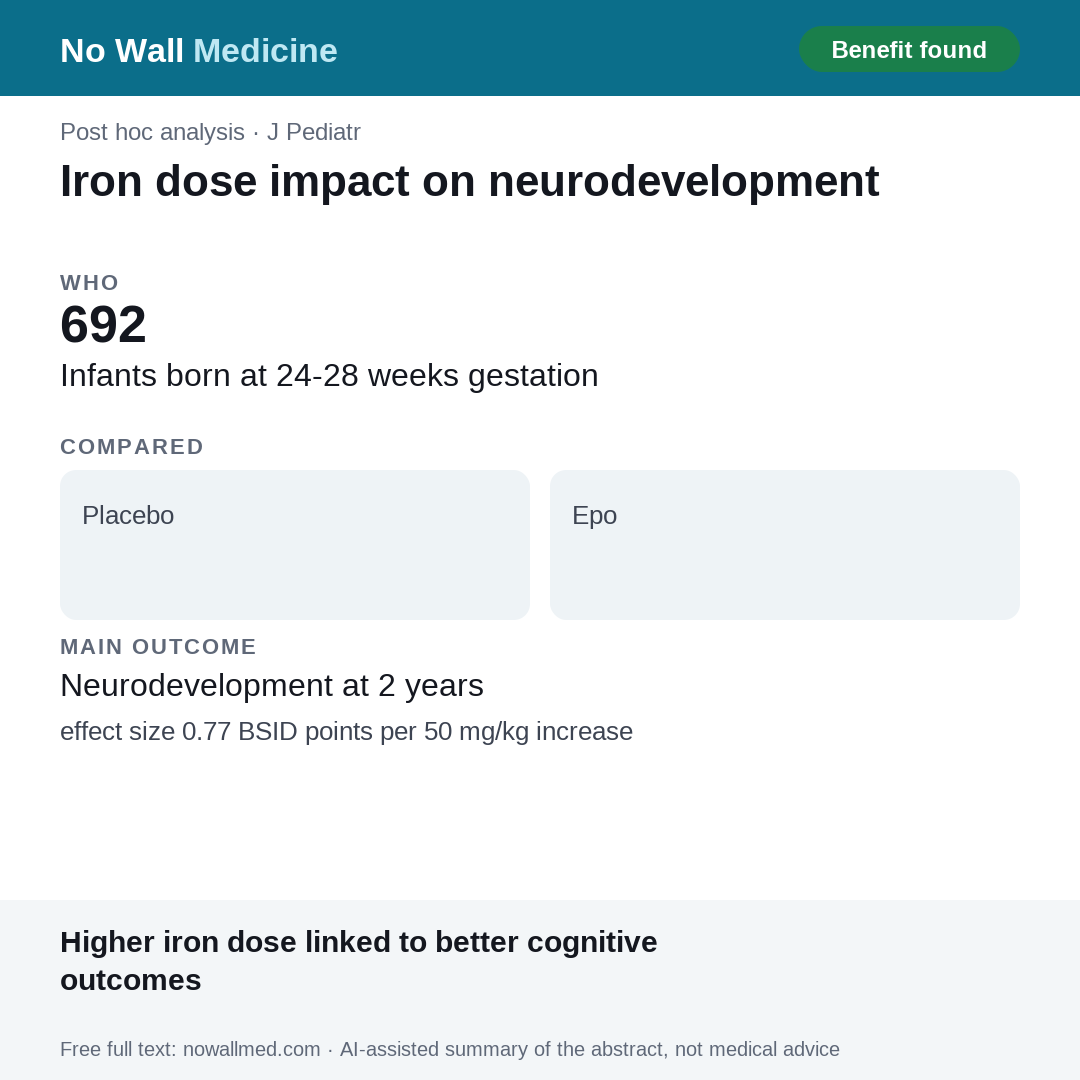
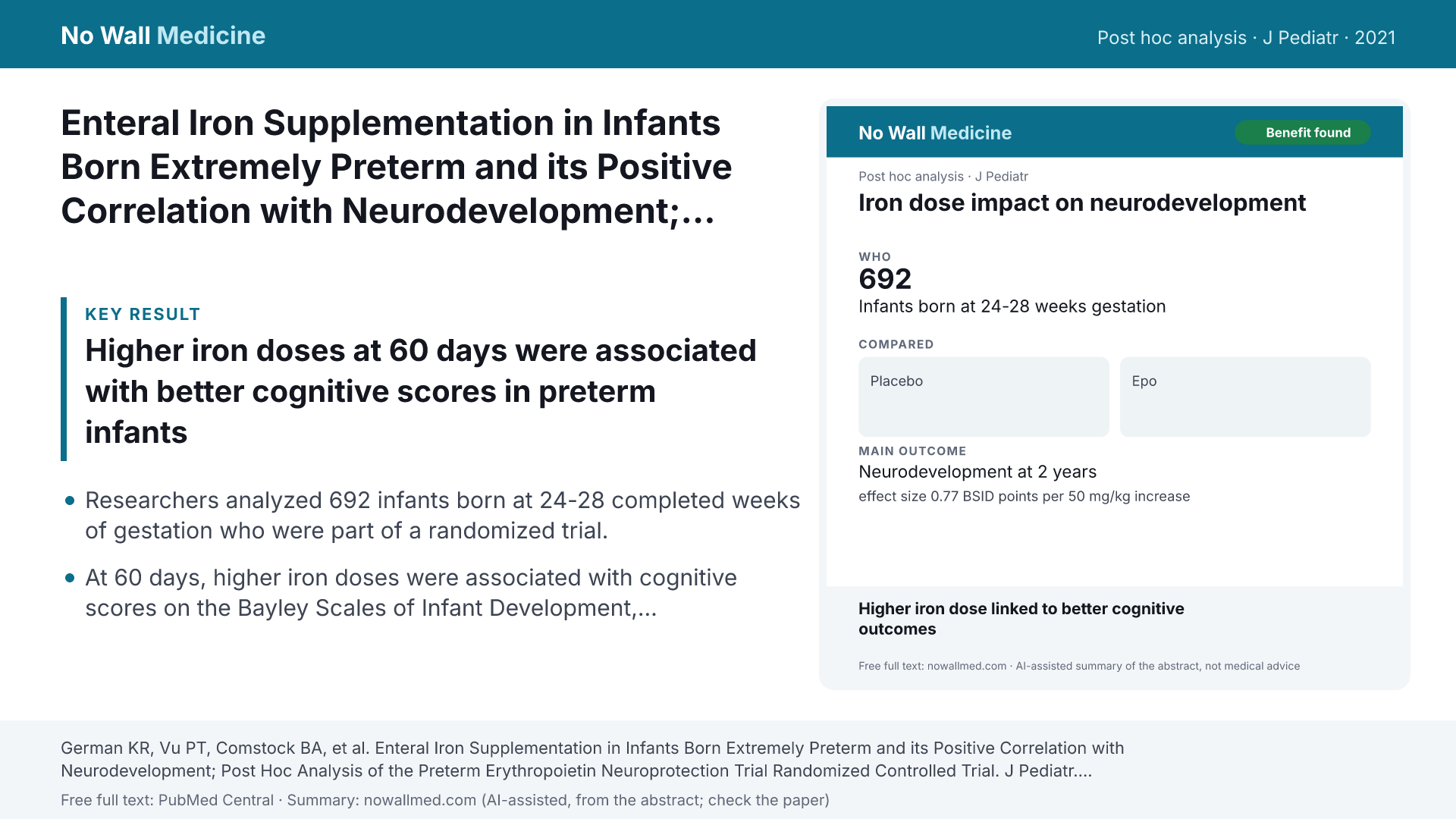
Higher iron doses at 60 days were associated with better cognitive scores in preterm infants
Enteral Iron Supplementation in Infants Born Extremely Preterm and its Positive Correlation with Neurodevelopment; Post Hoc Analysis of the Preterm Erythropoietin Neuroprotection Trial Randomized Controlled Trial
Post hoc analysisBenefit found
Iron dose impact on neurodevelopment
Who
692
Infants born at 24-28 weeks gestation
Compared
Placebo
Epo
Main outcome
Neurodevelopment at 2 years
Result: effect size 0.77 BSID points per 50 mg/kg increase
Bottom line: Higher iron dose linked to better cognitive outcomes
J Pediatr · 2021-07-27Download image
Why it matters: It was unknown if higher doses of iron given through the digestive tract are associated with improved neurodevelopmental outcomes in extremely preterm infants.
Key points
- Researchers analyzed 692 infants born at 24-28 completed weeks of gestation who were part of a randomized trial.
- At 60 days, higher iron doses were associated with cognitive scores on the Bayley Scales of Infant Development, third edition, with an effect size of 0.77 points per 50 mg/kg increase.
- Greater iron doses were also associated with motor and language scores, though these results did not reach statistical significance.
Headline and key points written with AI from the paper’s abstract, with every number checked against it. Read the paper before relying on them.
Was this summary helpful?
Subject terms
Cite this article
German KR, Vu PT, Comstock BA, et al. Enteral Iron Supplementation in Infants Born Extremely Preterm and its Positive Correlation with Neurodevelopment; Post Hoc Analysis of the Preterm Erythropoietin Neuroprotection Trial Randomized Controlled Trial. J Pediatr. 2021. doi:10.1016/j.jpeds.2021.07.019
Spotted a mistake? Suggest a correction