Epigallocatechin gallate did not change brain atrophy rates in progressive multiple sclerosis patients
Epigallocatechin Gallate in Progressive MS: A Randomized, Placebo-Controlled Trial
Randomized, double-blind, parallel-group, phase II trialNo clear difference
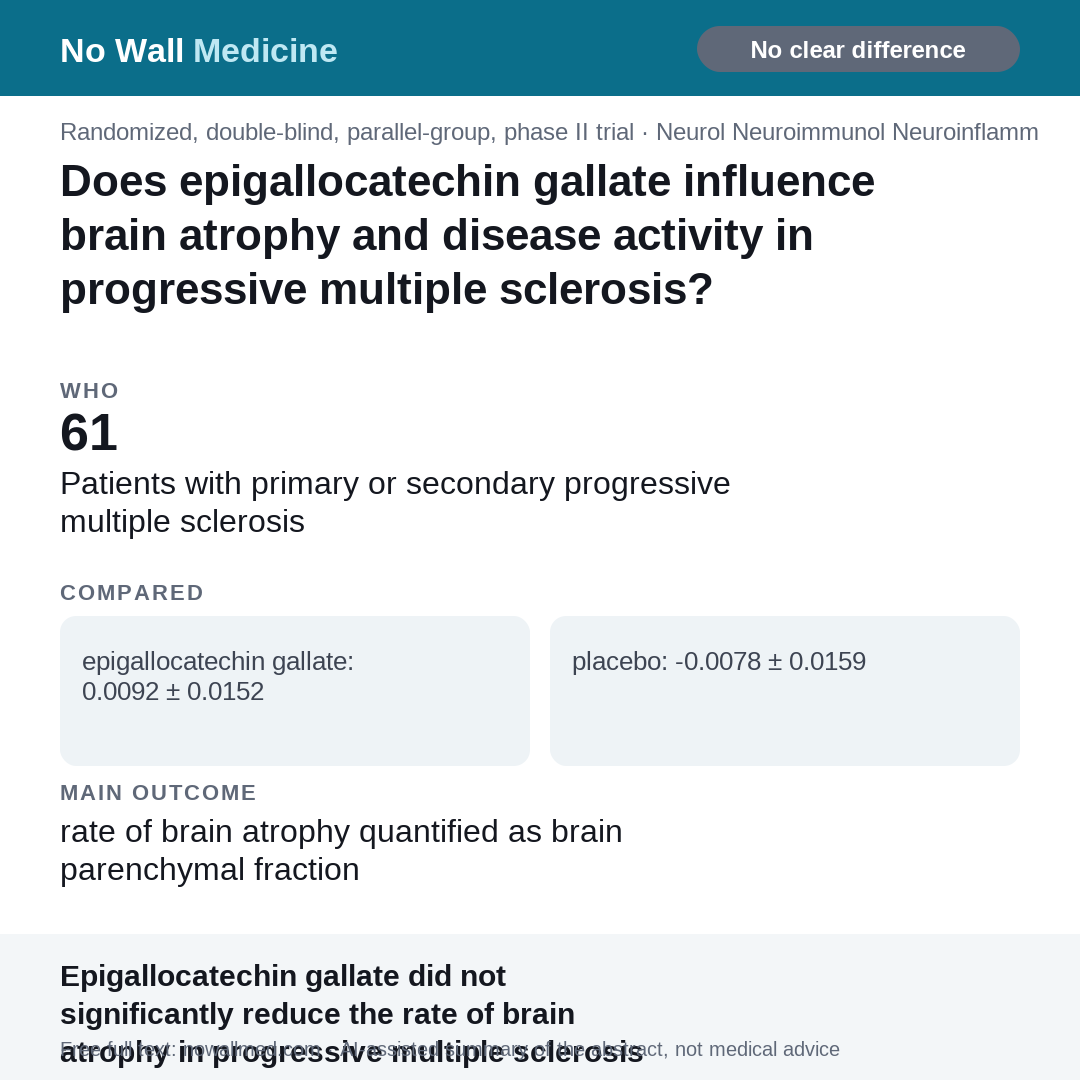
Does epigallocatechin gallate influence brain atrophy and disease activity in progressive multiple sclerosis?
Who
61
Patients with primary or secondary progressive multiple sclerosis
Compared
epigallocatechin gallate: 0.0092 ± 0.0152
placebo: -0.0078 ± 0.0159
Main outcome
rate of brain atrophy quantified as brain parenchymal fraction
Bottom line: Epigallocatechin gallate did not significantly reduce the rate of brain atrophy in progressive multiple sclerosis patients.
Neurol Neuroimmunol Neuroinflamm · 2021-02-23Download image
Clinical question: Does epigallocatechin gallate influence brain atrophy and disease activity in progressive multiple sclerosis?
Why it matters: It was unknown if epigallocatechin gallate, a compound found in green tea, could influence brain atrophy or disease activity in patients with progressive multiple sclerosis.
Key points
- Researchers studied 61 patients with primary or secondary progressive multiple sclerosis, comparing 30 patients receiving epigallocatechin gallate to 31 patients receiving a placebo.
- The rate of brain tissue loss, measured as brain parenchymal fraction, was 0.0092 ± 0.0152 in the treatment group and -0.0078 ± 0.0159 in the placebo group.
- No differences were found in secondary magnetic resonance imaging or clinical disease markers, and one patient stopped treatment due to elevated liver enzymes.
Headline and key points written with AI from the paper’s abstract, with every number checked against it. Read the paper before relying on them.
Was this summary helpful?
Subject terms
Cite this article
Rust R, Chien C, Scheel M, Brandt AU, Dörr J, Wuerfel J. Epigallocatechin Gallate in Progressive MS: A Randomized, Placebo-Controlled Trial. Neurol Neuroimmunol Neuroinflamm. 2021. doi:10.1212/NXI.0000000000000964
Spotted a mistake? Suggest a correction
Top studies every Monday
The week’s key trials and guidelines in your specialties, plus any topics you follow. By email, free.
Get the weekly digest