Childhood DNA methylation associations with health outcomes are larger than those measured at birth
Epigenetic timing effects on child developmental outcomes: a longitudinal meta-regression of findings from the Pregnancy And Childhood Epigenetics Consortium
Longitudinal meta-regressionMixed results
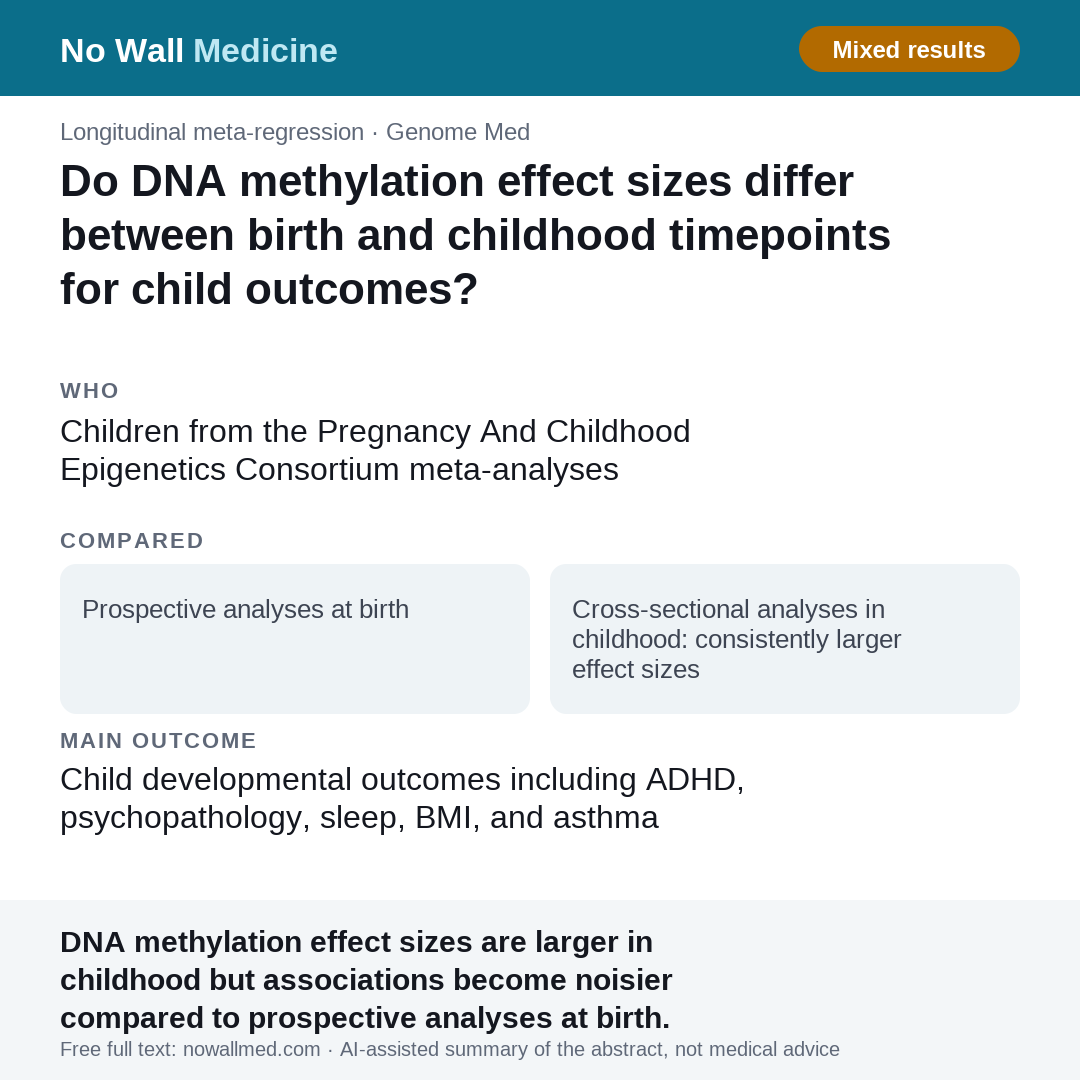
Do DNA methylation effect sizes differ between birth and childhood timepoints for child outcomes?
Who
Children from the Pregnancy And Childhood Epigenetics Consortium meta-analyses
Compared
Prospective analyses at birth
Cross-sectional analyses in childhood: consistently larger effect sizes
Main outcome
Child developmental outcomes including ADHD, psychopathology, sleep, BMI, and asthma
Bottom line: DNA methylation effect sizes are larger in childhood but associations become noisier compared to prospective analyses at birth.
Limitation: Observations could not be explained by sample size differences and only partly by differential study-heterogeneity.
Genome Med · 2025-04-14Download image
Clinical question: Do DNA methylation effect sizes differ between birth and childhood timepoints for child outcomes?
Why it matters: It is unclear whether DNA methylation alterations during specific developmental periods are more informative for health outcomes or how persistent these signals remain over time.
Key points
- Researchers used longitudinal meta-regression to compare DNA methylation, a chemical modification to DNA, measured at birth versus childhood across several health outcomes.
- DNA methylation effect sizes were consistently larger in childhood cross-sectional analyses compared to prospective analyses at birth across the studied outcomes.
- Associations in childhood were also noisier, showing larger standard errors than the measurements taken at birth for most outcomes.
Headline and key points written with AI from the paper’s abstract, with every number checked against it. Read the paper before relying on them.
Was this summary helpful?
Subject terms
Cite this article
Neumann A, Sammallahti S, Cosin-Tomas M, Reese SE, Suderman M, Alemany S. Epigenetic timing effects on child developmental outcomes: a longitudinal meta-regression of findings from the Pregnancy And Childhood Epigenetics Consortium. Genome Med. 2025. doi:10.1186/s13073-025-01451-7
Spotted a mistake? Suggest a correction
Top studies every Monday
The week’s key trials and guidelines in your specialties, plus any topics you follow. By email, free.
Get the weekly digest