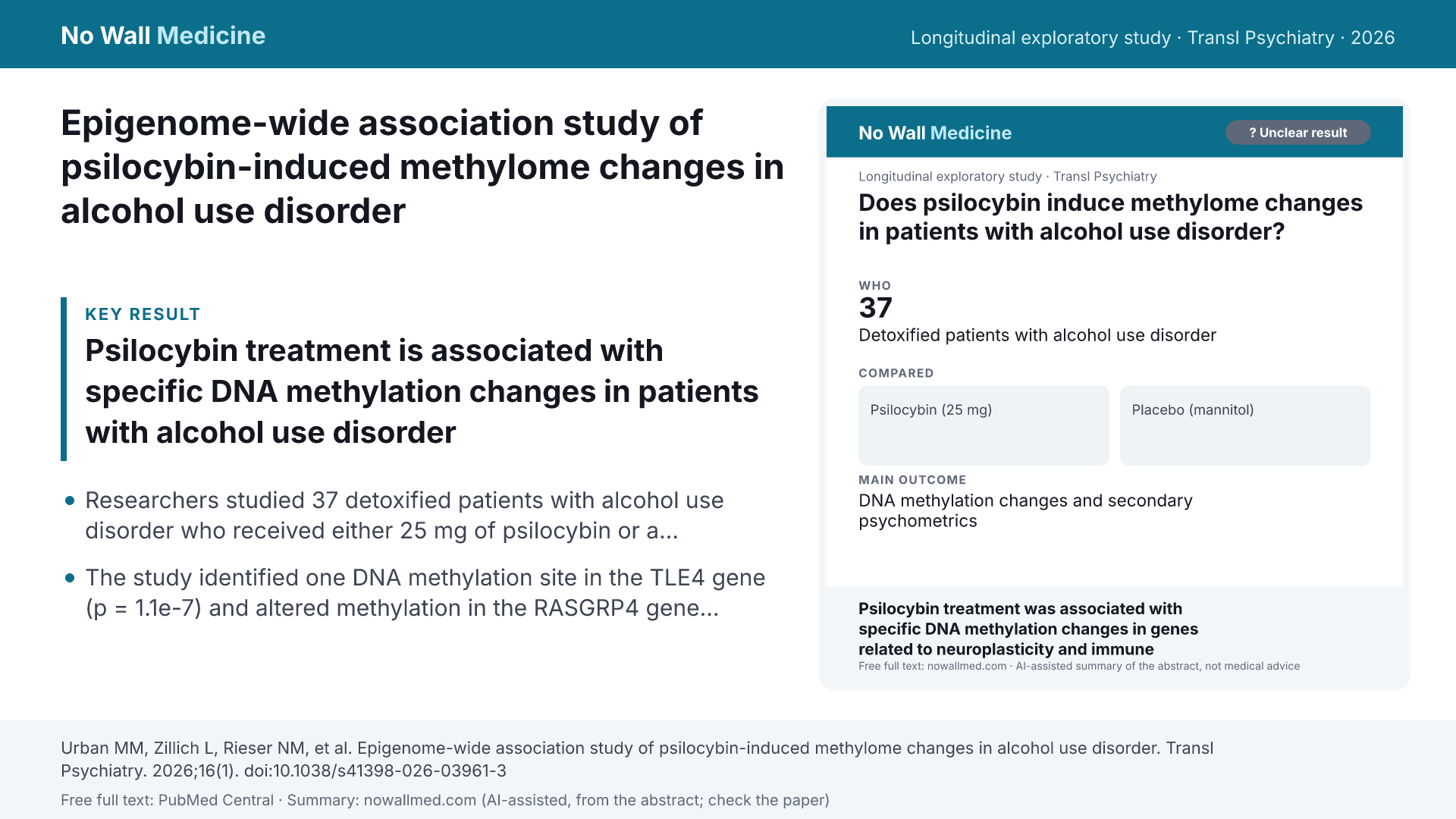
Epigenome-wide association study of psilocybin-induced methylome changes in alcohol use disorder
Key result: Psilocybin treatment is associated with specific DNA methylation changes in patients with alcohol use disorder
Key points
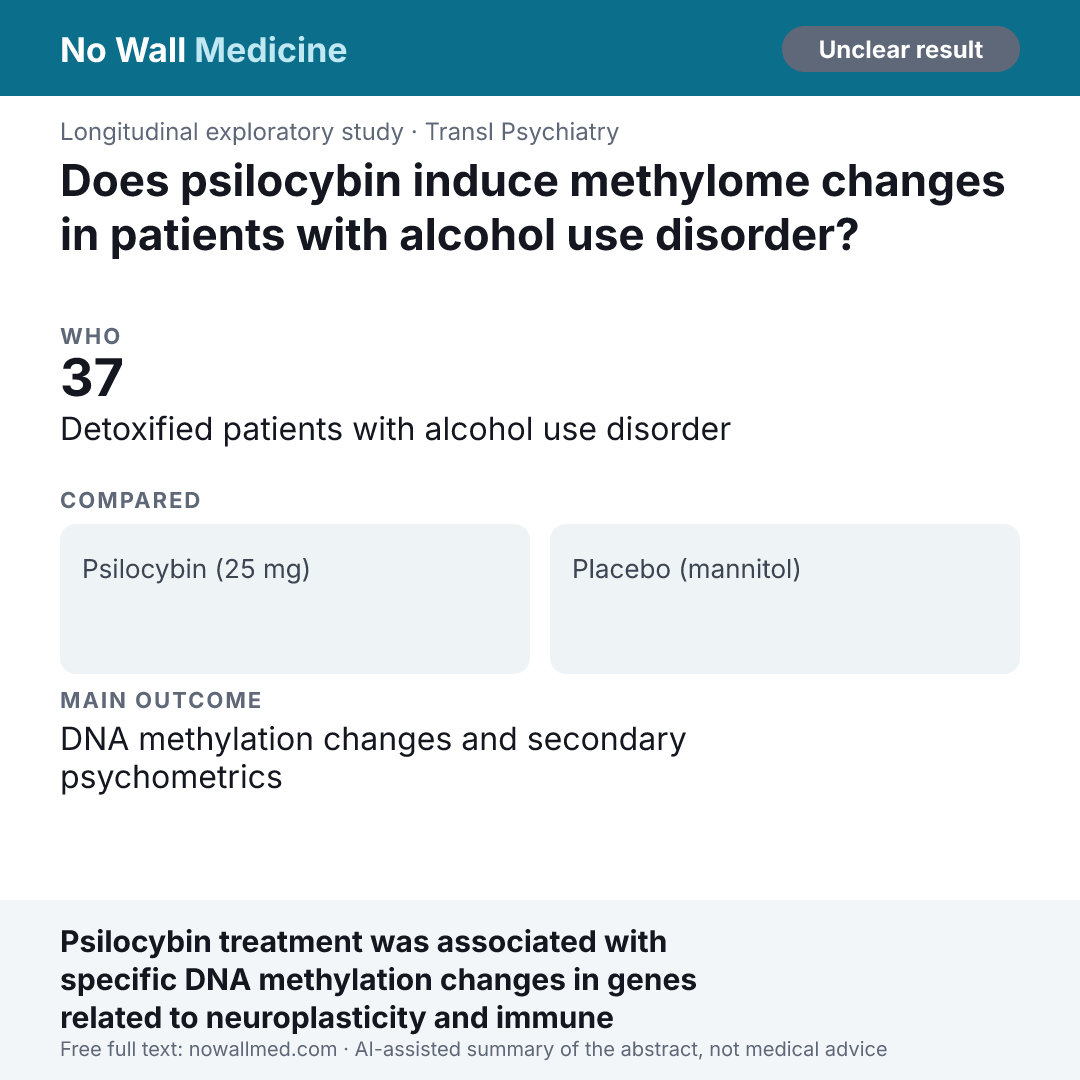
- Researchers studied 37 detoxified patients with alcohol use disorder who received either 25 mg of psilocybin or a placebo called mannitol.
- The study identified one DNA methylation site in the TLE4 gene (p = 1.1e-7) and altered methylation in the RASGRP4 gene (pFDR = 3.2e-4).
- Analysis suggested these genetic changes are related to neuroplasticity, immune functions, and the reduction of depressive symptoms and drinking behavior.
Why it matters: It is hypothesized that epigenetic mechanisms like DNA methylation contribute to the lasting therapeutic benefits of psilocybin for psychiatric conditions.
Limitation the authors note: The authors state that the findings of this pilot study are limited by the modest sample size.
Discussion prompts
- Would these patients look like yours? Who was left out?
- Is the main outcome one that matters to patients?
- Is the difference large enough to change what you do?
Cite: Urban MM, Zillich L, Rieser NM, et al. Epigenome-wide association study of psilocybin-induced methylome changes in alcohol use disorder. Transl Psychiatry. 2026;16(1). doi:10.1038/s41398-026-03961-3
Free full text: PubMed Central · Summary and visual abstract: nowallmed.com/a/epigenome-wide-association-study-of-psilocybin-induced-methylome-1psai96/ (AI-assisted from the abstract; check the paper before relying on it).