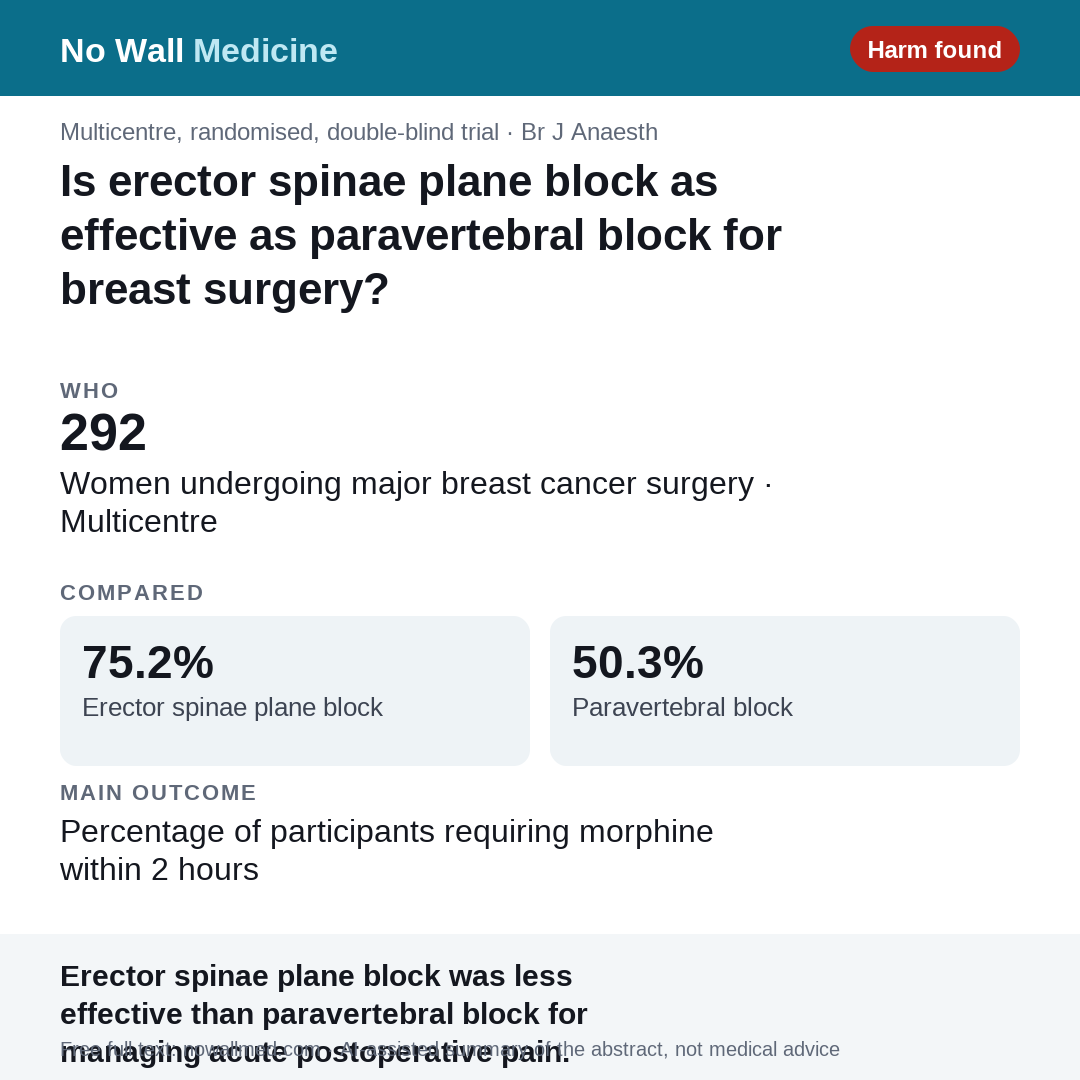
Erector spinae plane block was less effective than paravertebral block for pain after breast surgery
Erector spinae plane block versus paravertebral block for major oncological breast surgery: a multicentre randomised controlled trial
Multicentre, randomised, double-blind trialHarm found
Is erector spinae plane block as effective as paravertebral block for breast surgery?
Who
292
Women undergoing major breast cancer surgery · Multicentre
Compared
75.2%Erector spinae plane block
50.3%Paravertebral block
Main outcome
Percentage of participants requiring morphine within 2 hours
Bottom line: Erector spinae plane block was less effective than paravertebral block for managing acute postoperative pain.
Br J Anaesth · 2025-07-24Download image
Clinical question: Is erector spinae plane block as effective as paravertebral block for breast surgery?
Why it matters: Clinicians need to know if the newer erector spinae plane block is a safe and effective alternative to the thoracic paravertebral block for managing pain after breast surgery.
Key points
- Researchers conducted a multicentre randomized trial involving 292 women undergoing major breast cancer surgery to compare two types of nerve blocks.
- The erector spinae plane block failed to meet noninferiority criteria as 75.2% of those patients required morphine compared to 50.3% in the paravertebral block group.
- The erector spinae plane block provided less reliable nerve coverage, with 55.9% of participants not having the required area covered compared to 20.4% in the paravertebral group.
Headline and key points written with AI from the paper’s abstract, with every number checked against it. Read the paper before relying on them.
Was this summary helpful?
Subject terms
Cite this article
Raft J, Dureau S, Fuzier R, Augé M, Lamotte AS, Lemoine A. Erector spinae plane block versus paravertebral block for major oncological breast surgery: a multicentre randomised controlled trial. Br J Anaesth. 2025. doi:10.1016/j.bja.2025.05.051
Spotted a mistake? Suggest a correction
Top studies every Monday
The week’s key trials and guidelines in your specialties, plus any topics you follow. By email, free.
Get the weekly digest