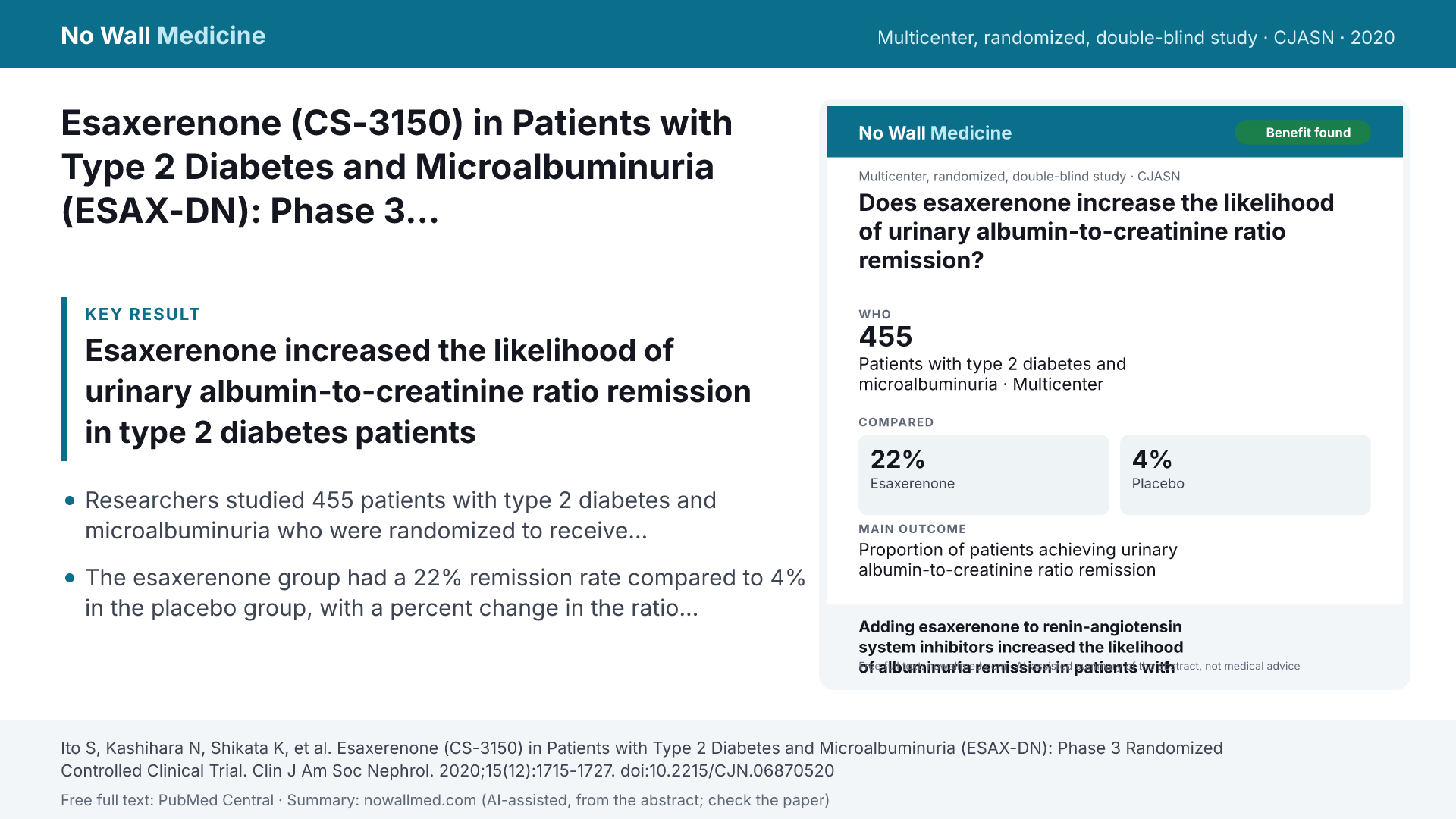
Esaxerenone increased the likelihood of urinary albumin-to-creatinine ratio remission in type 2 diabetes patients
Esaxerenone (CS-3150) in Patients with Type 2 Diabetes and Microalbuminuria (ESAX-DN): Phase 3 Randomized Controlled Clinical Trial
Multicenter, randomized, double-blind studyBenefit found
Does esaxerenone increase the likelihood of urinary albumin-to-creatinine ratio remission?
Who
455
Patients with type 2 diabetes and microalbuminuria · Multicenter
Compared
22%Esaxerenone
4%Placebo
Main outcome
Proportion of patients achieving urinary albumin-to-creatinine ratio remission
Result: absolute difference 18%; 95% confidence interval, 12% to 25%
Bottom line: Adding esaxerenone to renin-angiotensin system inhibitors increased the likelihood of albuminuria remission in patients with type 2 diabetes.
CJASN · 2020-11-25 · Save PNG
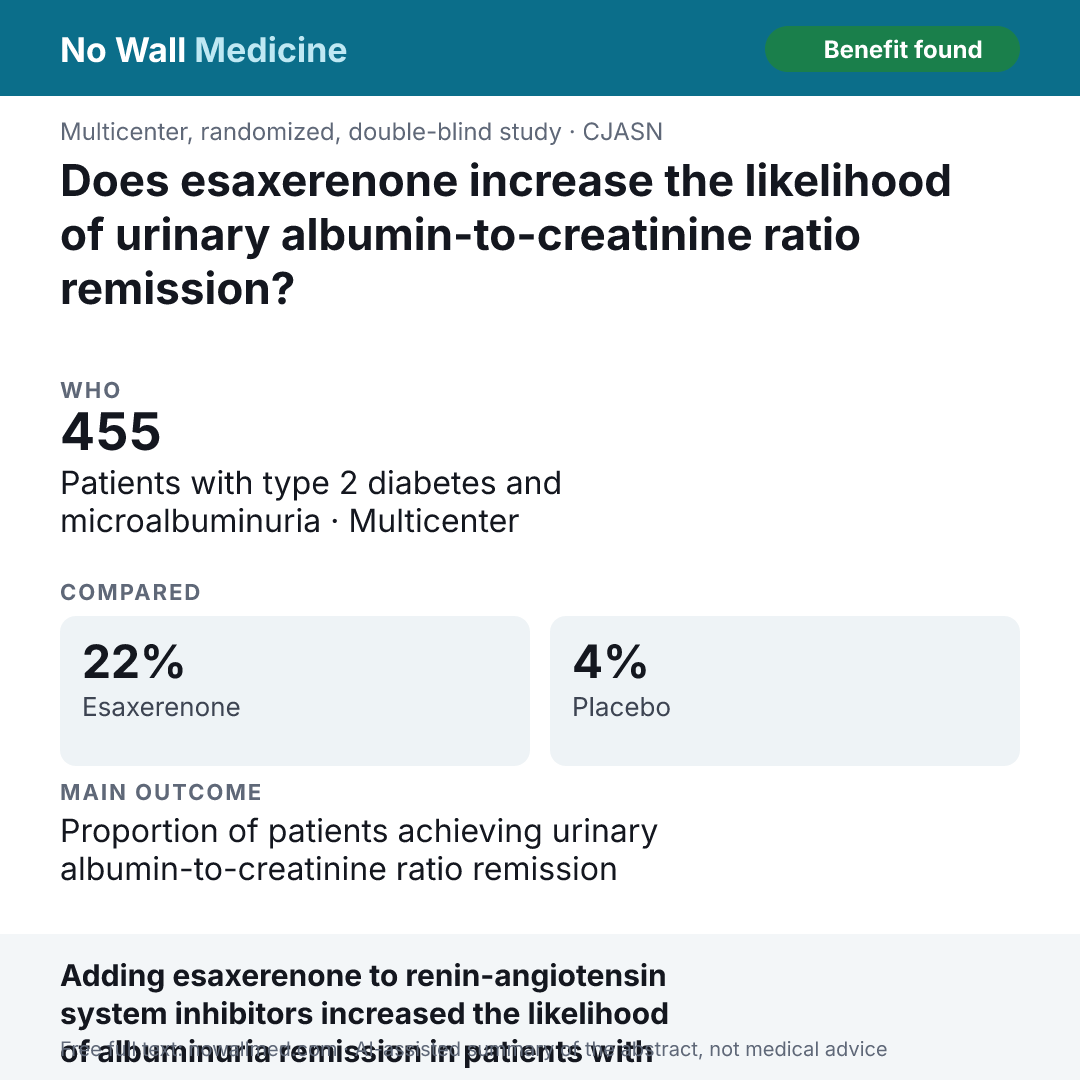
Clinical question: Does esaxerenone increase the likelihood of urinary albumin-to-creatinine ratio remission?
In absolute numbers
Esaxerenone: 22% · Placebo: 4% → a difference of 18 percentage points, so about 6 people would need the treatment for 1 more to benefit (number needed to treat) over the trial’s follow-up.
Worked out by us from the two group results above, not reported by the authors. Check the paper for the exact outcome and timing.
Key points
- Researchers studied 455 patients with type 2 diabetes and microalbuminuria who were randomized to receive either esaxerenone or a placebo for 52 weeks.
- The esaxerenone group had a 22% remission rate compared to 4% in the placebo group, with a percent change in the ratio of -58% versus 8%.
- More patients in the esaxerenone group had serum potassium levels ≥6.0 or ≥5.5 mEq/L on two consecutive measurements compared to 9% versus 2% in the placebo group.
Headline and key points written with AI from the paper’s abstract, with every number checked against it. Read the paper before relying on them.
Was this summary helpful?
Subject terms
Headline, design, result, key points, caveat and citation as plain text.
Cite this article
Ito S, Kashihara N, Shikata K, et al. Esaxerenone (CS-3150) in Patients with Type 2 Diabetes and Microalbuminuria (ESAX-DN): Phase 3 Randomized Controlled Clinical Trial. Clin J Am Soc Nephrol. 2020;15(12):1715-1727. doi:10.2215/CJN.06870520
Spotted a mistake? Suggest a correction