Ethics, Integrity, and Retributions of Digital Detection Surveillance Systems for Infectious Diseases: Systematic Literature Review
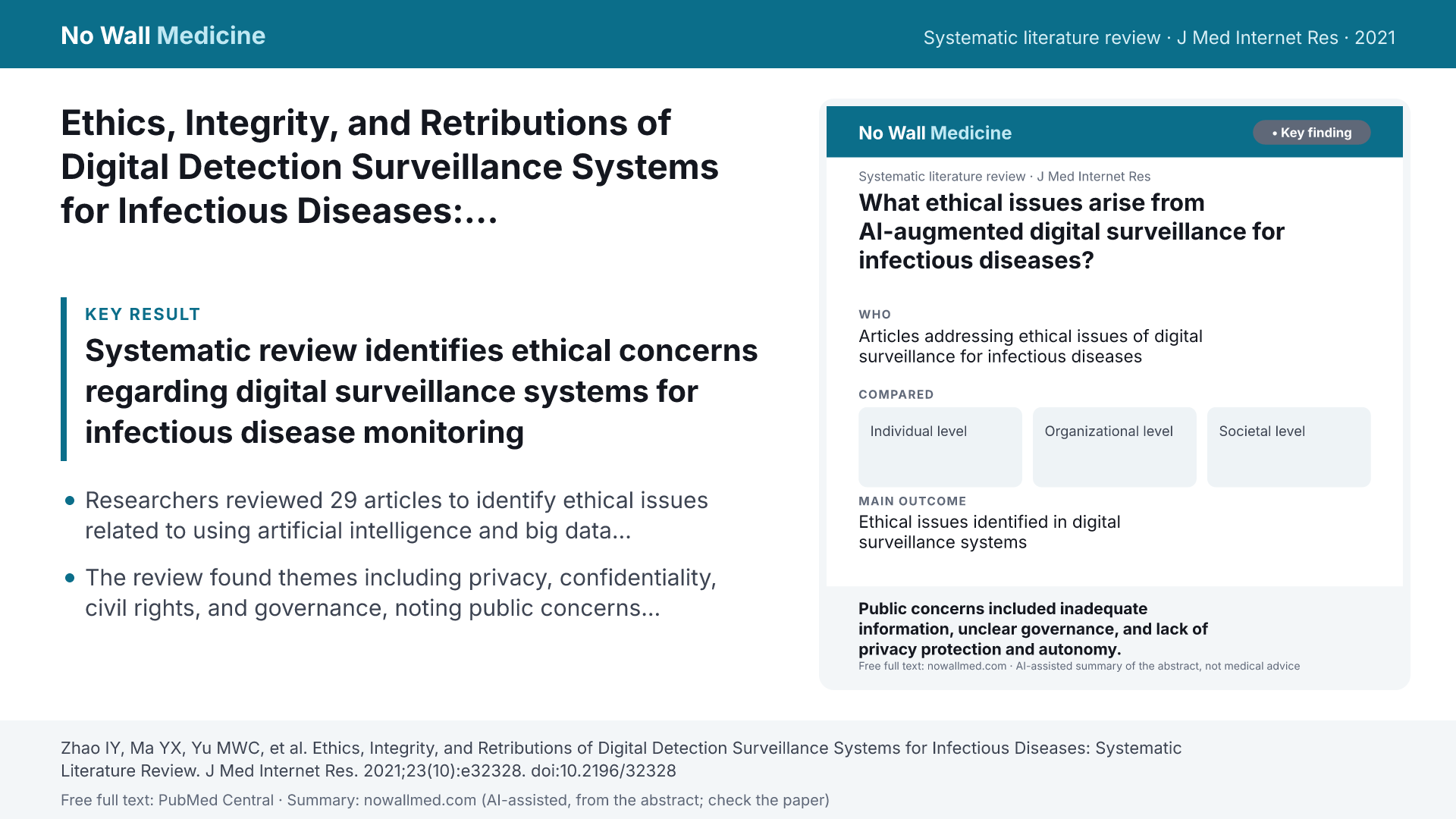
Key result: Systematic review identifies ethical concerns regarding digital surveillance systems for infectious disease monitoring
Key points
- Researchers reviewed 29 articles to identify ethical issues related to using artificial intelligence and big data analytics for monitoring infectious disease outbreaks.
- The review found themes including privacy, confidentiality, civil rights, and governance, noting public concerns about inadequate information and unclear governance frameworks.
- Barriers to engagement were linked to the potential widening of existing health care disparities or digital divides by underrepresenting vulnerable populations.
Why it matters: Ethical governance for digital detection surveillance systems often lags behind the technological achievements used to monitor infectious disease outbreaks.
Discussion prompts
- Would these patients look like yours? Who was left out?
- Is the main outcome one that matters to patients?
- Is the difference large enough to change what you do?
Cite: Zhao IY, Ma YX, Yu MWC, et al. Ethics, Integrity, and Retributions of Digital Detection Surveillance Systems for Infectious Diseases: Systematic Literature Review. J Med Internet Res. 2021;23(10):e32328. doi:10.2196/32328
Free full text: PubMed Central · Summary and visual abstract: nowallmed.com/a/ethics-integrity-and-retributions-of-digital-detection-surveillance-1s70zsn/ (AI-assisted from the abstract; check the paper before relying on it).