Ethnicity did not affect how well atypical antipsychotics worked for patients with schizophrenia
Ethnic differences in response to atypical antipsychotics in patients with schizophrenia: individual patient data meta-analysis of randomised placebo-controlled registration trials submitted to the Dutch Medicines Evaluation Board
Individual patient data meta-analysisNo clear difference
Does ethnicity moderate the response to atypical antipsychotic medication in schizophrenia patients?
Who
3880
Patients with schizophrenia in registration trials · Dutch Medicines Evaluation Board registration trials
Compared
White patients
Black patients
Main outcome
Symptom improvement and response defined as >30% Brief Psychiatric Rating Scale reduction
Result: odds ratio 0.875 (95% CI 0.510-1.499) for response
Bottom line: Atypical antipsychotic medication is equally effective in both Black and White patients with schizophrenia.
Limitation: White and Black patients were overrepresented relative to other ethnic groups, limiting generalisability.
BJPsych Open · 2023-03-02Download image
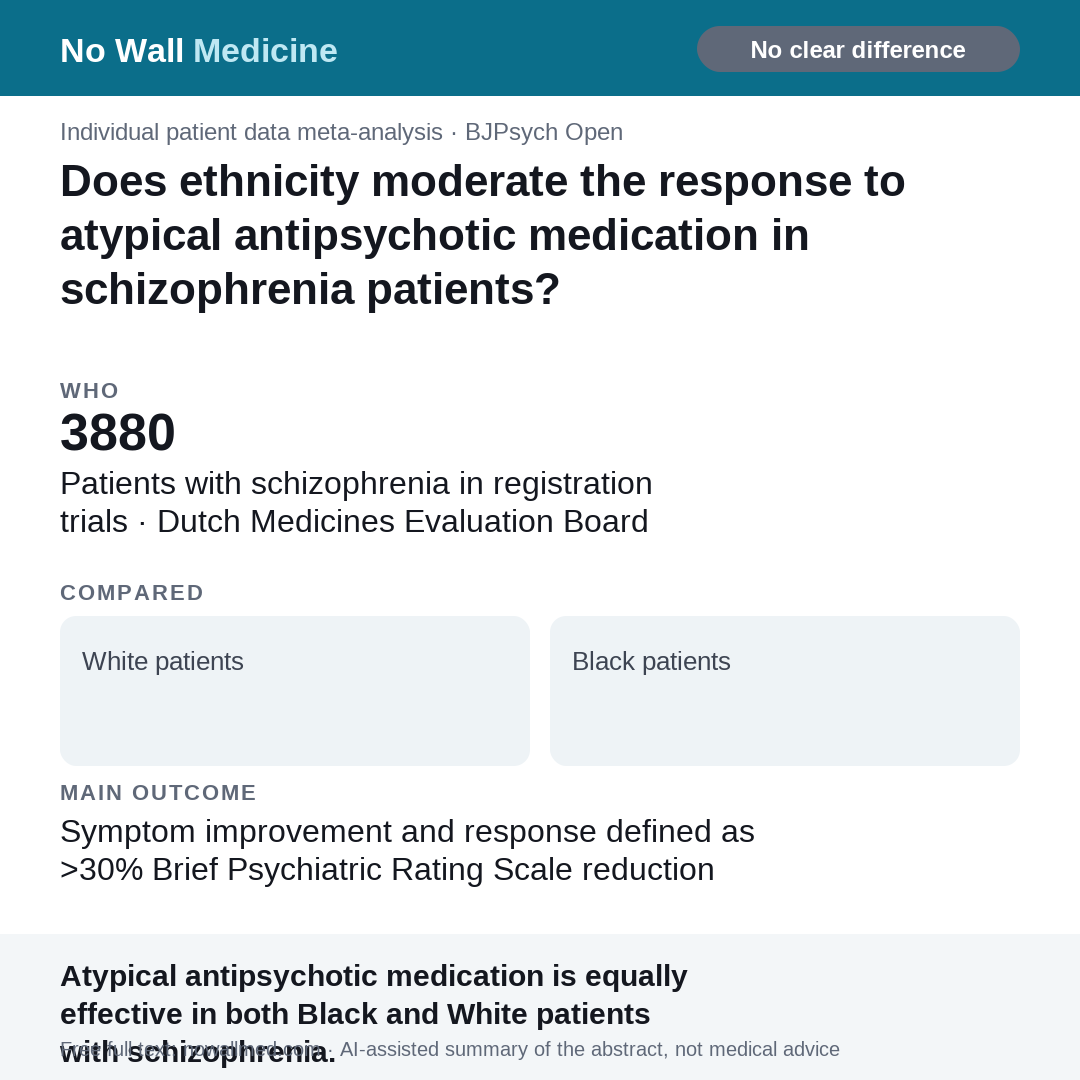
Clinical question: Does ethnicity moderate the response to atypical antipsychotic medication in schizophrenia patients?
Why it matters: It was unknown whether ethnicity influences how patients with schizophrenia respond to atypical antipsychotic medications.
Key points
- Researchers analyzed 18 placebo-controlled trials involving 3880 patients, where 61% were White, 25.6% were Black, and 13.4% were of other ethnicities.
- The study found that ethnicity did not moderate treatment efficacy, with an odds ratio of 0.875 for response and a pooled coefficient of -0.582 for symptom change.
- These findings remained consistent even after adjusting for age, gender, baseline symptom severity, and baseline negative symptoms.
Limitation the authors note: White and Black patients were overrepresented relative to other ethnic groups, which limits the generalisability of the findings.
Headline and key points written with AI from the paper’s abstract, with every number checked against it. Read the paper before relying on them.
Was this summary helpful?
Cite this article
Storosum BWC, Steinz C, Cohen SE, Mattila T, Brink WVD, Roes K. Ethnic differences in response to atypical antipsychotics in patients with schizophrenia: individual patient data meta-analysis of randomised placebo-controlled registration trials submitted to the Dutch Medicines Evaluation Board. BJPsych Open. 2023. doi:10.1192/bjo.2023.19
Spotted a mistake? Suggest a correction
Top studies every Monday
The week’s key trials and guidelines in your specialties, plus any topics you follow. By email, free.
Get the weekly digest