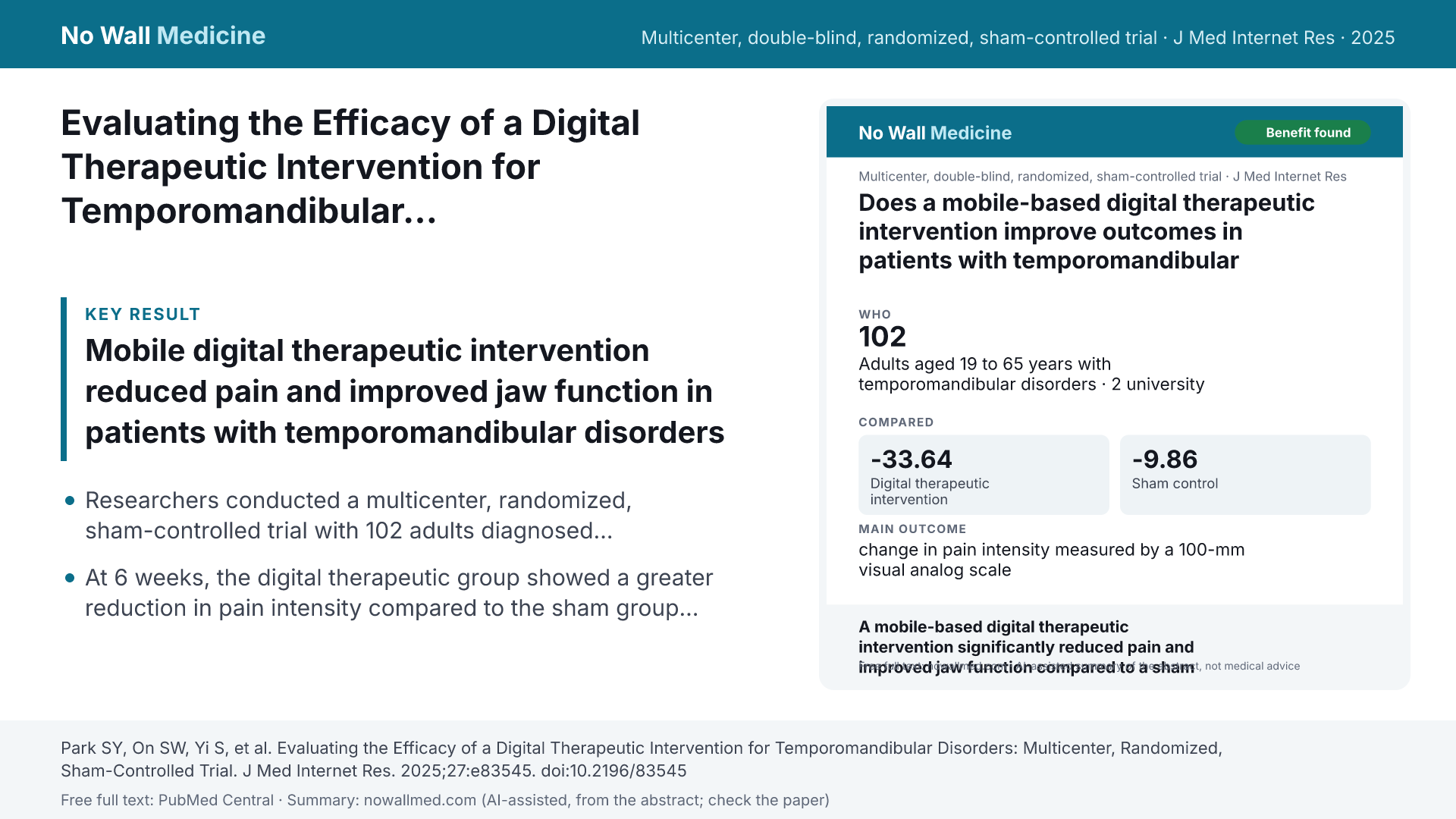
Mobile digital therapeutic intervention reduced pain and improved jaw function in patients with temporomandibular disorders
Evaluating the Efficacy of a Digital Therapeutic Intervention for Temporomandibular Disorders: Multicenter, Randomized, Sham-Controlled Trial
Multicenter, double-blind, randomized, sham-controlled trialBenefit found
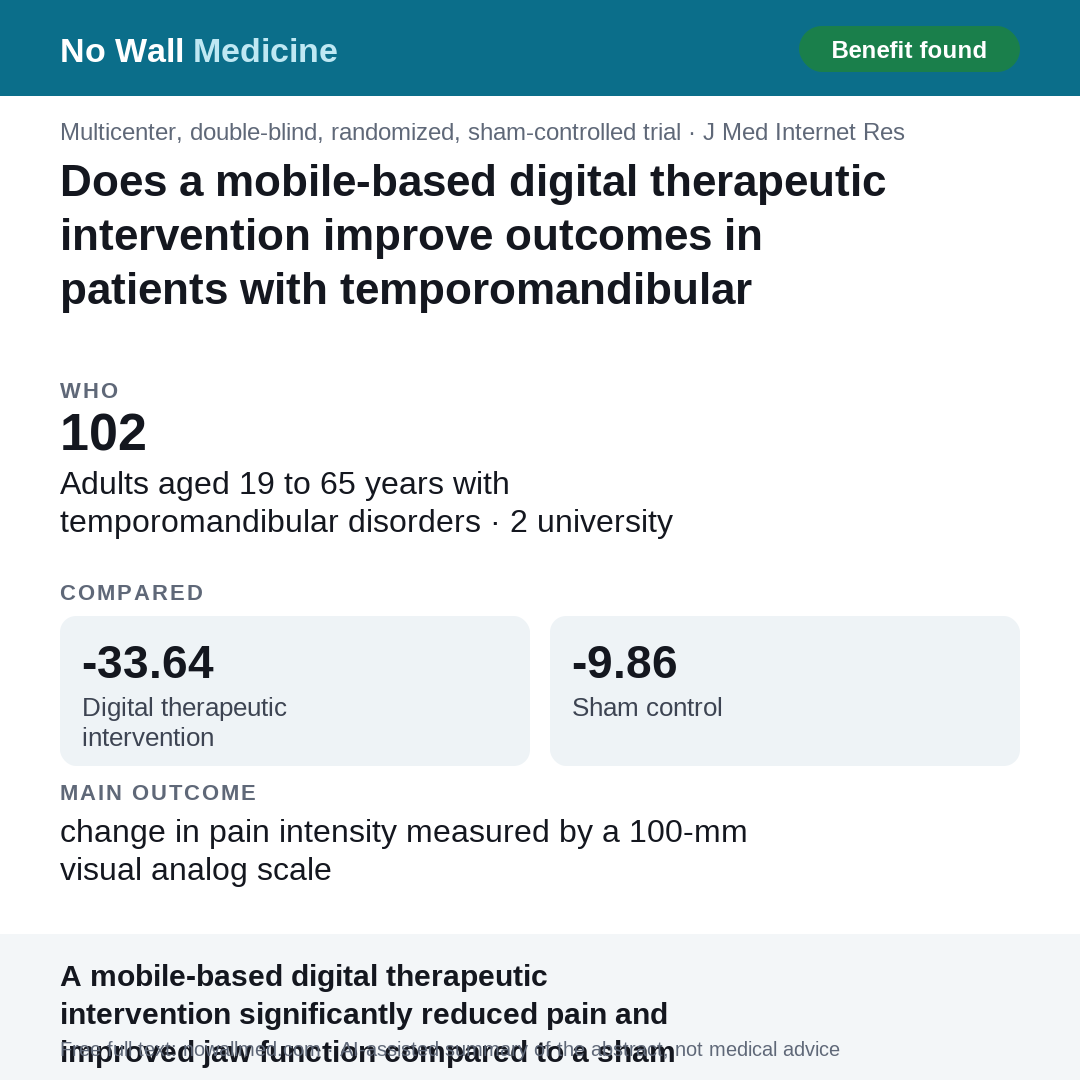
Does a mobile-based digital therapeutic intervention improve outcomes in patients with temporomandibular disorders?
Who
102
Adults aged 19 to 65 years with temporomandibular disorders · 2 university hospitals in South Korea
Compared
-33.64Digital therapeutic intervention
-9.86Sham control
Main outcome
change in pain intensity measured by a 100-mm visual analog scale
Result: between-group difference -23.78, 95% CI -34.15 to -13.41
Bottom line: A mobile-based digital therapeutic intervention significantly reduced pain and improved jaw function compared to a sham app.
J Med Internet Res · 2025-10-24Download image
Clinical question: Does a mobile-based digital therapeutic intervention improve outcomes in patients with temporomandibular disorders?
Why it matters: The clinical efficacy of digital therapeutics for managing temporomandibular disorders has not been adequately established.
Key points
- Researchers conducted a multicenter, randomized, sham-controlled trial with 102 adults diagnosed with temporomandibular disorders, comparing a mobile therapeutic app to a sham app.
- At 6 weeks, the digital therapeutic group showed a greater reduction in pain intensity compared to the sham group (-33.64 vs -9.86 on a 100-mm scale).
- The digital therapeutic group also showed improvements in maximum mouth opening, jaw functional limitation, and oral behaviors, but no significant difference was found in psychological distress scores.
Headline and key points written with AI from the paper’s abstract, with every number checked against it. Read the paper before relying on them.
Was this summary helpful?
Subject terms
Cite this article
Park SY, On SW, Yi S, Che SA, Kim B, Byun SH. Evaluating the Efficacy of a Digital Therapeutic Intervention for Temporomandibular Disorders: Multicenter, Randomized, Sham-Controlled Trial. J Med Internet Res. 2025. doi:10.2196/83545
Spotted a mistake? Suggest a correction