Virtual reality therapy was associated with less aggressiveness in hospital inpatients with dementia
Evaluating the Impact of Virtual Reality on the Behavioral and Psychological Symptoms of Dementia and Quality of Life of Inpatients With Dementia in Acute Care: Randomized Controlled Trial (VRCT)
Prospective, open-label, randomized controlled clinical trialMixed results
Does virtual reality therapy impact behavioral symptoms, falls, length of stay, and quality of life?
Who
69
Inpatients aged 65 years or older with dementia · Acute care hospital
Compared
Virtual reality arm: statistically significant effect on reducing aggressiveness
Control arm
Main outcome
Behavioral and psychological symptoms of dementia, falls, length of stay, and quality of life
Bottom line: Virtual reality therapy reduced aggressive behaviors but had no substantial impact on other symptoms, falls, or quality of life.
Limitation: The trial was stopped before reaching the intended sample size owing to COVID-19 restrictions.
J Med Internet Res · 2024-01-30Download image
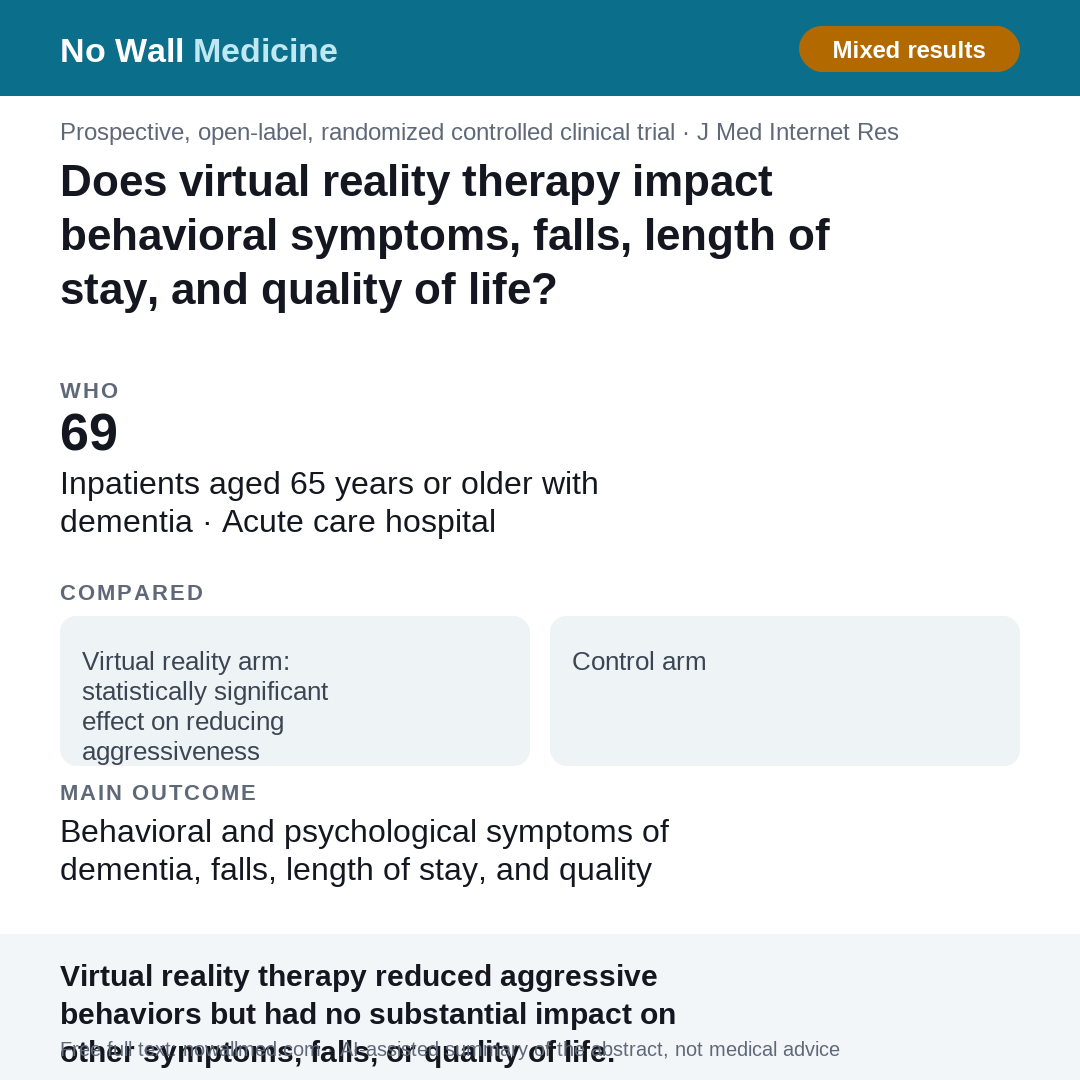
Clinical question: Does virtual reality therapy impact behavioral symptoms, falls, length of stay, and quality of life?
Why it matters: It is unknown how virtual reality therapy impacts behavioral and psychological symptoms of dementia, falls, length of stay, and quality of life in acute care hospital settings.
Key points
- Researchers conducted a randomized controlled trial with 69 participants aged 65 years or older admitted to acute care hospitals.
- Virtual reality therapy was associated with a reduction in aggressiveness, including physical aggression and loud vocalizations, but showed no substantial impact on apathy, falls, length of stay, or quality of life.
- The intervention was considered an acceptable and enjoyable experience with an average session length of 6.8 minutes and no adverse events.
Headline and key points written with AI from the paper’s abstract, with every number checked against it. Read the paper before relying on them.
Was this summary helpful?
Subject terms
Cite this article
Appel L, Appel E, Kisonas E, Lewis-Fung S, Pardini S, Rosenberg J. Evaluating the Impact of Virtual Reality on the Behavioral and Psychological Symptoms of Dementia and Quality of Life of Inpatients With Dementia in Acute Care: Randomized Controlled Trial (VRCT). J Med Internet Res. 2024. doi:10.2196/51758
Spotted a mistake? Suggest a correction
Top studies every Monday
The week’s key trials and guidelines in your specialties, plus any topics you follow. By email, free.
Get the weekly digest