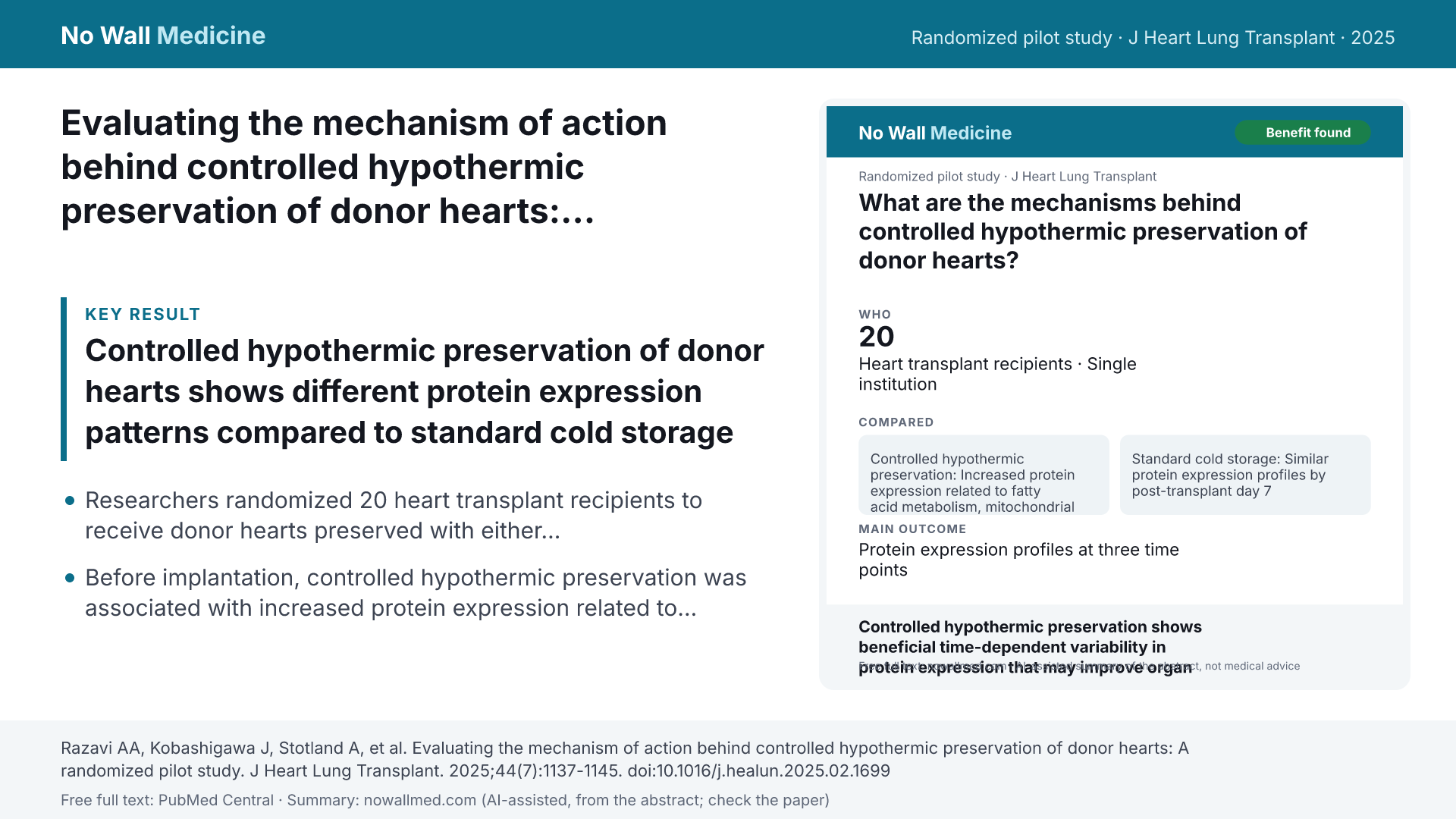
Controlled hypothermic preservation of donor hearts shows different protein expression patterns compared to standard cold storage
Evaluating the mechanism of action behind controlled hypothermic preservation of donor hearts: A randomized pilot study
Randomized pilot studyBenefit found
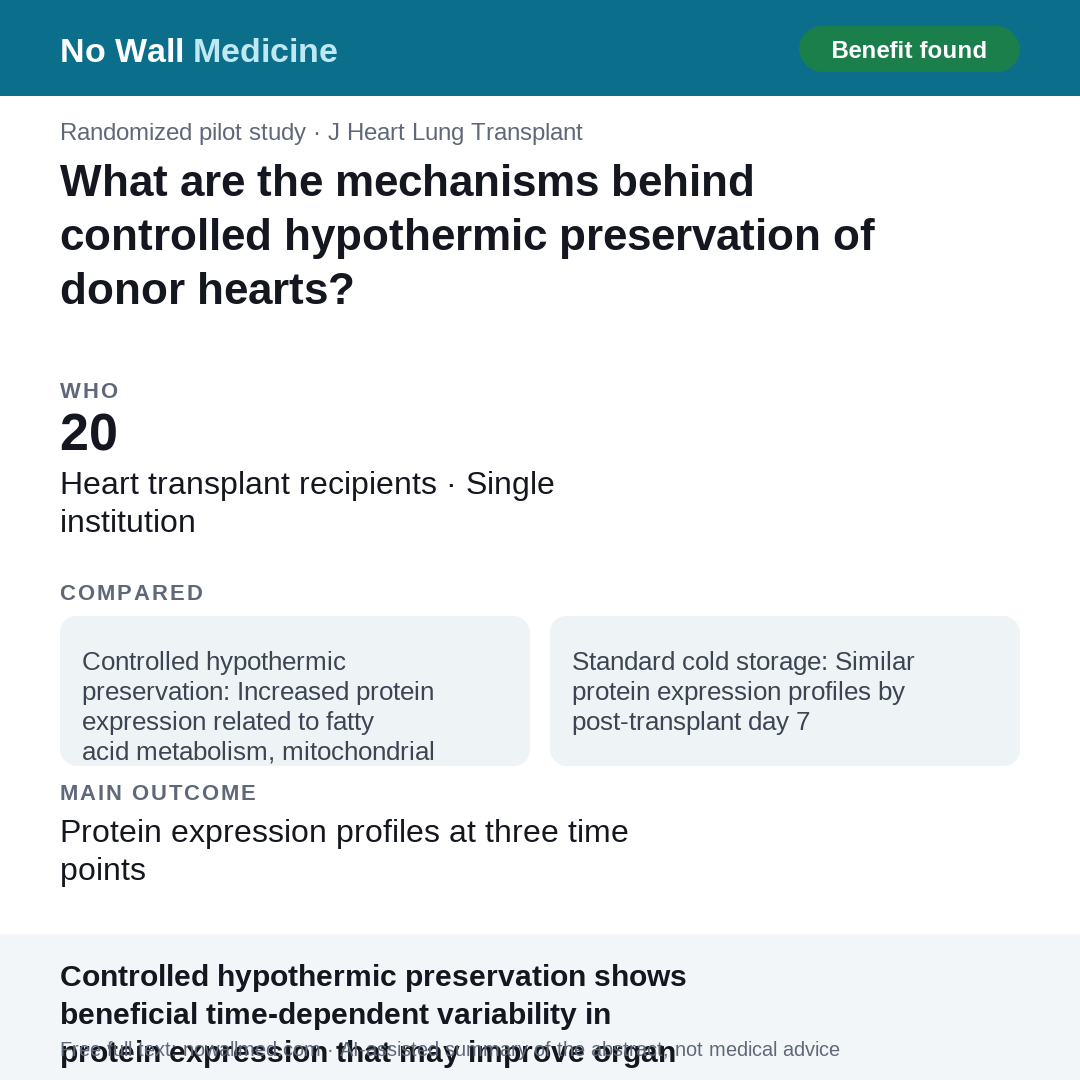
What are the mechanisms behind controlled hypothermic preservation of donor hearts?
Who
20
Heart transplant recipients · Single institution
Compared
Controlled hypothermic preservation: Increased protein expression related to fatty acid metabolism, mitochondrial intermembrane space, and contractile fiber machinery
Standard cold storage: Similar protein expression profiles by post-transplant day 7
Main outcome
Protein expression profiles at three time points
Bottom line: Controlled hypothermic preservation shows beneficial time-dependent variability in protein expression that may improve organ quality.
J Heart Lung Transplant · 2025-03-19Download image
Clinical question: What are the mechanisms behind controlled hypothermic preservation of donor hearts?
Why it matters: The mechanisms underlying why controlled hypothermic preservation is associated with decreased primary graft dysfunction in human subjects are unclear.
Key points
- Researchers randomized 20 heart transplant recipients to receive donor hearts preserved with either controlled hypothermic preservation or standard cold storage.
- Before implantation, controlled hypothermic preservation was associated with increased protein expression related to fatty acid metabolism, mitochondrial intermembrane space, and contractile fiber machinery.
- By post-transplant day 7, controlled hypothermic preservation was associated with increased expression in the peroxisome proliferator-activated receptor signaling pathway and fatty acid oxidation.
Headline and key points written with AI from the paper’s abstract, with every number checked against it. Read the paper before relying on them.
Was this summary helpful?
Subject terms
Cite this article
Razavi AA, Kobashigawa J, Stotland A, Chen Q, Patel J, Emerson D. Evaluating the mechanism of action behind controlled hypothermic preservation of donor hearts: A randomized pilot study. J Heart Lung Transplant. 2025. doi:10.1016/j.healun.2025.02.1699
Spotted a mistake? Suggest a correction