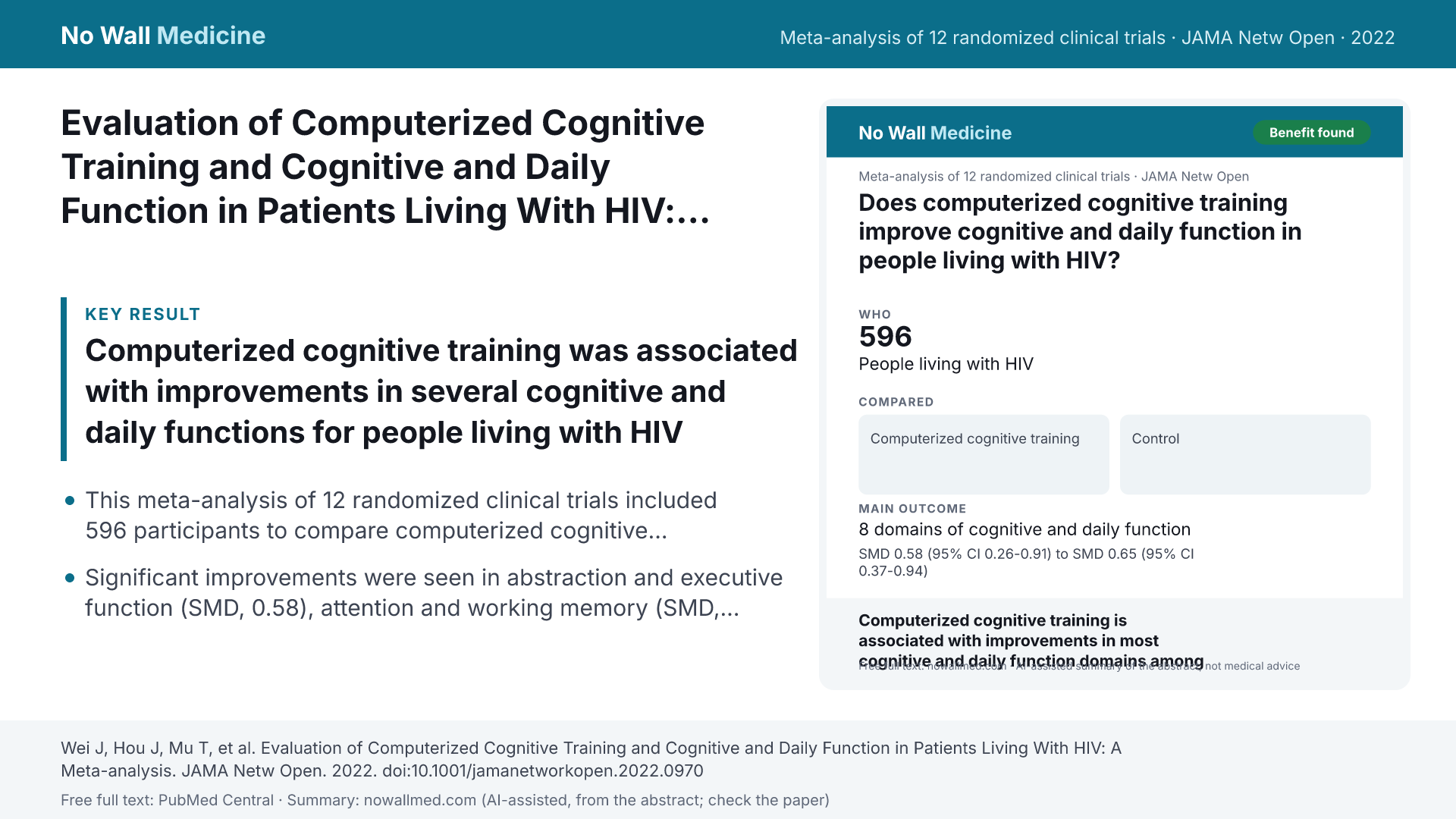
Evaluation of Computerized Cognitive Training and Cognitive and Daily Function in Patients Living With HIV: A Meta-analysis
Key result: Computerized cognitive training was associated with improvements in several cognitive and daily functions for people living with HIV
Key points
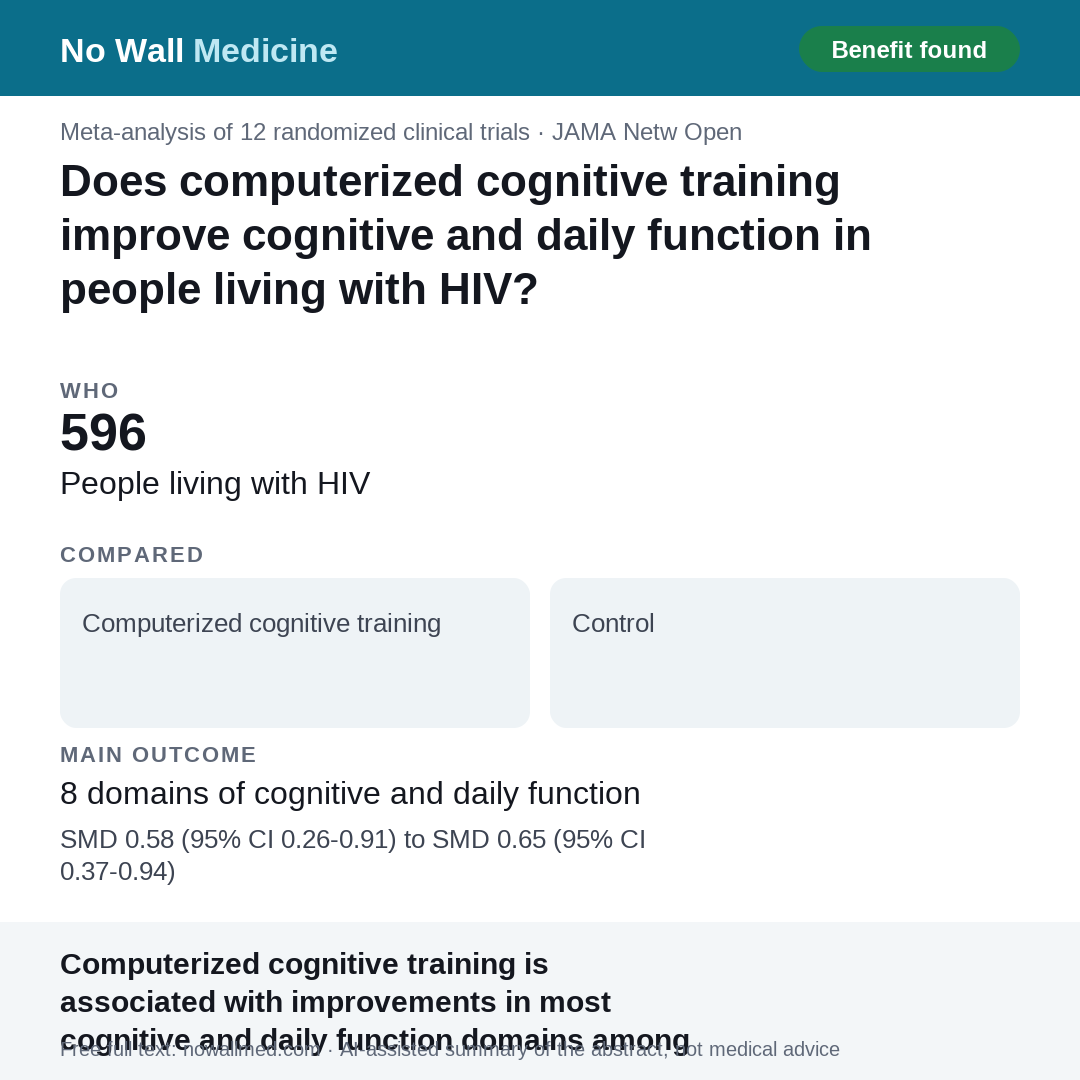
- This meta-analysis of 12 randomized clinical trials included 596 participants to compare computerized cognitive training against control groups.
- Significant improvements were seen in abstraction and executive function (SMD, 0.58), attention and working memory (SMD, 0.62), memory (SMD, 0.59), motor skills (SMD, 0.50), speed of information processing (SMD, 0.65), and daily function (SMD, 0.44).
- No significant changes were found for sensory and perceptual skills (SMD, 0.06) or verbal and language skills (SMD, 0.46).
Why it matters: While antiretroviral therapy exists, there are no beneficial pharmacological treatments for HIV-associated neurocognitive disorder, and the effectiveness of computerized cognitive training remains uncertain.
Discussion prompts
- Would these patients look like yours? Who was left out?
- Is the main outcome one that matters to patients?
- Is the difference large enough to change what you do?
Cite: Wei J, Hou J, Mu T, Sun J, Li S, Wu H. Evaluation of Computerized Cognitive Training and Cognitive and Daily Function in Patients Living With HIV: A Meta-analysis. JAMA Netw Open. 2022. doi:10.1001/jamanetworkopen.2022.0970
Free full text: PubMed Central · Summary and visual abstract: nowallmed.com/a/evaluation-of-computerized-cognitive-training-and-cognitive-and-daily-1qix6vi/ (AI-assisted from the abstract; check the paper before relying on it).