Information theoretic network meta-analysis ranks combination therapies higher for metastatic breast cancer treatment
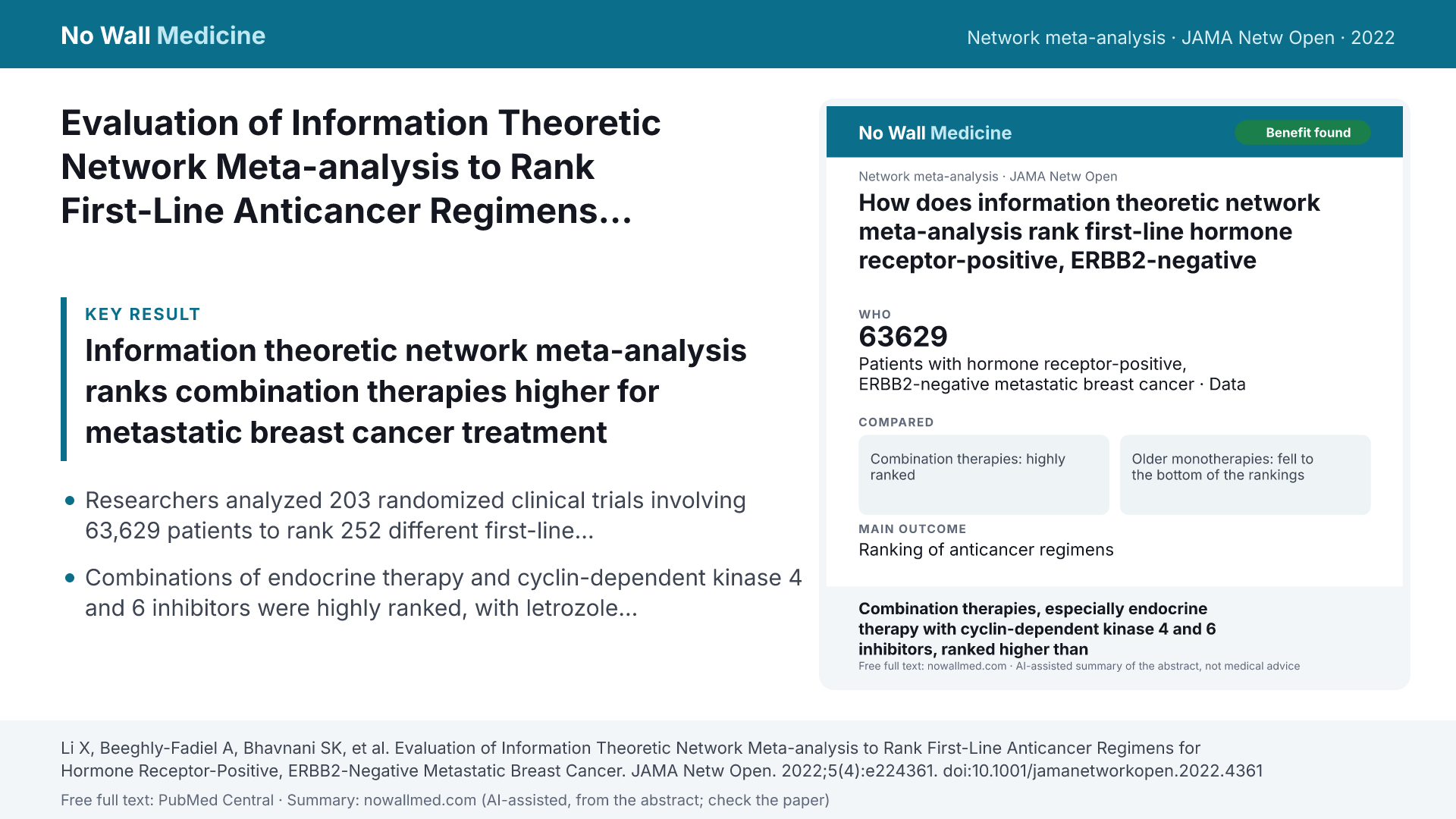
Evaluation of Information Theoretic Network Meta-analysis to Rank First-Line Anticancer Regimens for Hormone Receptor-Positive, ERBB2-Negative Metastatic Breast Cancer
Network meta-analysisBenefit found
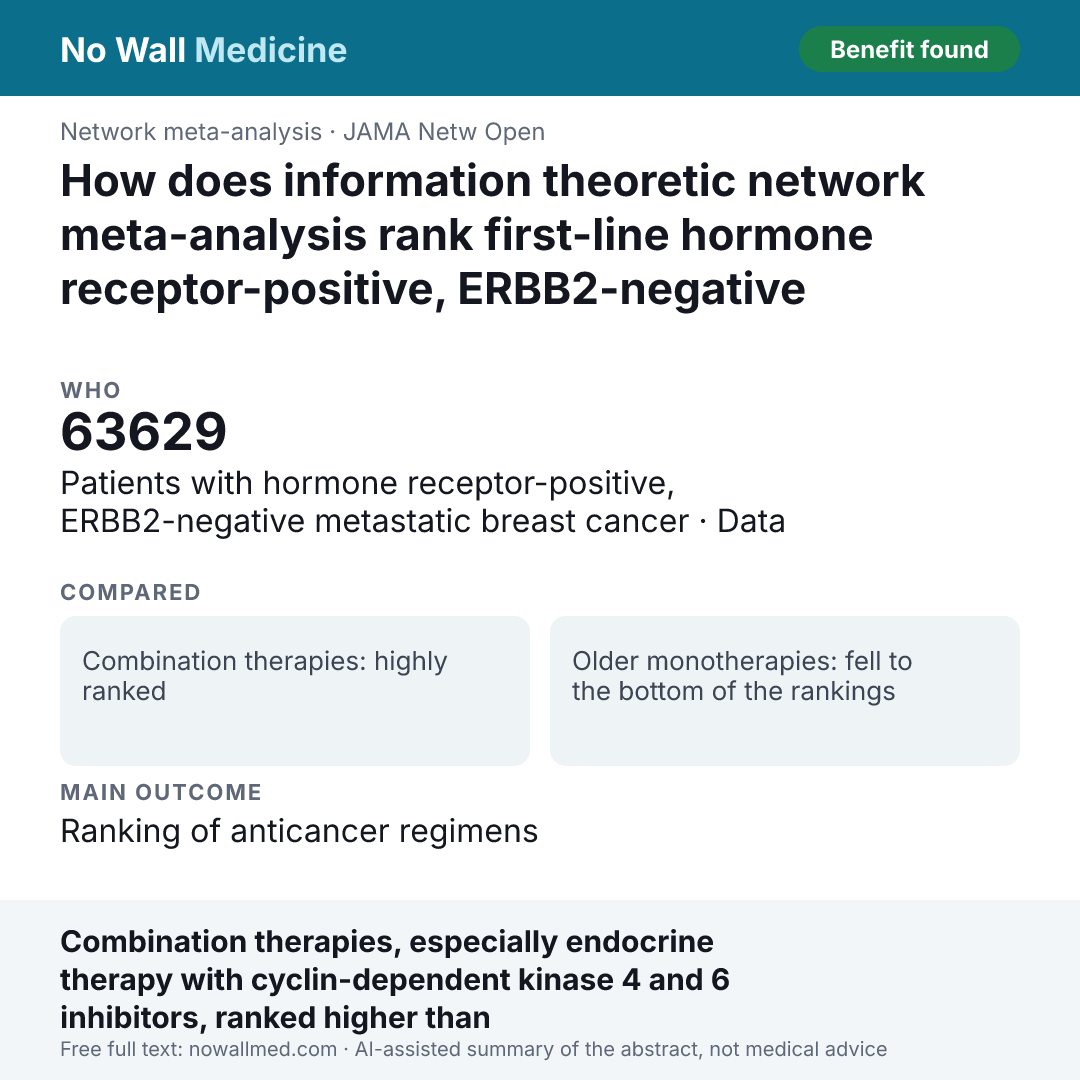
How does information theoretic network meta-analysis rank first-line hormone receptor-positive, ERBB2-negative metastatic breast cancer regimens?
Who
63629
Patients with hormone receptor-positive, ERBB2-negative metastatic breast cancer · Data from HemOnc.org and prior network meta-analysis
Compared
Combination therapies: highly ranked
Older monotherapies: fell to the bottom of the rankings
Main outcome
Ranking of anticancer regimens
Bottom line: Combination therapies, especially endocrine therapy with cyclin-dependent kinase 4 and 6 inhibitors, ranked higher than monotherapies.
Limitation: Risk of bias and inconsistency in the treatment network were not assessed.
JAMA Netw Open · 2022-04-01 · Save PNG
Clinical question: How does information theoretic network meta-analysis rank first-line hormone receptor-positive, ERBB2-negative metastatic breast cancer regimens?
Why it matters: Evaluating the growing number of treatment options is difficult because few regimens have been directly compared in randomized clinical trials and evidence has evolved over decades.
Key points
- Researchers analyzed 203 randomized clinical trials involving 63,629 patients to rank 252 different first-line treatment regimens for hormone receptor-positive, ERBB2-negative metastatic breast cancer.
- Combinations of endocrine therapy and cyclin-dependent kinase 4 and 6 inhibitors were highly ranked, with letrozole plus palbociclib ranked first and letrozole plus ribociclib ranked third.
- Older single-drug treatments like anastrozole and letrozole fell to the bottom of the rankings.
Limitation the authors note: The risk of bias within individual studies and inconsistency in the treatment network were not assessed.
Headline and key points written with AI from the paper’s abstract, with every number checked against it. Read the paper before relying on them.
Was this summary helpful?
Subject terms
Headline, design, result, key points, caveat and citation as plain text.
Cite this article
Li X, Beeghly-Fadiel A, Bhavnani SK, et al. Evaluation of Information Theoretic Network Meta-analysis to Rank First-Line Anticancer Regimens for Hormone Receptor-Positive, ERBB2-Negative Metastatic Breast Cancer. JAMA Netw Open. 2022. doi:10.1001/jamanetworkopen.2022.4361
Spotted a mistake? Suggest a correction