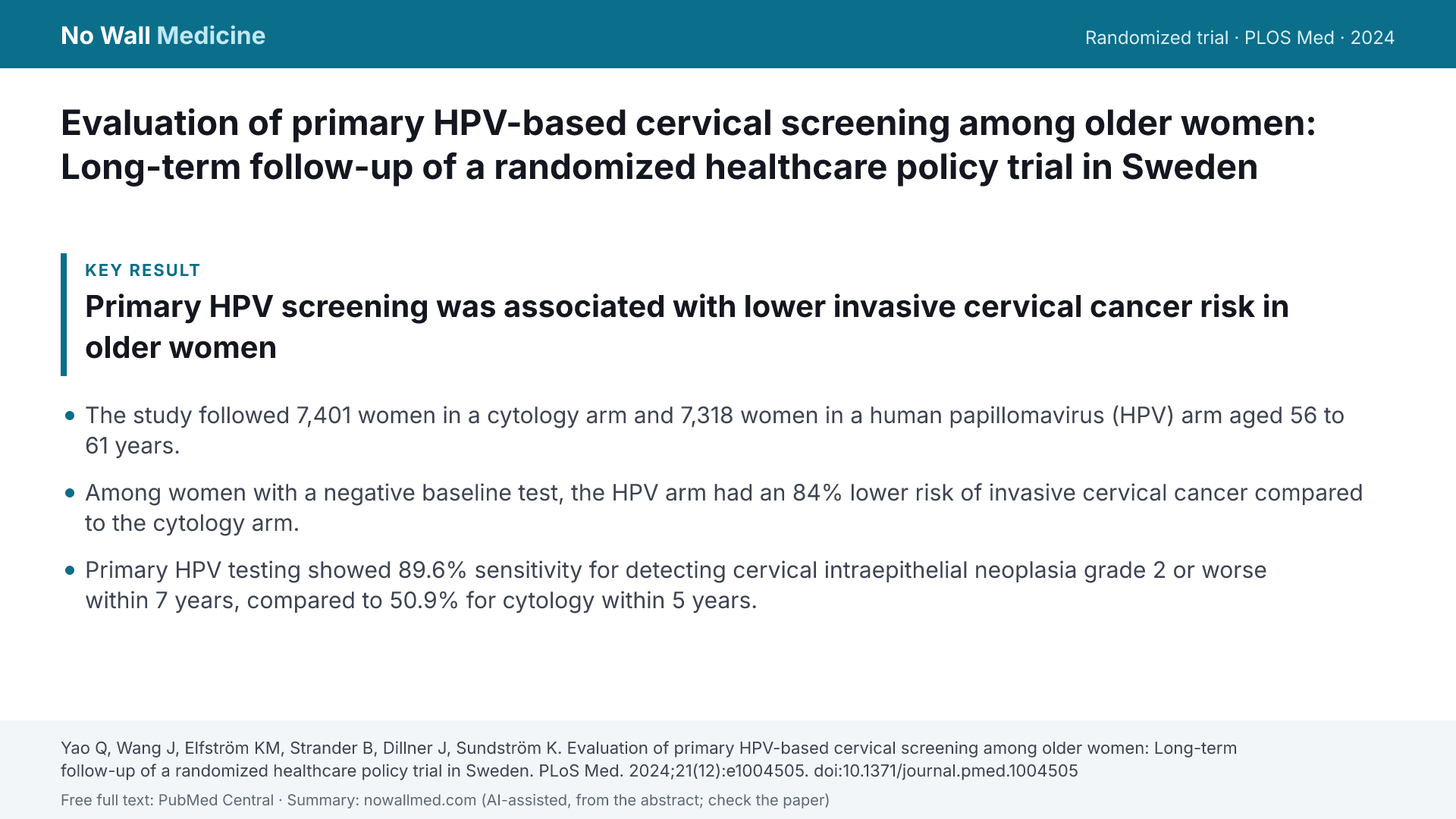
Primary HPV screening was associated with lower invasive cervical cancer risk in older women
Evaluation of primary HPV-based cervical screening among older women: Long-term follow-up of a randomized healthcare policy trial in Sweden
Why it matters: It is unknown if primary human papillomavirus (HPV) screening and longer intervals are effective at preventing invasive cervical cancer in women aged 56 to 61.
Key points
- The study followed 7,401 women in a cytology arm and 7,318 women in a human papillomavirus (HPV) arm aged 56 to 61 years.
- Among women with a negative baseline test, the HPV arm had an 84% lower risk of invasive cervical cancer compared to the cytology arm.
- Primary HPV testing showed 89.6% sensitivity for detecting cervical intraepithelial neoplasia grade 2 or worse within 7 years, compared to 50.9% for cytology within 5 years.
Limitation the authors note: The authors stated a partial imbalance of invitations during follow-up between the two arms may have led to an underestimation of the effectiveness of primary HPV-based screening.
Headline and key points written with AI from the paper’s abstract, with every number checked against it. Read the paper before relying on them.
Was this summary helpful?
Subject terms
Cite this article
Yao Q, Wang J, Elfström KM, Strander B, Dillner J, Sundström K. Evaluation of primary HPV-based cervical screening among older women: Long-term follow-up of a randomized healthcare policy trial in Sweden. PLOS Med. 2024. doi:10.1371/journal.pmed.1004505
Spotted a mistake? Suggest a correction