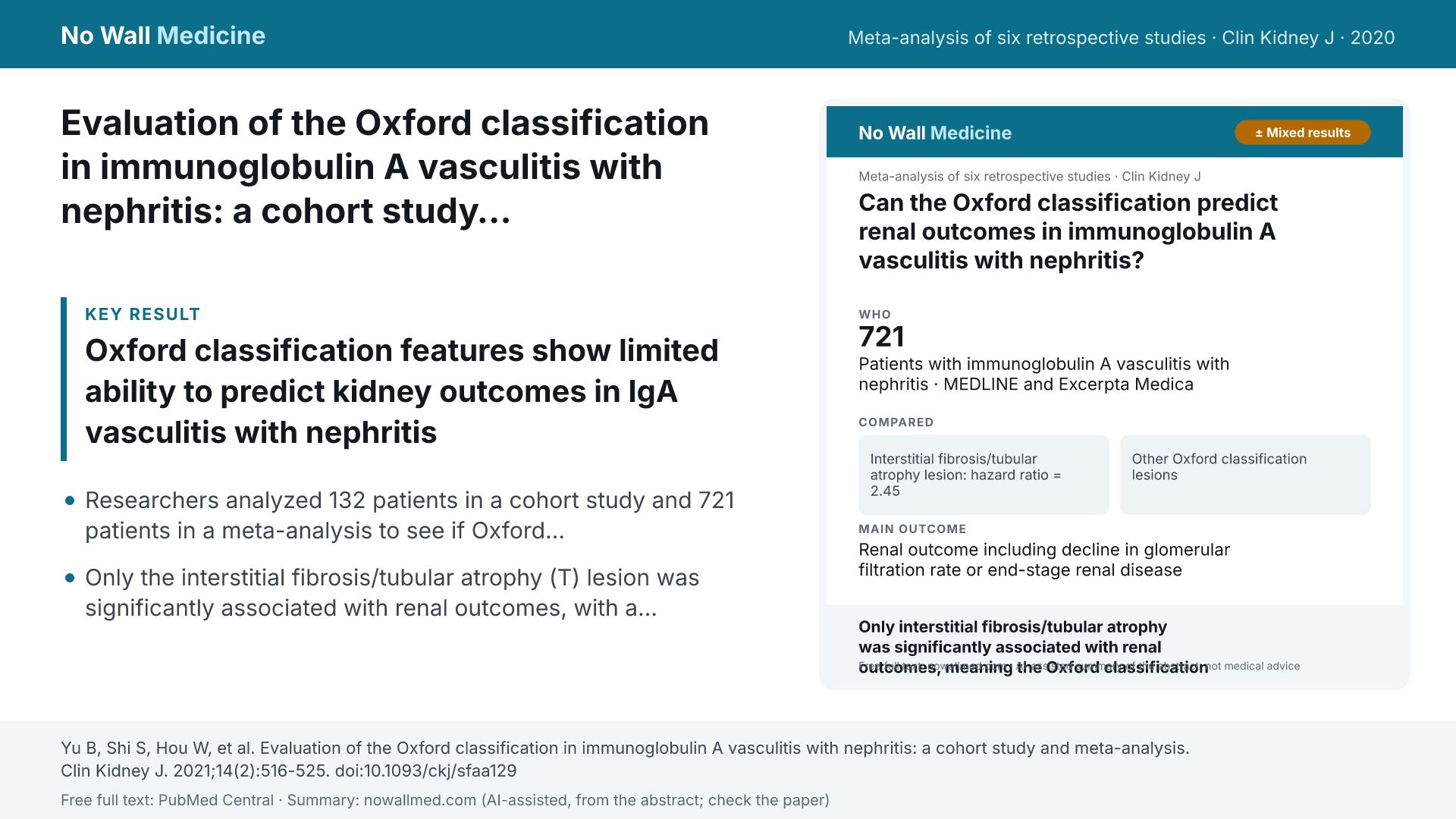
Oxford classification features show limited ability to predict kidney outcomes in IgA vasculitis with nephritis
Evaluation of the Oxford classification in immunoglobulin A vasculitis with nephritis: a cohort study and meta-analysis
Meta-analysis of six retrospective studiesMixed results
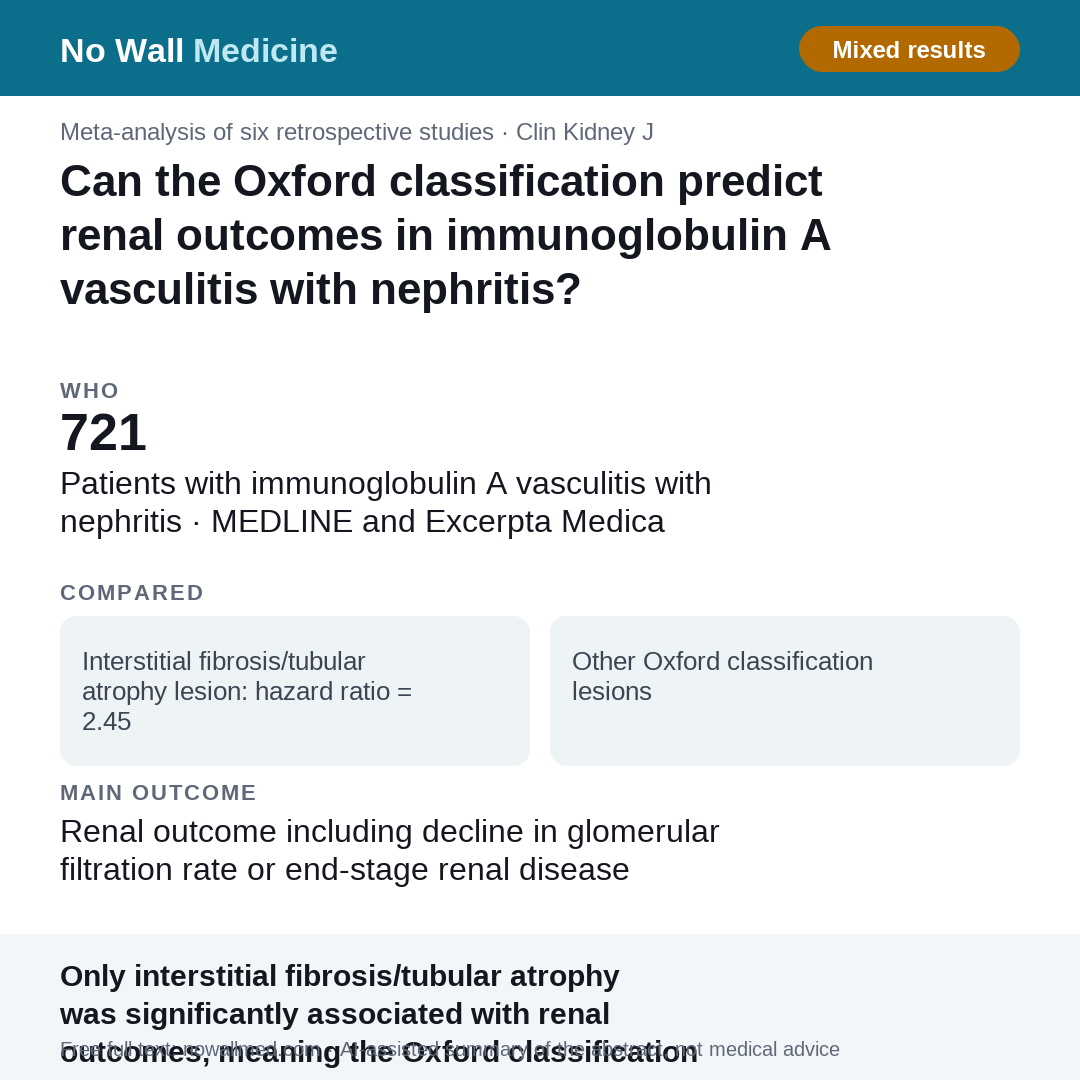
Can the Oxford classification predict renal outcomes in immunoglobulin A vasculitis with nephritis?
Who
721
Patients with immunoglobulin A vasculitis with nephritis · MEDLINE and Excerpta Medica Database
Compared
Interstitial fibrosis/tubular atrophy lesion: hazard ratio = 2.45
Other Oxford classification lesions
Main outcome
Renal outcome including decline in glomerular filtration rate or end-stage renal disease
Result: hazard ratio = 2.45 (P = 0.007)
Bottom line: Only interstitial fibrosis/tubular atrophy was significantly associated with renal outcomes, meaning the Oxford classification is not fully validated.
Limitation: Usage of immunosuppressant before renal biopsy might be a main confounder.
Clin Kidney J · 2020-08-11Download image
Clinical question: Can the Oxford classification predict renal outcomes in immunoglobulin A vasculitis with nephritis?
Why it matters: It is unknown if the Oxford classification, used for IgA nephropathy, is useful for predicting outcomes in patients with IgA vasculitis with nephritis.
Key points
- Researchers analyzed 132 patients in a cohort study and 721 patients in a meta-analysis to see if Oxford classification lesions predicted kidney decline or end-stage renal disease.
- Only the interstitial fibrosis/tubular atrophy (T) lesion was significantly associated with renal outcomes, with a hazard ratio of 2.45 (P = 0.007).
- Mesangial hypercellularity (M), crescents (C), endocapillary hypercellularity (E), and segmental glomerulosclerosis (S) lesions were not linked to renal outcomes.
Limitation the authors note: The authors noted that the use of immunosuppressants, sample size, and follow-up time may have caused heterogeneity in the results.
Headline and key points written with AI from the paper’s abstract, with every number checked against it. Read the paper before relying on them.
Was this summary helpful?
Cite this article
Yu B, Shi S, Hou W, Liu L, Lv J, Wang S. Evaluation of the Oxford classification in immunoglobulin A vasculitis with nephritis: a cohort study and meta-analysis. Clin Kidney J. 2020. doi:10.1093/ckj/sfaa129
Spotted a mistake? Suggest a correction