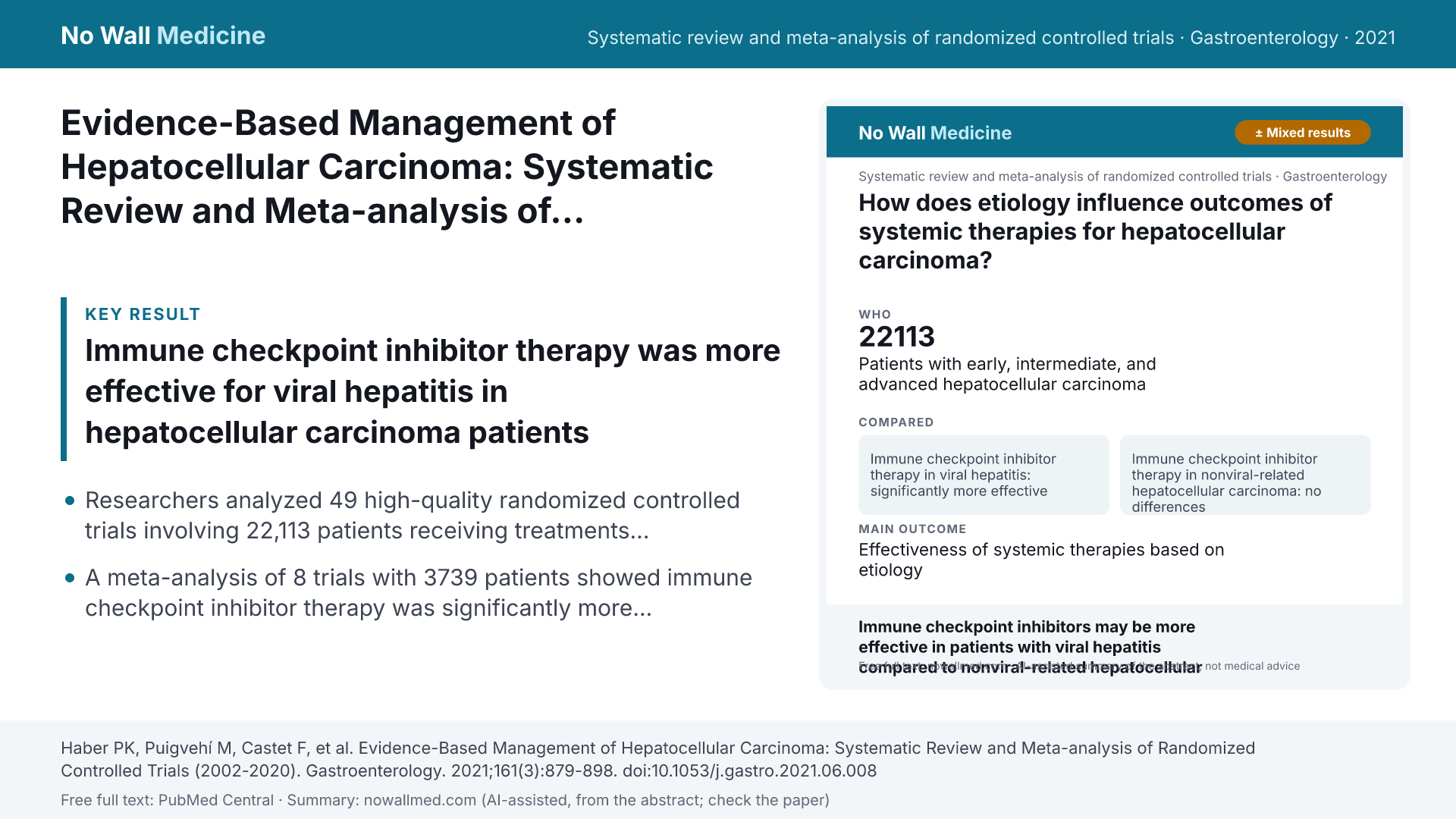
Immune checkpoint inhibitor therapy was more effective for viral hepatitis in hepatocellular carcinoma patients
Evidence-Based Management of Hepatocellular Carcinoma: Systematic Review and Meta-analysis of Randomized Controlled Trials (2002-2020)
Systematic review and meta-analysis of randomized controlled trialsMixed results
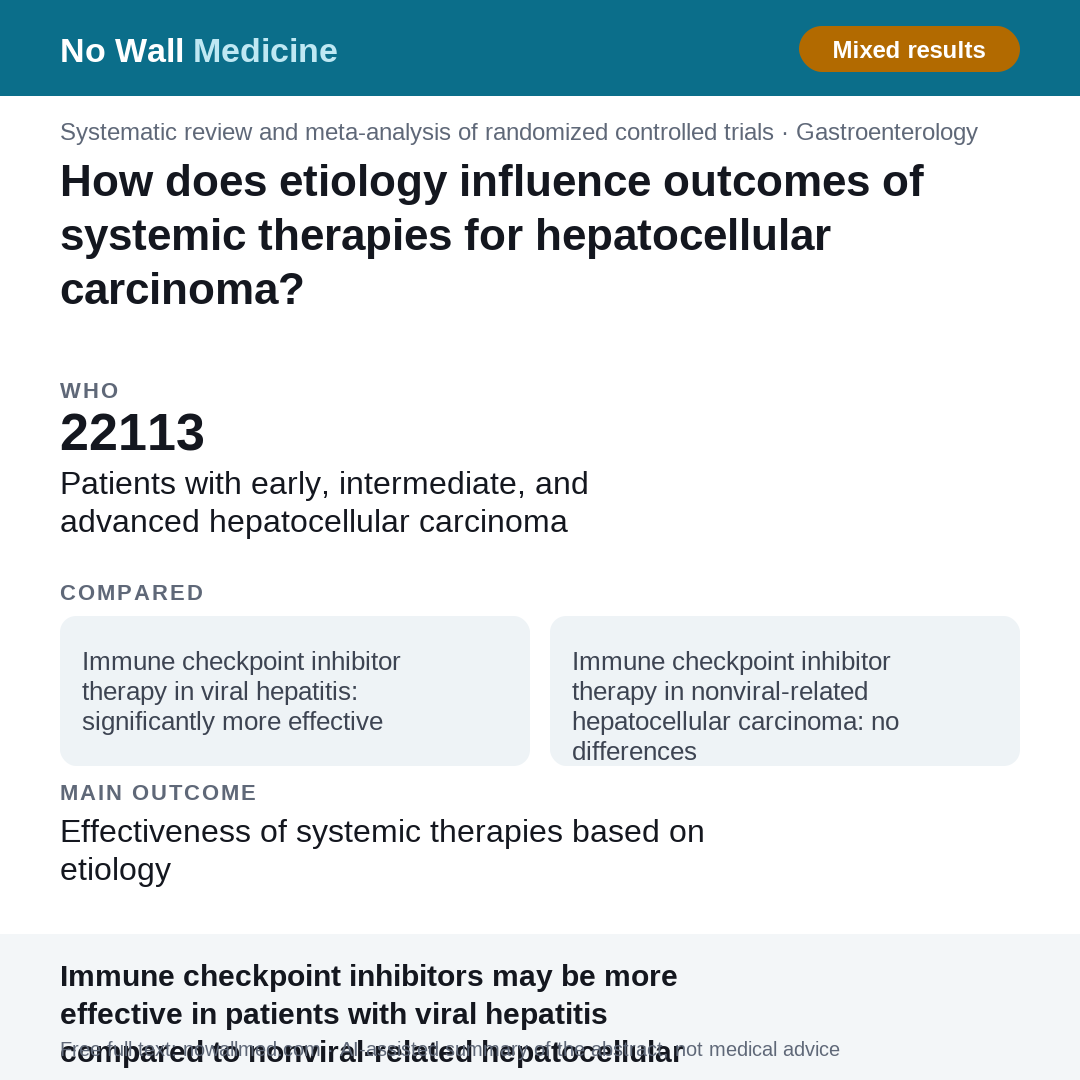
How does etiology influence outcomes of systemic therapies for hepatocellular carcinoma?
Who
22113
Patients with early, intermediate, and advanced hepatocellular carcinoma
Compared
Immune checkpoint inhibitor therapy in viral hepatitis: significantly more effective
Immune checkpoint inhibitor therapy in nonviral-related hepatocellular carcinoma: no differences
Main outcome
Effectiveness of systemic therapies based on etiology
Bottom line: Immune checkpoint inhibitors may be more effective in patients with viral hepatitis compared to nonviral-related hepatocellular carcinoma.
Gastroenterology · 2021-06-12Download image
Clinical question: How does etiology influence outcomes of systemic therapies for hepatocellular carcinoma?
Why it matters: It was unknown how the underlying cause of liver cancer, such as viral hepatitis, influences how patients respond to different systemic therapies.
Key points
- Researchers analyzed 49 high-quality randomized controlled trials involving 22,113 patients receiving treatments for early, intermediate, or advanced liver cancer.
- A meta-analysis of 8 trials with 3739 patients showed immune checkpoint inhibitor therapy was significantly more effective in patients with viral hepatitis compared to nonviral-related liver cancer.
- No differences related to the cause of the disease were observed in patients treated with tyrosine-kinase inhibitor or anti-vascular endothelial growth factor therapy.
Headline and key points written with AI from the paper’s abstract, with every number checked against it. Read the paper before relying on them.
Was this summary helpful?
Subject terms
Cite this article
Haber PK, Puigvehí M, Castet F, Lourdusamy V, Montal R, Tabrizian P. Evidence-Based Management of Hepatocellular Carcinoma: Systematic Review and Meta-analysis of Randomized Controlled Trials (2002-2020). Gastroenterology. 2021. doi:10.1053/j.gastro.2021.06.008
Spotted a mistake? Suggest a correction
Top studies every Monday
The week’s key trials and guidelines in your specialties, plus any topics you follow. By email, free.
Get the weekly digest