Different SMAS facelift techniques are associated with varying complication rates and high patient satisfaction
Evolution of Superficial Muscular Aponeurotic System Facelift Techniques: A Comprehensive Systematic Review of Complications and Outcomes
Systematic reviewMixed results
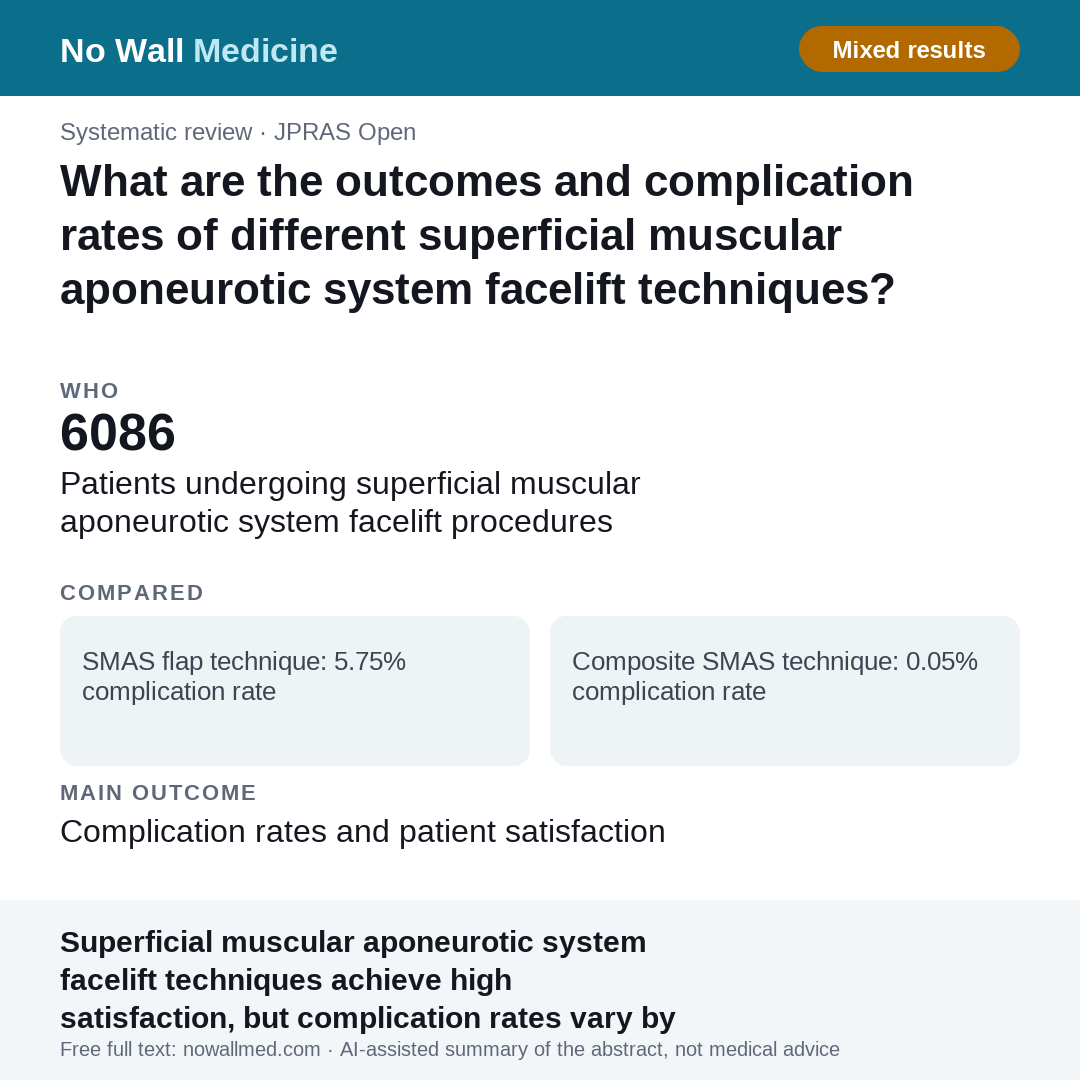
What are the outcomes and complication rates of different superficial muscular aponeurotic system facelift techniques?
Who
6086
Patients undergoing superficial muscular aponeurotic system facelift procedures
Compared
SMAS flap technique: 5.75% complication rate
Composite SMAS technique: 0.05% complication rate
Main outcome
Complication rates and patient satisfaction
Bottom line: Superficial muscular aponeurotic system facelift techniques achieve high satisfaction, but complication rates vary by specific technique used.
Limitation: Some studies have not reported all complications, making it difficult to determine the best approach.
JPRAS Open · 2023-06-08Download image
Clinical question: What are the outcomes and complication rates of different superficial muscular aponeurotic system facelift techniques?
Why it matters: The optimal approach for superficial muscular aponeurotic system (SMAS) facelift procedures remains unclear.
Key points
- Researchers reviewed 27 studies involving 6086 patients to compare 6 different superficial muscular aponeurotic system (SMAS) facelift techniques.
- Over 85% of patients were satisfied with their results, while complication rates ranged from 0.05% for the composite SMAS technique to 5.75% for the SMAS flap technique.
- The most common complications were temporary facial nerve injury at 0.85% and skin necrosis at 0.41%.
Headline and key points written with AI from the paper’s abstract, with every number checked against it. Read the paper before relying on them.
Was this summary helpful?
Cite this article
Mortada H, Alkilani N, Halawani IR, Zaid WA, Alkahtani RS, Saqr H. Evolution of Superficial Muscular Aponeurotic System Facelift Techniques: A Comprehensive Systematic Review of Complications and Outcomes. JPRAS Open. 2023. doi:10.1016/j.jpra.2023.06.003
Spotted a mistake? Suggest a correction
Top studies every Monday
The week’s key trials and guidelines in your specialties, plus any topics you follow. By email, free.
Get the weekly digest