Mindfulness skills drive symptom changes in mindfulness-based cognitive therapy for recurrent depression
Examining what works for whom and how in mindfulness-based cognitive therapy (MBCT) for recurrent depression: moderated-mediation analysis in the PREVENT trial
Randomized trial, moderated-mediation analysisBenefit found
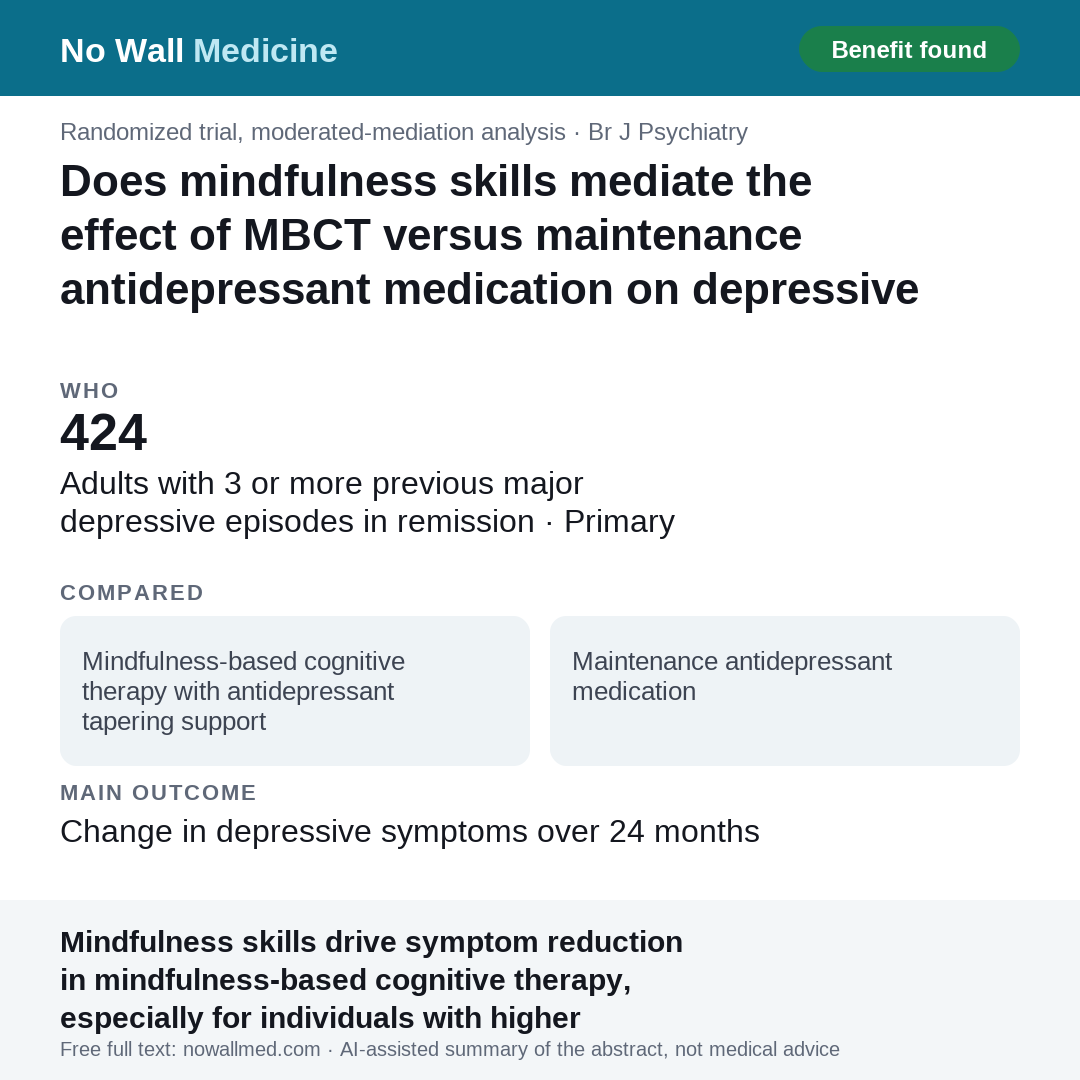
Does mindfulness skills mediate the effect of MBCT versus maintenance antidepressant medication on depressive symptoms?
Who
424
Adults with 3 or more previous major depressive episodes in remission · Primary care practices in the United Kingdom
Compared
Mindfulness-based cognitive therapy with antidepressant tapering support
Maintenance antidepressant medication
Main outcome
Change in depressive symptoms over 24 months
Result: moderated-mediation index = -0.27 (95% CI -0.66, -0.03)
Bottom line: Mindfulness skills drive symptom reduction in mindfulness-based cognitive therapy, especially for individuals with higher depression severity.
Br J Psychiatry · 2024-11-08Download image
Clinical question: Does mindfulness skills mediate the effect of MBCT versus maintenance antidepressant medication on depressive symptoms?
Why it matters: It is unknown if mindfulness skills play different roles in managing recurrent depression depending on an individual's baseline depression severity.
Key points
- The study analyzed 424 adults with at least 3 previous major depressive episodes who were randomized to either mindfulness-based cognitive therapy with antidepressant tapering support or maintenance antidepressant medication.
- Mindfulness skills acted as a mediator for depressive symptom changes over 24 months, with an expected mean Beck Depression Inventory-II reduction of 10 points for higher severity and 3.5 points for lower severity.
- The effect of mindfulness skills on symptom changes was moderated by the initial severity of depression.
Limitation the authors note: It is unclear if these effects apply to those with a current depressive episode.
Headline and key points written with AI from the paper’s abstract, with every number checked against it. Read the paper before relying on them.
Was this summary helpful?
Subject terms
Cite this article
Montero-Marin J, Hinze V, Maloney S, van der Velden AM, Hayes R, Watkins ER. Examining what works for whom and how in mindfulness-based cognitive therapy (MBCT) for recurrent depression: moderated-mediation analysis in the PREVENT trial. Br J Psychiatry. 2024. doi:10.1192/bjp.2024.178
Spotted a mistake? Suggest a correction
Top studies every Monday
The week’s key trials and guidelines in your specialties, plus any topics you follow. By email, free.
Get the weekly digest