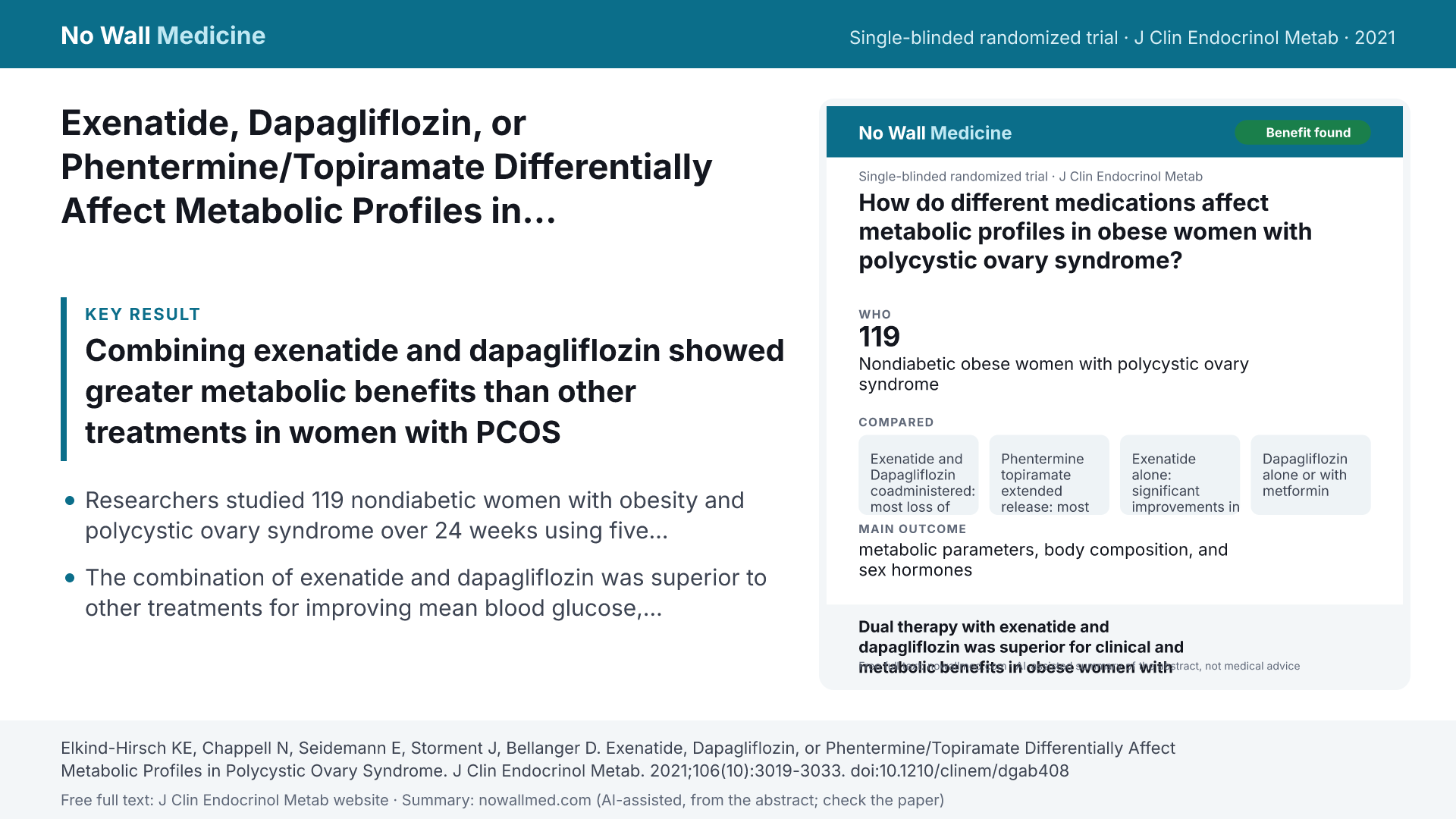
Combining exenatide and dapagliflozin showed greater metabolic benefits than other treatments in women with PCOS
Exenatide, Dapagliflozin, or Phentermine/Topiramate Differentially Affect Metabolic Profiles in Polycystic Ovary Syndrome
Single-blinded randomized trialBenefit found
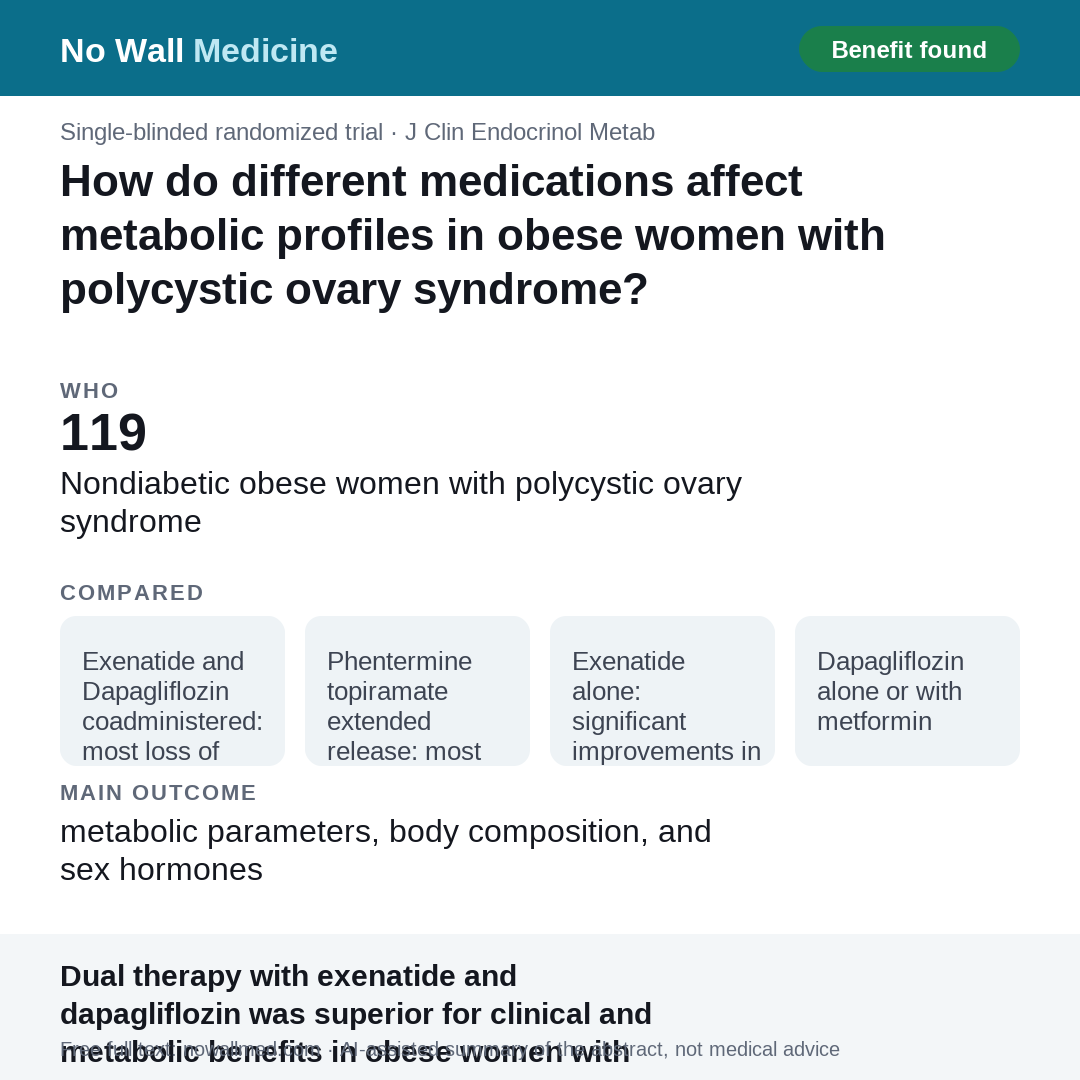
How do different medications affect metabolic profiles in obese women with polycystic ovary syndrome?
Who
119
Nondiabetic obese women with polycystic ovary syndrome
Compared
Exenatide and Dapagliflozin coadministered: most loss of weight and total body fat and waist circumference
Phentermine topiramate extended release: most loss of weight and total body fat and waist circumference
Exenatide alone: significant improvements in mean blood glucose, insulin sensitivity, and insulin secretion
Dapagliflozin alone or with metformin
Main outcome
metabolic parameters, body composition, and sex hormones
Bottom line: Dual therapy with exenatide and dapagliflozin was superior for clinical and metabolic benefits in obese women with polycystic ovary syndrome.
J Clin Endocrinol Metab · 2021-06-08Download image
Clinical question: How do different medications affect metabolic profiles in obese women with polycystic ovary syndrome?
Why it matters: It was unknown how different weight-loss medications like glucagon-like peptide-1 receptor agonists and sodium-glucose cotransporter-2 inhibitors affect metabolic profiles and sex hormones in women with polycystic ovary syndrome.
Key points
- Researchers studied 119 nondiabetic women with obesity and polycystic ovary syndrome over 24 weeks using five different medication regimens.
- The combination of exenatide and dapagliflozin was superior to other treatments for improving mean blood glucose, insulin sensitivity, and insulin secretion.
- All studied medications were associated with reductions in fasting glucose, testosterone, free androgen index, and blood pressure.
Headline and key points written with AI from the paper’s abstract, with every number checked against it. Read the paper before relying on them.
Was this summary helpful?
Subject terms
Cite this article
Elkind-Hirsch KE, Chappell N, Seidemann E, Storment J, Bellanger D. Exenatide, Dapagliflozin, or Phentermine/Topiramate Differentially Affect Metabolic Profiles in Polycystic Ovary Syndrome. J Clin Endocrinol Metab. 2021. doi:10.1210/clinem/dgab408
Spotted a mistake? Suggest a correction