Exercise and Cognitive Function in Chronic Kidney Disease: A Systematic Review and Meta-Analysis of Efficacy and Harms
Systematic review and meta-analysis of randomized controlled trialsBenefit found
Does exercise improve cognitive function and cause harm in people with chronic kidney disease?
Who
1160
People living with any stage of chronic kidney disease
Compared
Exercise
Control
Main outcome
Cognitive function
Result: effect size 0.22 (95% confidence intervals, 0.00 to 0.44)
Bottom line: Exercise has a small but positive effect on cognitive function in chronic kidney disease, especially aerobic exercise.
Limitation: The quality of evidence was rated as low.
CJASN · 2024-07-31Download image
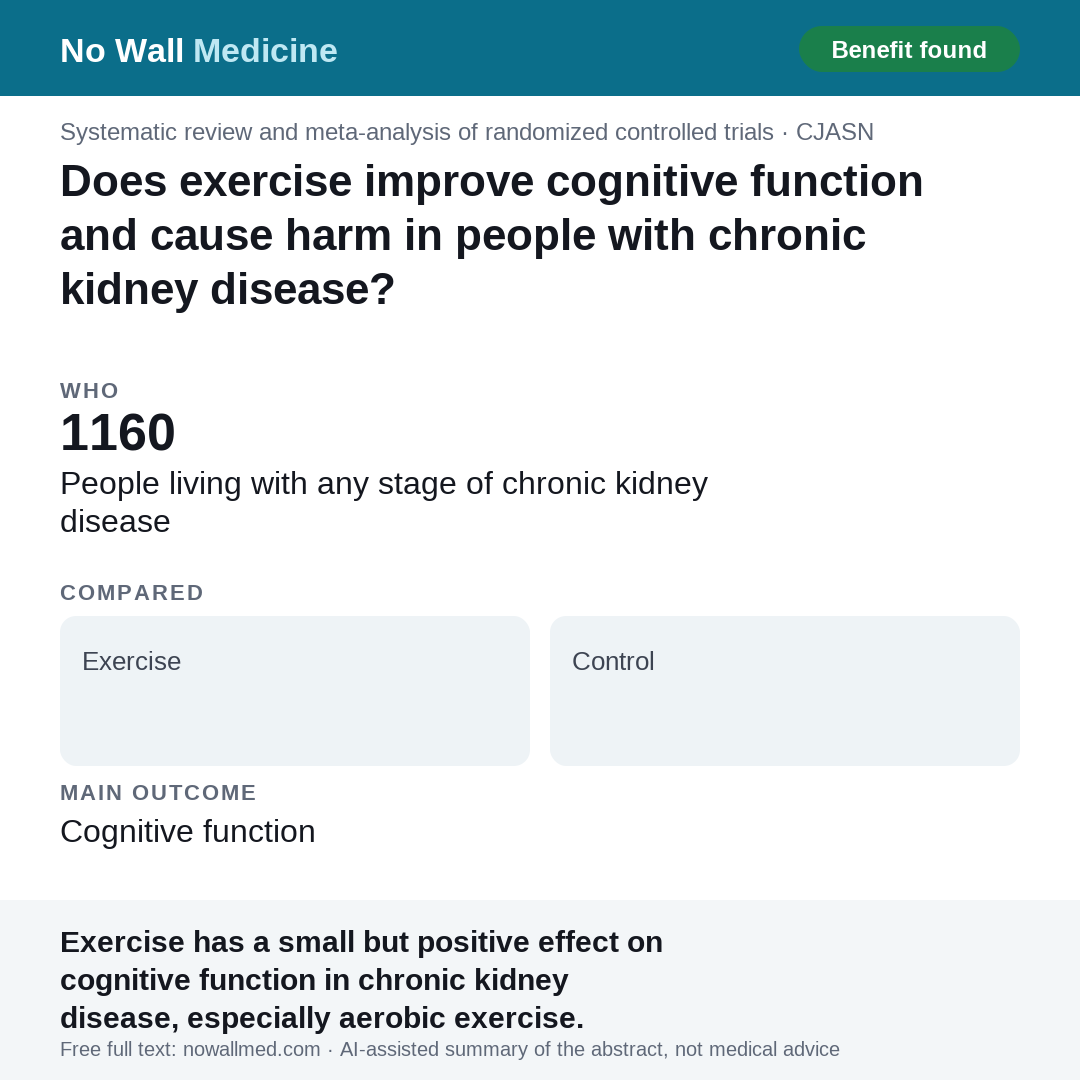
Clinical question: Does exercise improve cognitive function and cause harm in people with chronic kidney disease?
Abstract
Key points
Cognitive impairment is common in CKD. Exercise targets multiple risk factors of cognitive decline. Meta-analysis found that exercise had a small but positive effect on cognitive function in CKD, albeit the quality of evidence was low. Further analyses revealed that aerobic exercise was particularly beneficial and that exercise did not substantially increase harms. Background
People living with CKD are at higher risk of cognitive impairment. Exercise may improve cognitive function. This systematic review and meta-analysis of randomized controlled trials was completed to determine the efficacy and harms of exercise in improving cognitive function in people living with CKD. Methods
A systematic literature review identified randomized controlled trials of people with any stage of CKD, with an intervention that exercised large-muscle groups, and with a validated outcome measure of cognitive function. First, harms were analyzed. Then a random-effects meta-analysis was completed with subsequent planned subgroup analyses to investigate heterogeneity between CKD stages and treatments; between different exercise types, durations, and intensities; and between different outcome methodologies. Finally, quality of evidence was rated. Results
Nineteen trials randomized 1160 participants. Harms were reported on 94 occasions in intervention groups versus 83 in control. The primary analysis found that exercise had a small but statistically significant effect on cognition in CKD (effect size=0.22; 95% confidence intervals, 0.00 to 0.44; P = 0.05). However, the quality of evidence was rated as low. Subgroup analyses found that type of exercise moderated the effect on cognition (chi square=7.62; P = 0.02), with positive effects only observed following aerobic exercise (effect size=0.57; 95% confidence interval, 0.21 to 0.93; P = 0.002). Conclusions
Across the spectrum of CKD, exercise had a small but positive and clinically meaningful effect on cognitive function and did not seem to be harmful. Aerobic exercise was particularly beneficial. However, the results must be interpreted cautiously because of the low quality of evidence. Nevertheless, care teams may choose to recommend aerobic exercise interventions to prevent cognitive decline. Researchers should design unbiased studies to clarify what intensity and duration of exercise is required to maximize efficiency of such exercise interventions.
Cite this article
Bradshaw E, Alejmi A, Rossetti G, D'Avossa G, Macdonald JH. Exercise and Cognitive Function in Chronic Kidney Disease: A Systematic Review and Meta-Analysis of Efficacy and Harms. CJASN. 2024. doi:10.2215/CJN.0000000000000533
Spotted a mistake? Suggest a correction
Top studies every Monday
The week’s key trials and guidelines in your specialties, by email. Free.
Get the weekly digest