Exercise, manipulation and traction physiotherapy in the conservative management of lumbar disc herniation: A systematic review and meta-analysis
Systematic review and meta-analysisBenefit found
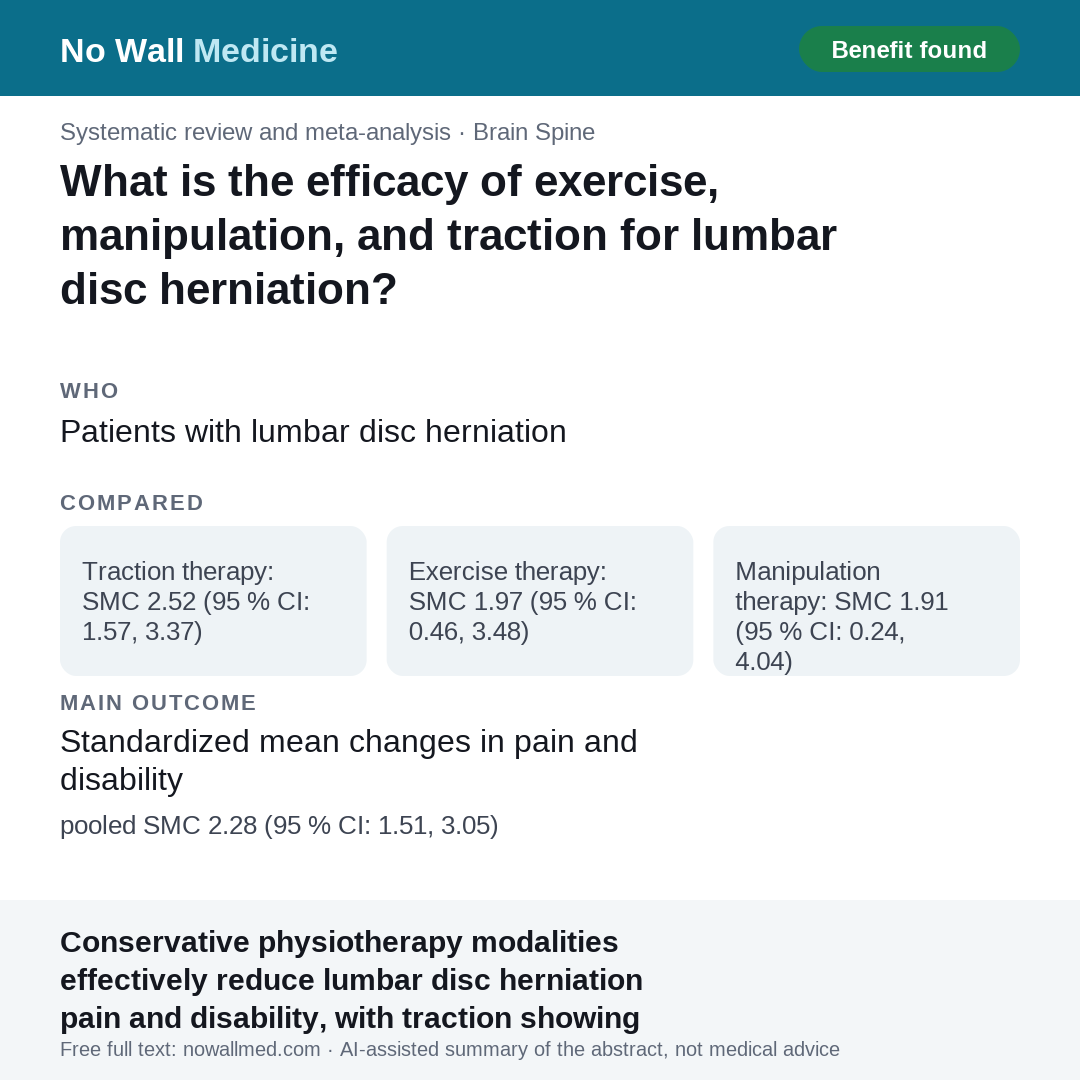
What is the efficacy of exercise, manipulation, and traction for lumbar disc herniation?
Who
Patients with lumbar disc herniation
Compared
Traction therapy: SMC 2.52 (95 % CI: 1.57, 3.37)
Exercise therapy: SMC 1.97 (95 % CI: 0.46, 3.48)
Manipulation therapy: SMC 1.91 (95 % CI: 0.24, 4.04)
Main outcome
Standardized mean changes in pain and disability
Result: pooled SMC 2.28 (95 % CI: 1.51, 3.05)
Bottom line: Conservative physiotherapy modalities effectively reduce lumbar disc herniation pain and disability, with traction showing the largest effect.
Limitation: High heterogeneity and limited quantitative evidence for subgroup differentiation.
Brain Spine · 2025-10-16Download image
Clinical question: What is the efficacy of exercise, manipulation, and traction for lumbar disc herniation?
Abstract
Introduction
Lumbar disc herniation (LDH) is a leading cause of global back pain with significant socioeconomic impact. Conservative physiotherapy, including exercise, manipulation, and traction therapies, is a common first-line treatment. However, their relative efficacy and applicability to specific subgroups remain unclear. Research question
This systematic review and meta-analysis evaluated the efficacy of these three modalities, identified factors influencing variability, and explored subgroup-specific applications. Material and methods
Following PRISMA guidelines, a systematic review was conducted with searches of PubMed, MEDLINE, EMBASE, OVID, Scopus, and grey literature. Forty-three studies were included in the qualitative synthesis and 20 in the meta-analysis. Random-effects models estimated pooled standardized mean changes (SMCs), and meta-regression examined covariates influencing variability. Results
The pooled SMC across modalities was 2.28 (95 % CI: 1.51, 3.05), indicating large treatment effects, though heterogeneity was high (I2 = 97.9 %). Traction therapy had the highest effect size (SMC = 2.52, 95 % CI: 1.57, 3.37), followed by exercise therapy (SMC = 1.97, 95 % CI: 0.46, 3.48) and manipulation therapy (SMC = 1.91, 95 % CI: 0.24, 4.04). Follow-up duration significantly influenced effect sizes (p < 0.001), with shorter durations associated with larger effects. Qualitative findings suggested potential subgroup benefits for complex or chronic pain patients, but quantitative evidence for subgroup differentiation was limited. Discussion and conclusion
Conservative therapies may effectively reduce LDH-related pain and disability, with traction therapy demonstrating the largest pooled effect size. High heterogeneity and methodological inconsistencies limit subgroup-specific recommendations. Rigorous trials and standardized methodologies are essential for optimizing evidence-based care for LDH patients.
Cite this article
Thavarajasingam SG, Ramsay DSC, Namireddy SR, Kamath AG, Kanakala S, Zaidi H. Exercise, manipulation and traction physiotherapy in the conservative management of lumbar disc herniation: A systematic review and meta-analysis. Brain Spine. 2025. doi:10.1016/j.bas.2025.105632
Spotted a mistake? Suggest a correction