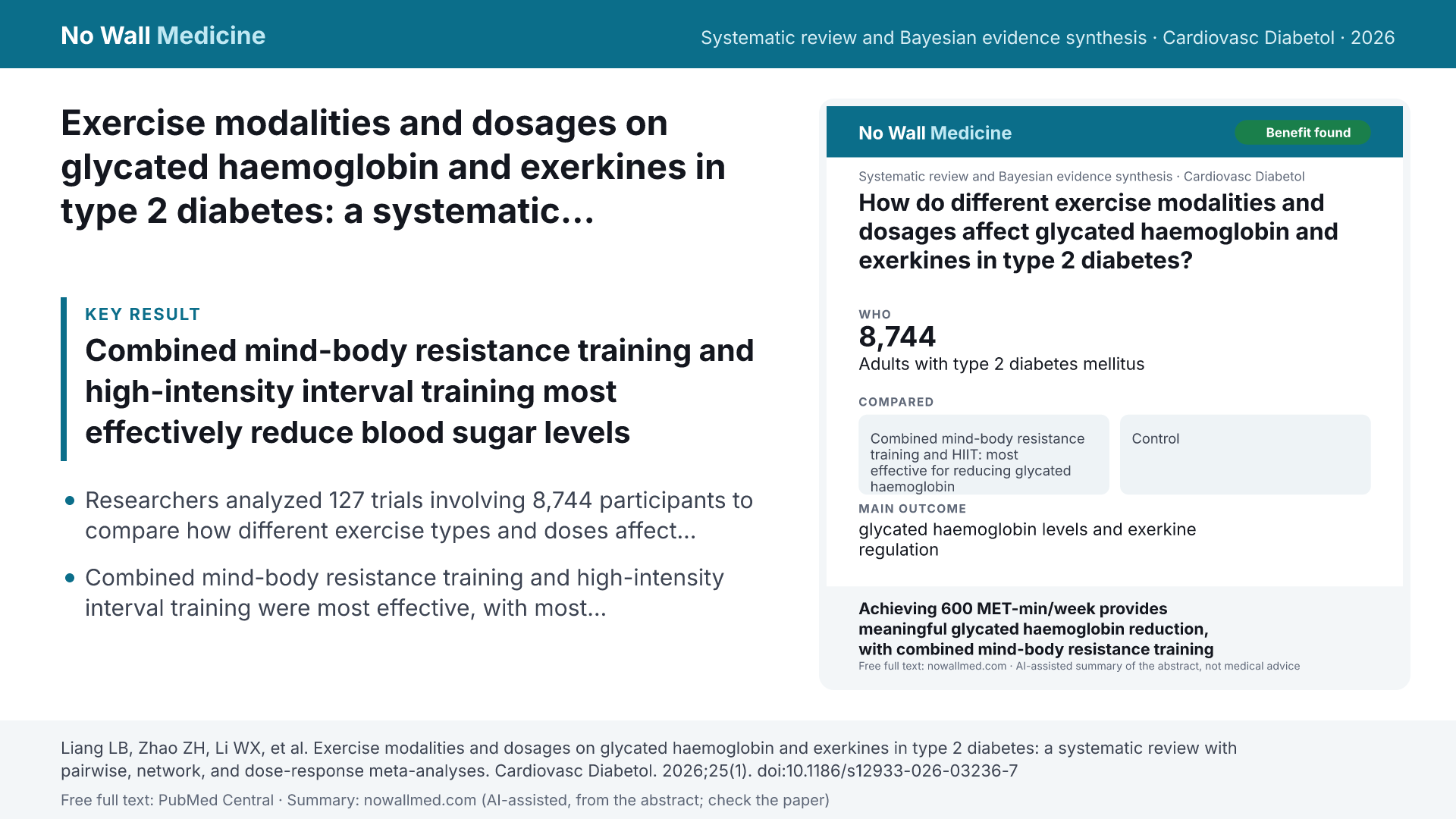
Combined mind-body resistance training and high-intensity interval training most effectively reduce blood sugar levels
Exercise modalities and dosages on glycated haemoglobin and exerkines in type 2 diabetes: a systematic review with pairwise, network, and dose-response meta-analyses
Systematic review and Bayesian evidence synthesisBenefit found
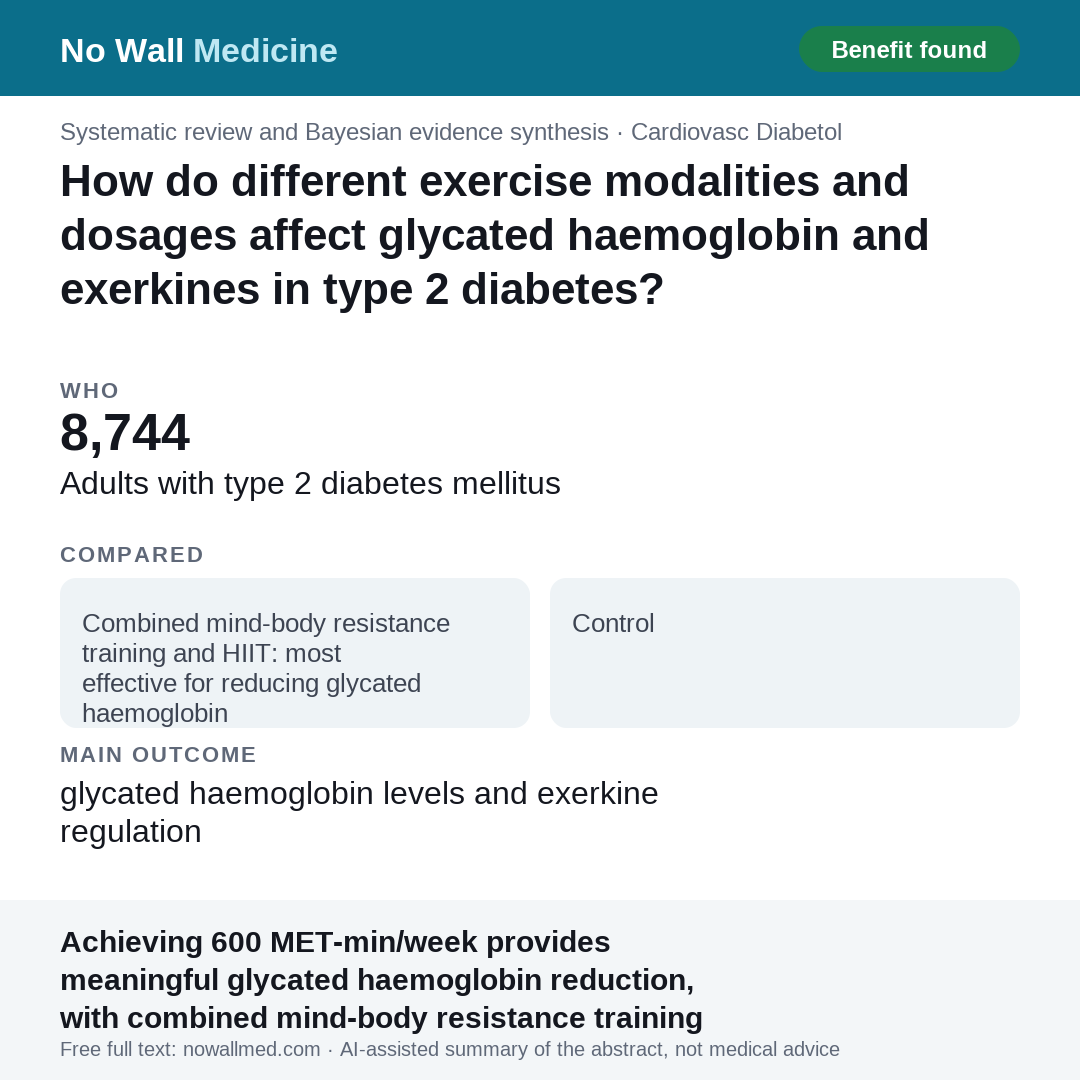
How do different exercise modalities and dosages affect glycated haemoglobin and exerkines in type 2 diabetes?
Who
8,744
Adults with type 2 diabetes mellitus
Compared
Combined mind-body resistance training and HIIT: most effective for reducing glycated haemoglobin
Control
Main outcome
glycated haemoglobin levels and exerkine regulation
Result: mean difference: -0.57% (95% credible interval: -0.72, -0.42) at 600 MET-min/week
Bottom line: Achieving 600 MET-min/week provides meaningful glycated haemoglobin reduction, with combined mind-body resistance training and high-intensity interval training being most effective.
Limitation: evidence concerning combined mind-body resistance training remains preliminary in nature
Cardiovasc Diabetol · 2026-06-17Download image
Clinical question: How do different exercise modalities and dosages affect glycated haemoglobin and exerkines in type 2 diabetes?
Why it matters: The comparative efficacy of specific exercise types, optimal doses, and their effects on exerkines, which are signaling molecules released during exercise, remains incompletely defined.
Key points
- Researchers analyzed 127 trials involving 8,744 participants to compare how different exercise types and doses affect glycated haemoglobin, a measure of long-term blood sugar.
- Combined mind-body resistance training and high-intensity interval training were most effective, with most clinical benefits occurring at 600 MET-min/week (mean difference: -0.57%).
- High-intensity interval training was associated with greater increases in adiponectin, while resistance training showed trends toward greater reductions in interleukin-6 and tumour necrosis factor-alpha.
Headline and key points written with AI from the paper’s abstract, with every number checked against it. Read the paper before relying on them.
Was this summary helpful?
Subject terms
Cite this article
Liang LB, Zhao ZH, Li WX, et al. Exercise modalities and dosages on glycated haemoglobin and exerkines in type 2 diabetes: a systematic review with pairwise, network, and dose-response meta-analyses. Cardiovasc Diabetol. 2026. doi:10.1186/s12933-026-03236-7
Spotted a mistake? Suggest a correction