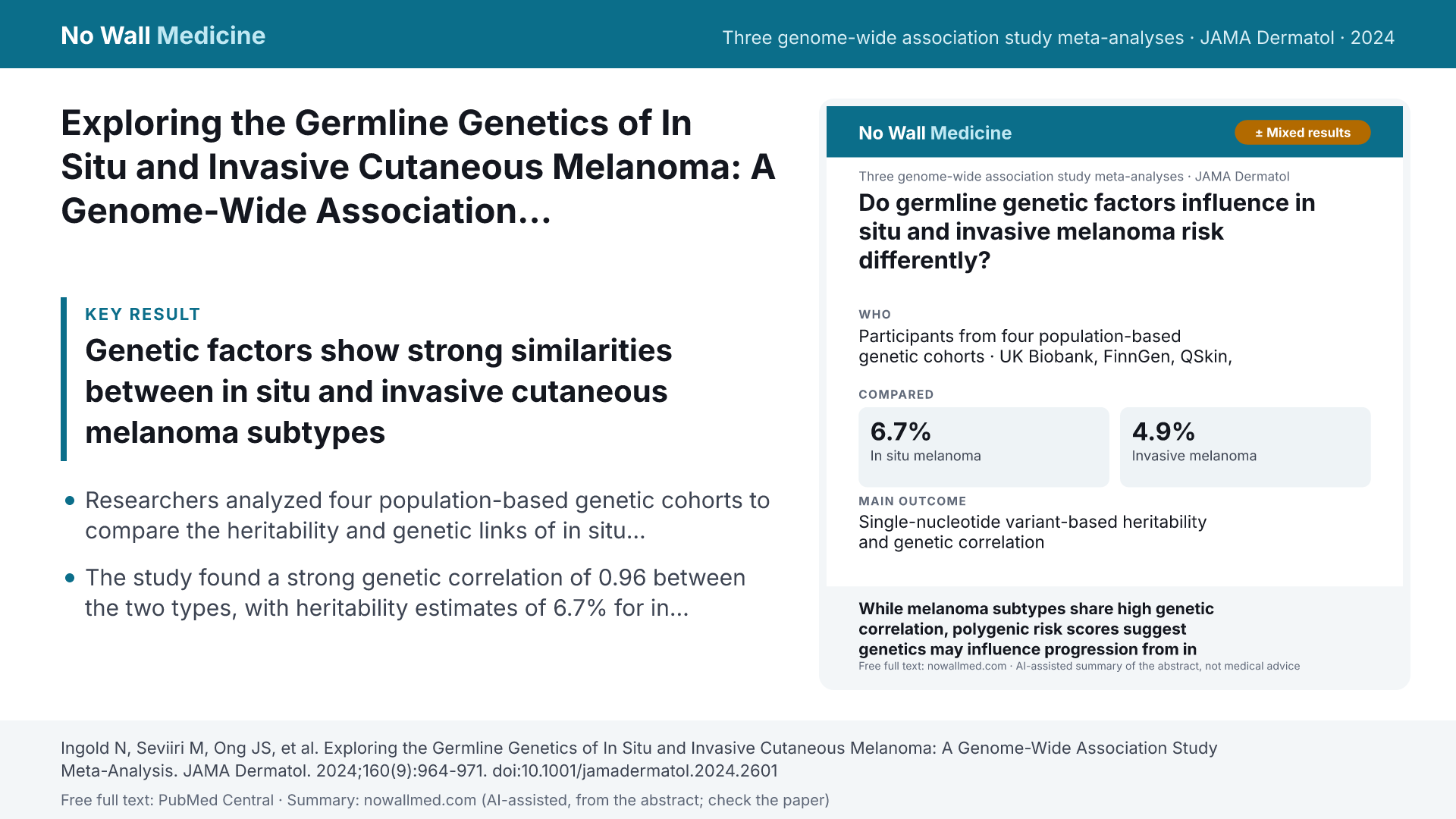
Genetic factors show strong similarities between in situ and invasive cutaneous melanoma subtypes
Exploring the Germline Genetics of In Situ and Invasive Cutaneous Melanoma: A Genome-Wide Association Study Meta-Analysis
Three genome-wide association study meta-analysesMixed results
Do germline genetic factors influence in situ and invasive melanoma risk differently?
Who
Participants from four population-based genetic cohorts · UK Biobank, FinnGen, QSkin, and Q-MEGA cohorts
Compared
6.7%In situ melanoma (95% CI, 4.1-9.3)
4.9%Invasive melanoma (95% CI, 2.8-7.2)
Main outcome
Single-nucleotide variant-based heritability and genetic correlation
Result: genetic r = 0.96; 95% CI, 0.76-1.15
Bottom line: While melanoma subtypes share high genetic correlation, polygenic risk scores suggest genetics may influence progression from in situ to invasive.
JAMA Dermatol · 2024-08-14 · Save PNG
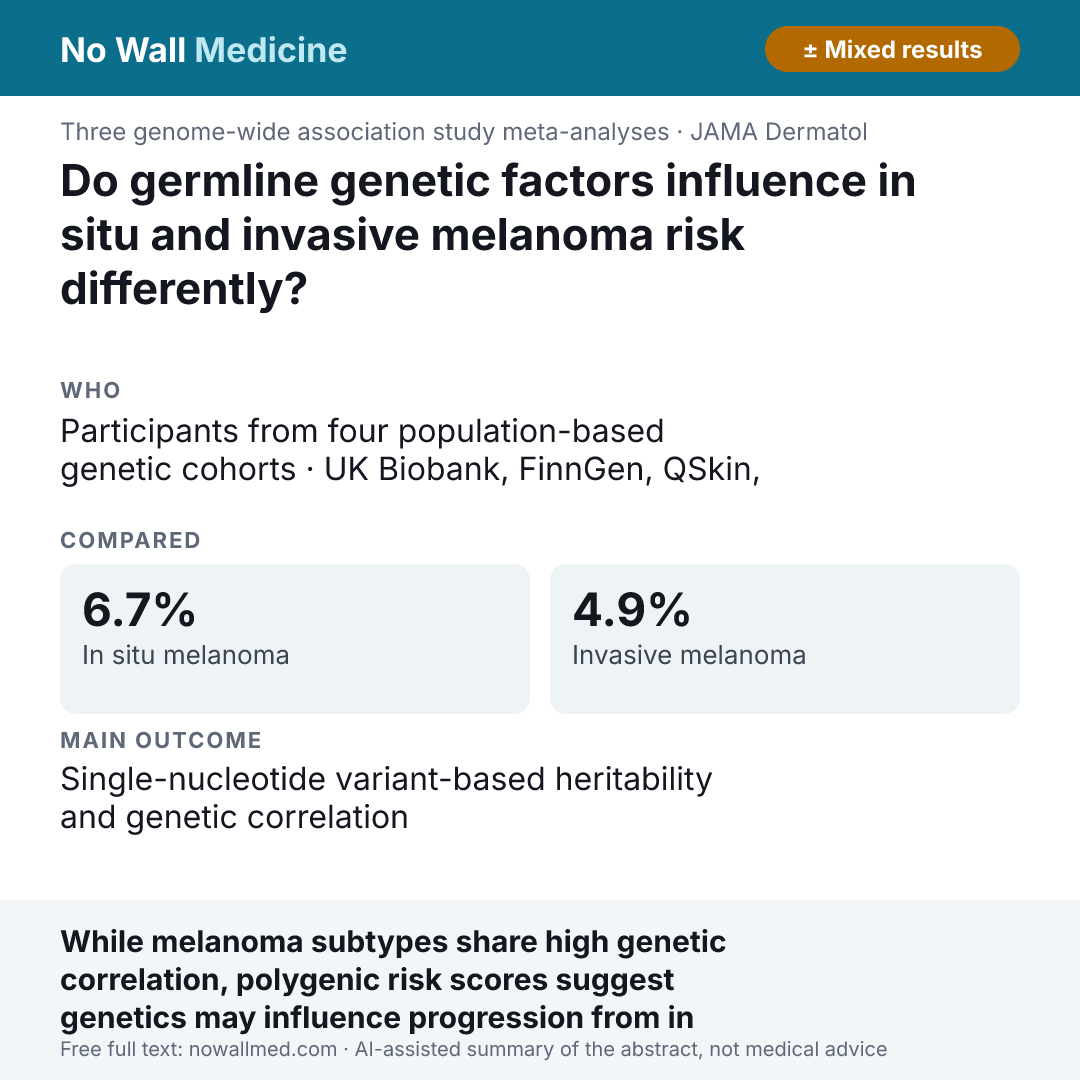
Clinical question: Do germline genetic factors influence in situ and invasive melanoma risk differently?
Key points
- Researchers analyzed four population-based genetic cohorts to compare the heritability and genetic links of in situ melanoma and invasive melanoma.
- The study found a strong genetic correlation of 0.96 between the two types, with heritability estimates of 6.7% for in situ and 4.9% for invasive melanoma.
- A polygenic risk score, which measures the combined effect of many genetic variants, was associated with an odds ratio of 1.43 per 1-SD increase for invasive melanoma.
Headline and key points written with AI from the paper’s abstract, with every number checked against it. Read the paper before relying on them.
Was this summary helpful?
Subject terms
Headline, design, result, key points, caveat and citation as plain text.
Cite this article
Ingold N, Seviiri M, Ong JS, et al. Exploring the Germline Genetics of In Situ and Invasive Cutaneous Melanoma: A Genome-Wide Association Study Meta-Analysis. JAMA Dermatol. 2024;160(9):964-971. doi:10.1001/jamadermatol.2024.2601
Spotted a mistake? Suggest a correction