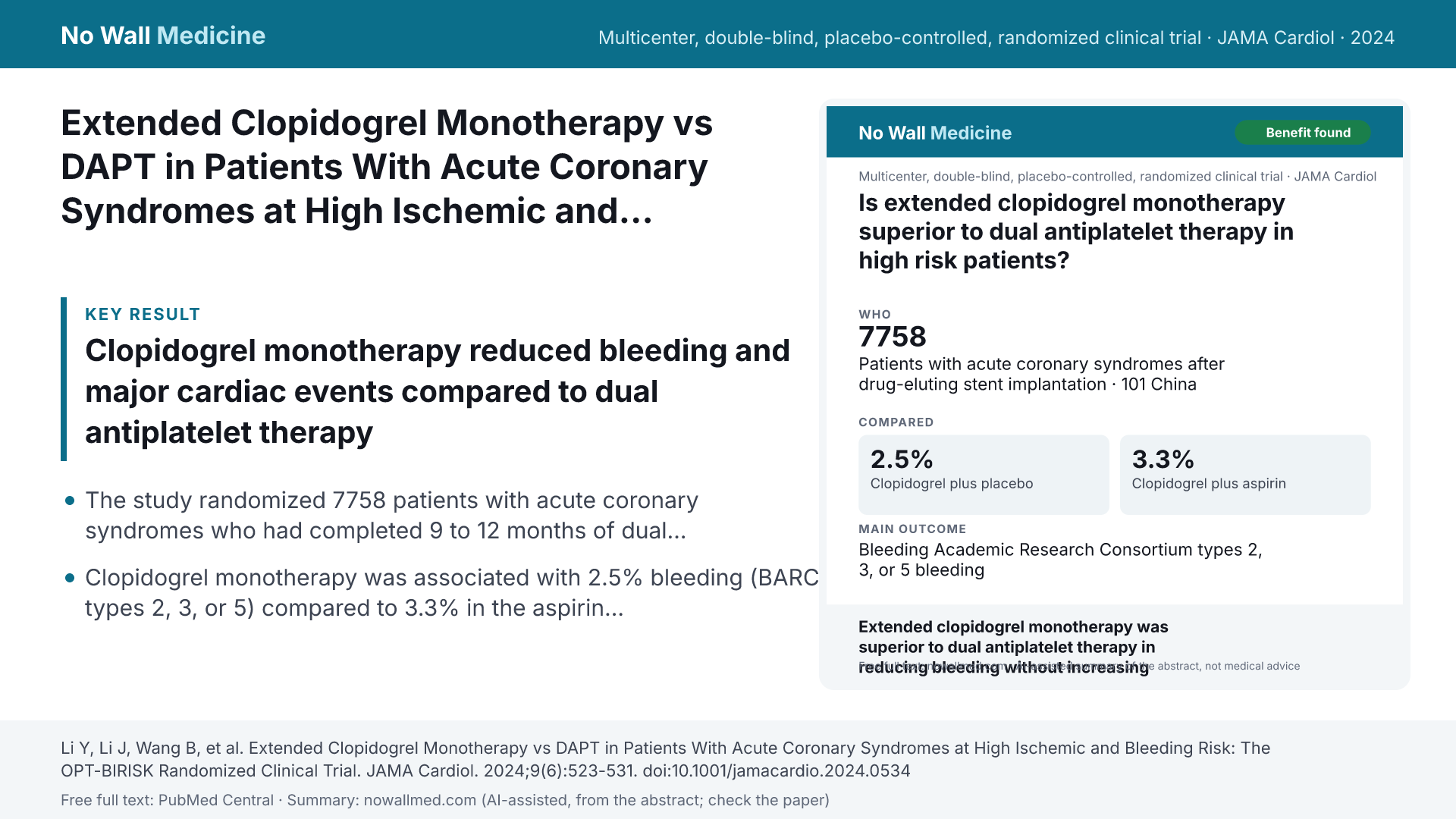
Clopidogrel monotherapy reduced bleeding and major cardiac events compared to dual antiplatelet therapy
Extended Clopidogrel Monotherapy vs DAPT in Patients With Acute Coronary Syndromes at High Ischemic and Bleeding Risk: The OPT-BIRISK Randomized Clinical Trial
Multicenter, double-blind, placebo-controlled, randomized clinical trialBenefit found
Is extended clopidogrel monotherapy superior to dual antiplatelet therapy in high risk patients?
Who
7758
Patients with acute coronary syndromes after drug-eluting stent implantation · 101 China centers
Compared
2.5%Clopidogrel plus placebo
3.3%Clopidogrel plus aspirin
Main outcome
Bleeding Academic Research Consortium types 2, 3, or 5 bleeding
Result: hazard ratio 0.75 (95% CI, 0.57-0.97)
Bottom line: Extended clopidogrel monotherapy was superior to dual antiplatelet therapy in reducing bleeding without increasing ischemic events.
JAMA Cardiol · 2024-04-17Download image
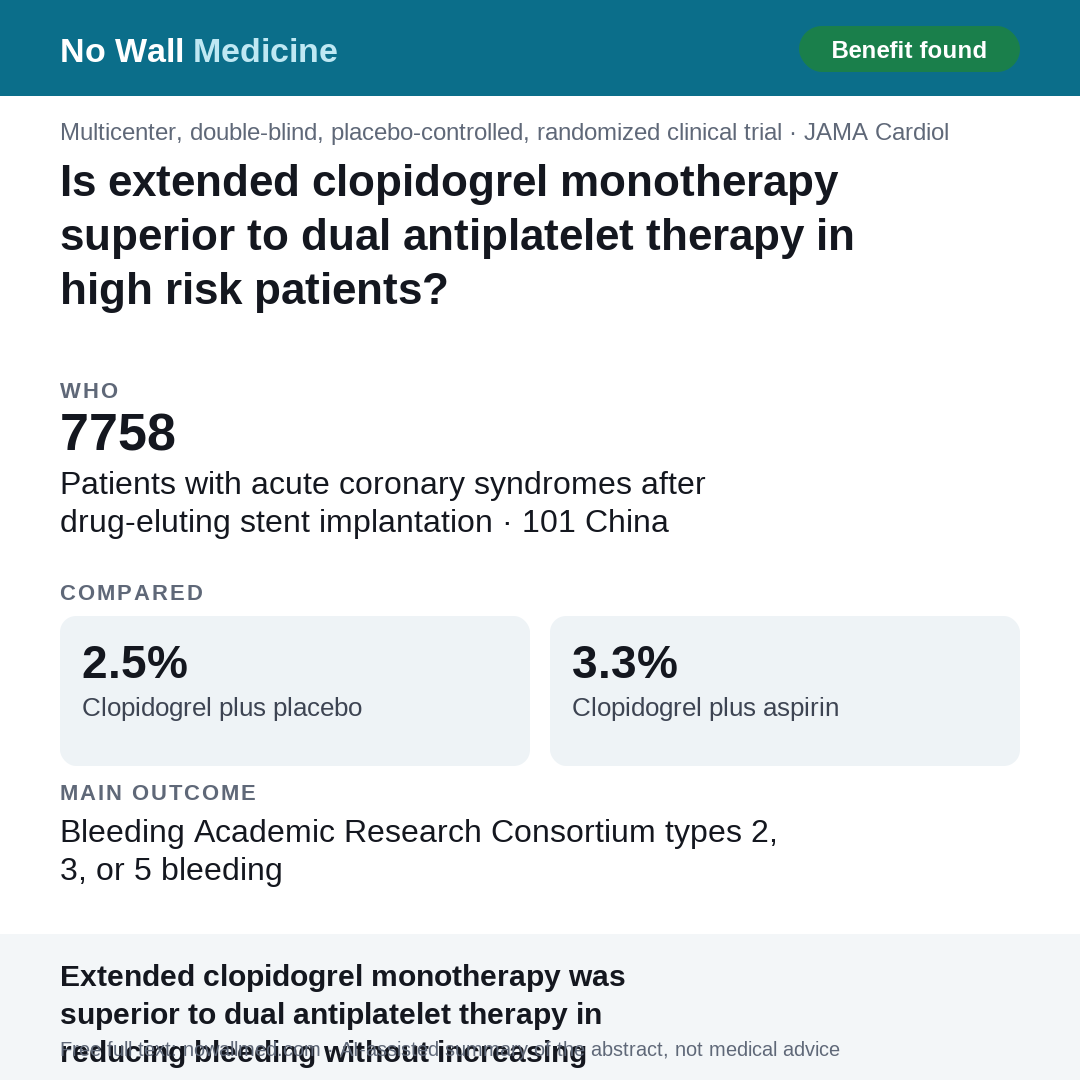
Clinical question: Is extended clopidogrel monotherapy superior to dual antiplatelet therapy in high risk patients?
Why it matters: It is unknown if switching to clopidogrel alone after 9 to 12 months of dual antiplatelet therapy is better than continuing both drugs for patients at high bleeding and ischemic risk.
In absolute numbers
Clopidogrel plus placebo: 2.5% · Clopidogrel plus aspirin: 3.3% → a difference of 0.8 percentage points, so about 126 people would need the treatment for 1 more to benefit (number needed to treat) over the trial’s follow-up.
Worked out by us from the two group results above, not reported by the authors. Check the paper for the exact outcome and timing.
Key points
- The study randomized 7758 patients with acute coronary syndromes who had completed 9 to 12 months of dual antiplatelet therapy after stent implantation.
- Clopidogrel monotherapy was associated with 2.5% bleeding (BARC types 2, 3, or 5) compared to 3.3% in the aspirin and clopidogrel group.
- Major adverse cardiac and cerebral events occurred in 2.6% of the clopidogrel monotherapy group and 3.5% of the dual antiplatelet therapy group.
Headline and key points written with AI from the paper’s abstract, with every number checked against it. Read the paper before relying on them.
Was this summary helpful?
Subject terms
Cite this article
Li Y, Li J, Wang B, Jing Q, Zeng Y, Hou A. Extended Clopidogrel Monotherapy vs DAPT in Patients With Acute Coronary Syndromes at High Ischemic and Bleeding Risk: The OPT-BIRISK Randomized Clinical Trial. JAMA Cardiol. 2024. doi:10.1001/jamacardio.2024.0534
Spotted a mistake? Suggest a correction