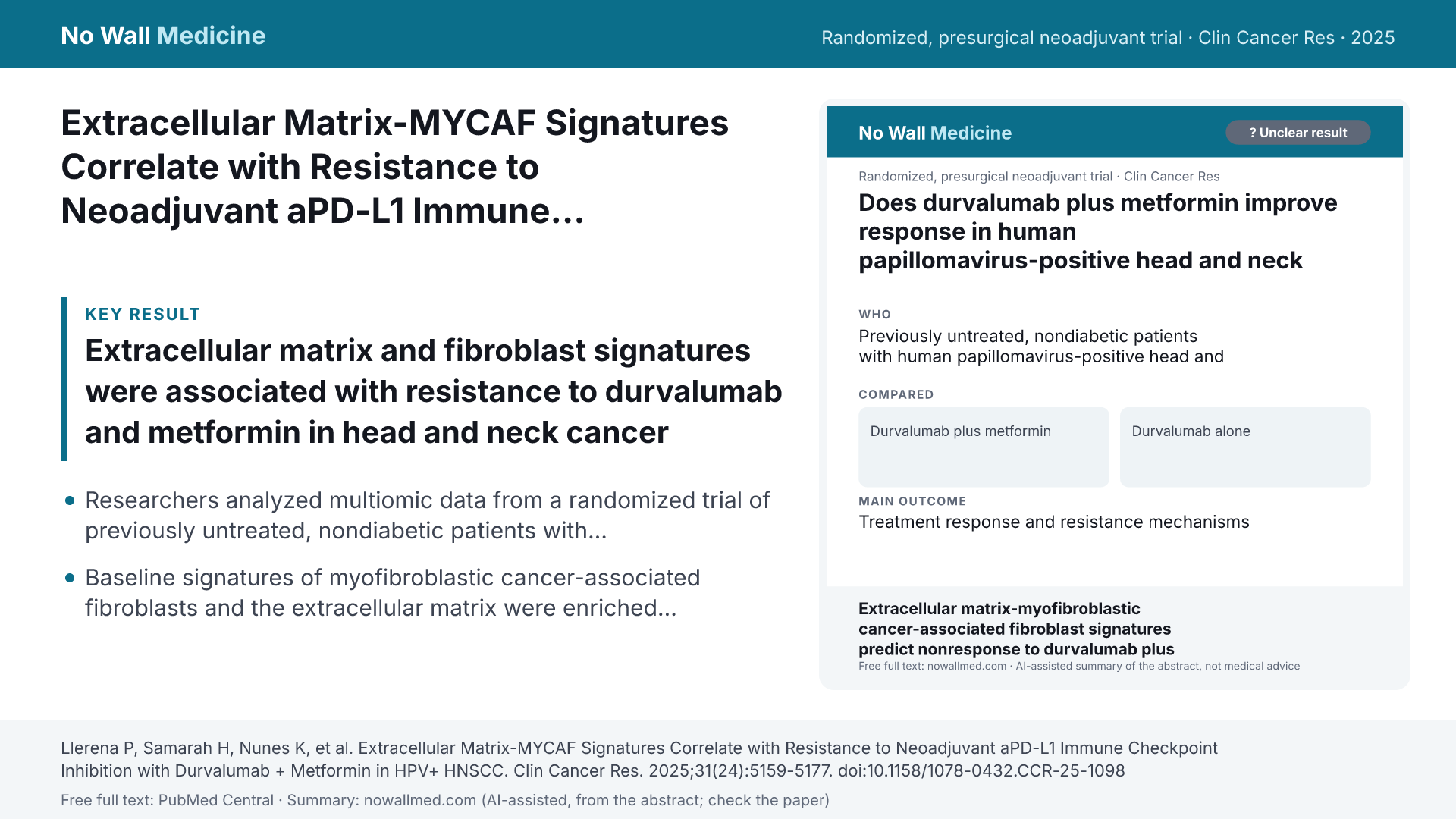
Extracellular matrix and fibroblast signatures were associated with resistance to durvalumab and metformin in head and neck cancer
Extracellular Matrix-MYCAF Signatures Correlate with Resistance to Neoadjuvant aPD-L1 Immune Checkpoint Inhibition with Durvalumab + Metformin in HPV+ HNSCC
Randomized, presurgical neoadjuvant trialUnclear result
Does durvalumab plus metformin improve response in human papillomavirus-positive head and neck squamous cell carcinoma?
Who
Previously untreated, nondiabetic patients with human papillomavirus-positive head and neck squamous cell carcinoma
Compared
Durvalumab plus metformin
Durvalumab alone
Main outcome
Treatment response and resistance mechanisms
Bottom line: Extracellular matrix-myofibroblastic cancer-associated fibroblast signatures predict nonresponse to durvalumab plus metformin in human papillomavirus-positive head and neck squamous cell carcinoma.
Clin Cancer Res · 2025-09-11Download image
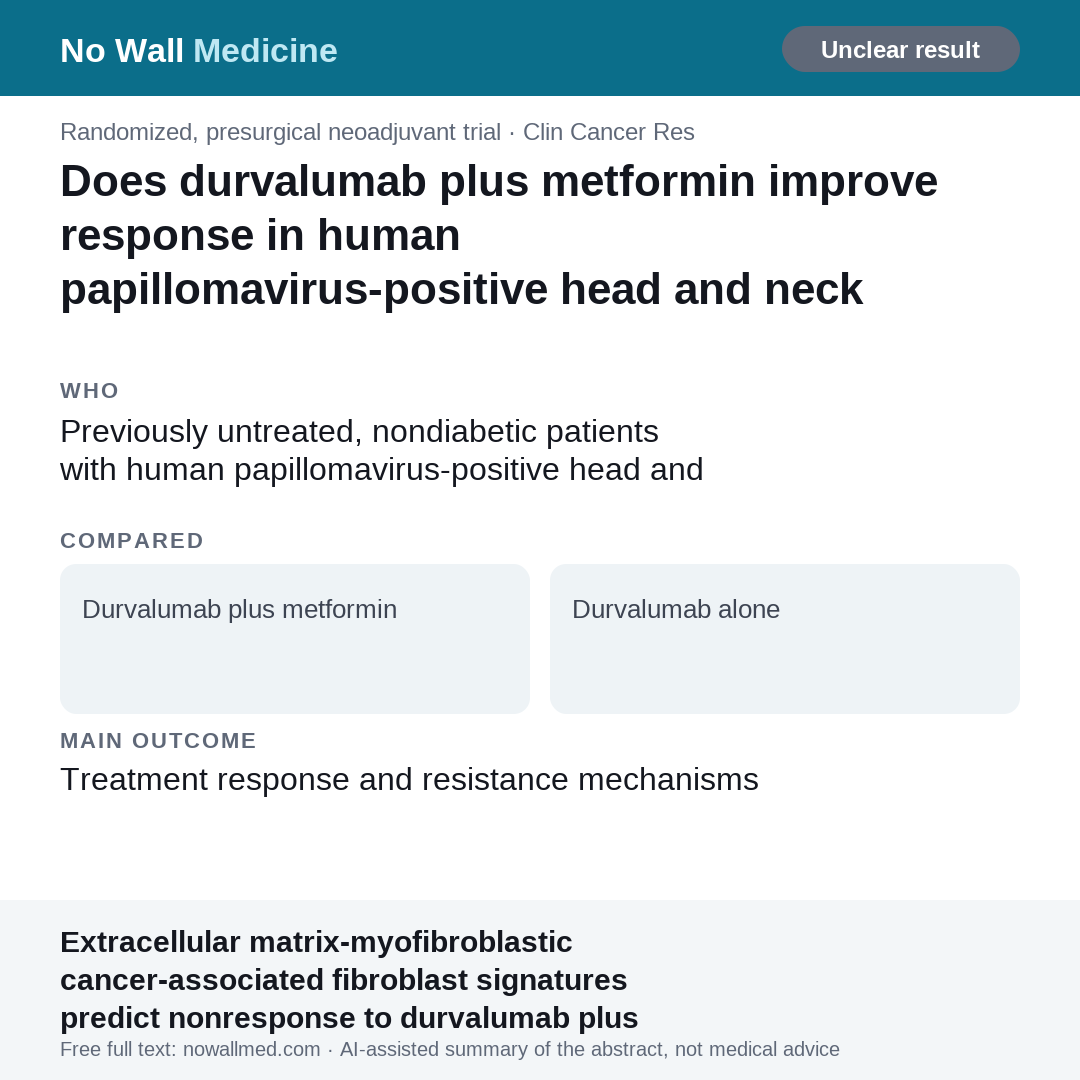
Clinical question: Does durvalumab plus metformin improve response in human papillomavirus-positive head and neck squamous cell carcinoma?
Why it matters: Single-agent immune checkpoint inhibitors have limited efficacy in head and neck squamous cell carcinoma, creating a need to understand predictors of response to combination therapies.
Key points
- Researchers analyzed multiomic data from a randomized trial of previously untreated, nondiabetic patients with human papillomavirus-positive head and neck squamous cell carcinoma.
- Baseline signatures of myofibroblastic cancer-associated fibroblasts and the extracellular matrix were enriched in patients who did not respond to durvalumab plus metformin.
- Baseline responders were instead characterized by enrichment of the Langerhans-like dendritic cell state and interferon signatures.
Headline and key points written with AI from the paper’s abstract, with every number checked against it. Read the paper before relying on them.
Was this summary helpful?
Subject terms
Headline, design, result, key points, caveat and citation as plain text.
Cite this article
Llerena P, Samarah H, Nunes K, et al. Extracellular Matrix-MYCAF Signatures Correlate with Resistance to Neoadjuvant aPD-L1 Immune Checkpoint Inhibition with Durvalumab + Metformin in HPV+ HNSCC. Clin Cancer Res. 2025. doi:10.1158/1078-0432.CCR-25-1098
Spotted a mistake? Suggest a correction