Extracellular vesicle proteins in lung fluid may predict response to inhaled corticosteroid treatment in COPD
Extracellular vesicles from bronchoalveolar lavage fluid provide insights into the inhaled corticosteroids treatment response in COPD
Randomized trialBenefit found
Can extracellular vesicles from bronchoalveolar lavage fluid predict inhaled corticosteroid response in COPD?
Who
34
34 patients with chronic obstructive pulmonary disease
Compared
Inhaled corticosteroids
Placebo
Main outcome
Lung function changes after 6 months
Bottom line: Extracellular vesicle proteins, especially the cystatin superfamily, may predict responsiveness to inhaled corticosteroid treatment in COPD.
Respir Res · 2025-07-30Download image
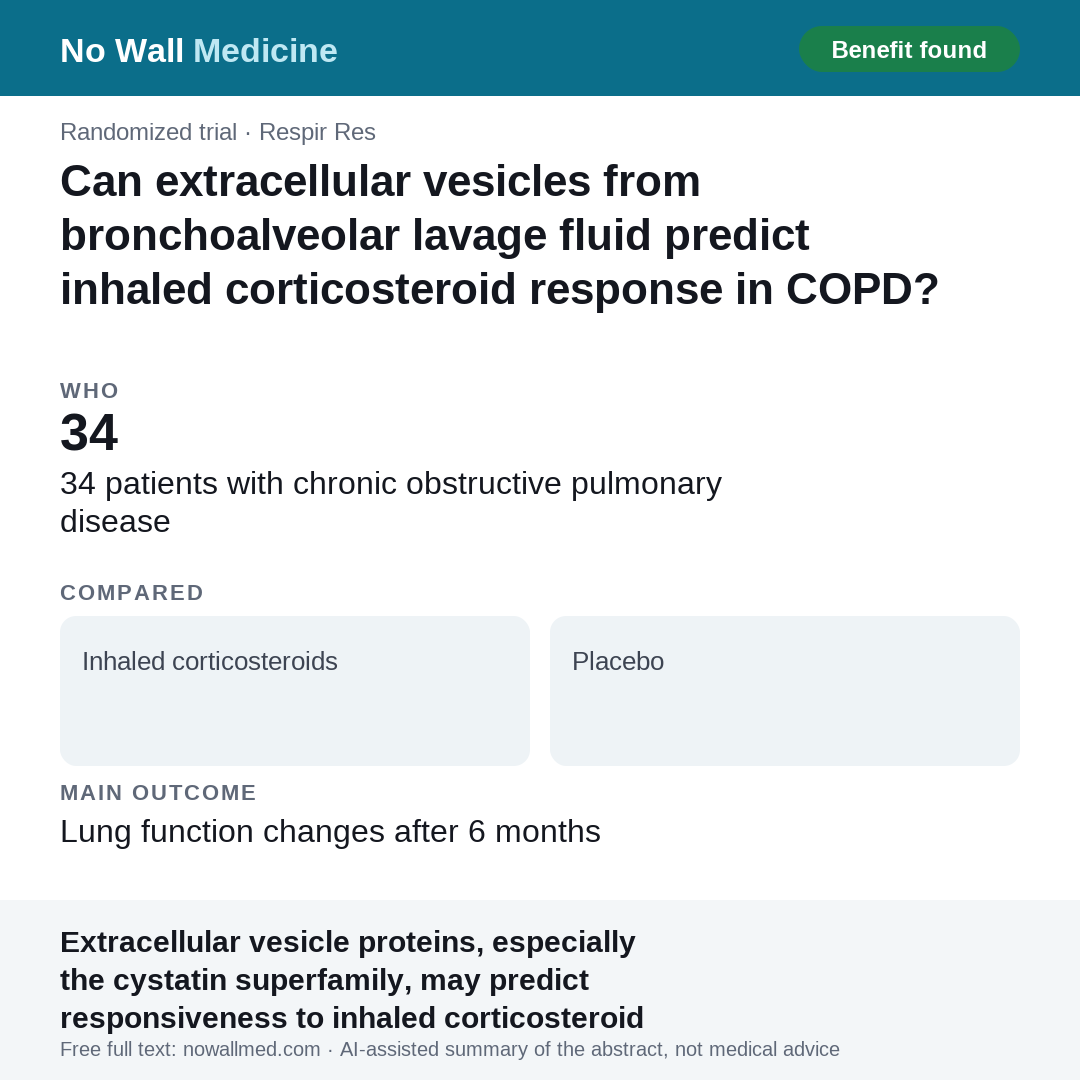
Clinical question: Can extracellular vesicles from bronchoalveolar lavage fluid predict inhaled corticosteroid response in COPD?
Why it matters: Treatment responses to inhaled corticosteroids vary among individuals with chronic obstructive pulmonary disease, and biomarkers are needed to predict which patients will benefit.
Key points
- Researchers studied 34 patients with chronic obstructive pulmonary disease treated for 6 months with either a placebo or inhaled corticosteroids.
- Baseline levels of certain proteins in extracellular vesicles, such as CST1, were correlated with improvements in lung function after treatment.
- Proteins from the cystatin superfamily showed different expression patterns between patients who responded to treatment and those who did not.
Headline and key points written with AI from the paper’s abstract, with every number checked against it. Read the paper before relying on them.
Topics
Cite this article
Fang J, Wolters JC, Rafie K, Wang C, Bartel S, van den Berge M. Extracellular vesicles from bronchoalveolar lavage fluid provide insights into the inhaled corticosteroids treatment response in COPD. Respir Res. 2025. doi:10.1186/s12931-025-03330-6
Spotted a mistake? Suggest a correction
Top studies every Monday
The week’s key trials and guidelines in your specialties, plus any topics you follow. By email, free.
Get the weekly digest