Integrated carbon dioxide removal and kidney support therapy reduced carbon dioxide levels in critically ill patients
Extracorporeal CO2 removal integrated with continuous renal replacement therapy in patients with acute respiratory distress syndrome and acute kidney injury: a systematic review and meta-analysis
Systematic review and meta-analysisBenefit found
Does integrated extracorporeal carbon dioxide removal and continuous renal replacement therapy affect PaCO2 and pH?
Who
105
Adult patients with acute respiratory distress syndrome and acute kidney injury
Compared
Pre-treatment
Post-treatment: sustained reductions in PaCO2
Main outcome
Changes in PaCO2 and arterial pH
Result: mean difference -8.22 mmHg (95% CI -12.00 to -4.44) for PaCO2 at 2 h
Bottom line: Integrated carbon dioxide removal and renal replacement therapy reduces carbon dioxide and improves pH in these patients.
Limitation: Safety and patient-centered outcomes were limited and heterogeneously reported.
Ann Intensive Care · 2026-07-15Download image
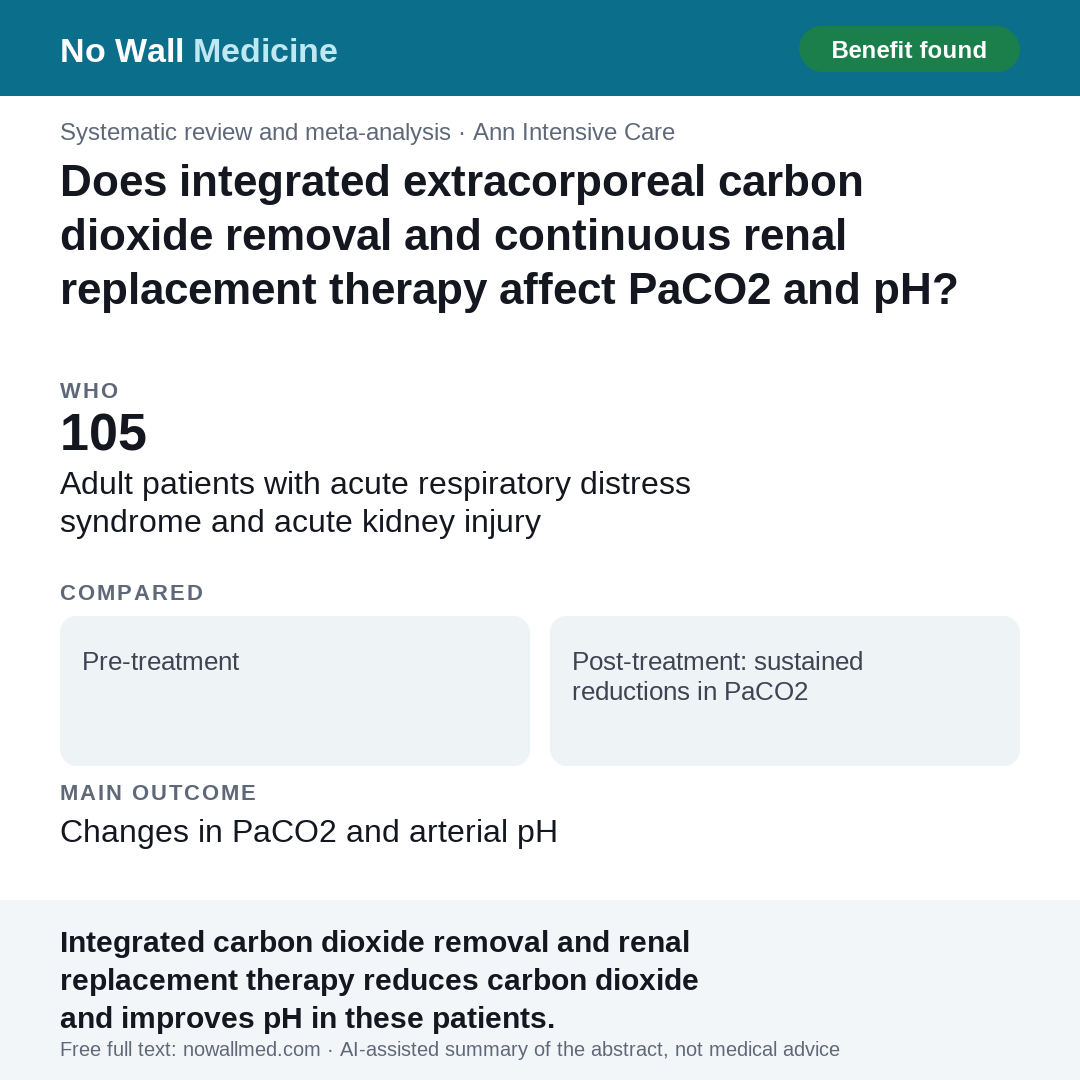
Clinical question: Does integrated extracorporeal carbon dioxide removal and continuous renal replacement therapy affect PaCO2 and pH?
Why it matters: The physiological effects and safety of combining carbon dioxide removal with continuous renal replacement therapy in these complex patients remain uncertain.
Key points
- Researchers analyzed seven observational studies involving 105 adult patients with acute respiratory distress syndrome and acute kidney injury.
- Integrating carbon dioxide removal into continuous renal replacement therapy reduced carbon dioxide levels by 9.10 mmHg at 24 hours and increased blood pH.
- The treatment was associated with lower ventilatory intensity, including a reduction in driving pressure by 3.61 cmH2O.
Limitation the authors note: The included studies were observational and safety and patient-centered outcomes were limited and heterogeneously reported.
Headline and key points written with AI from the paper’s abstract, with every number checked against it. Read the paper before relying on them.
Spotted a mistake? Suggest a correction