Extracorporeal membrane oxygenation for cardiogenic shock: a meta-analysis of mortality and complications
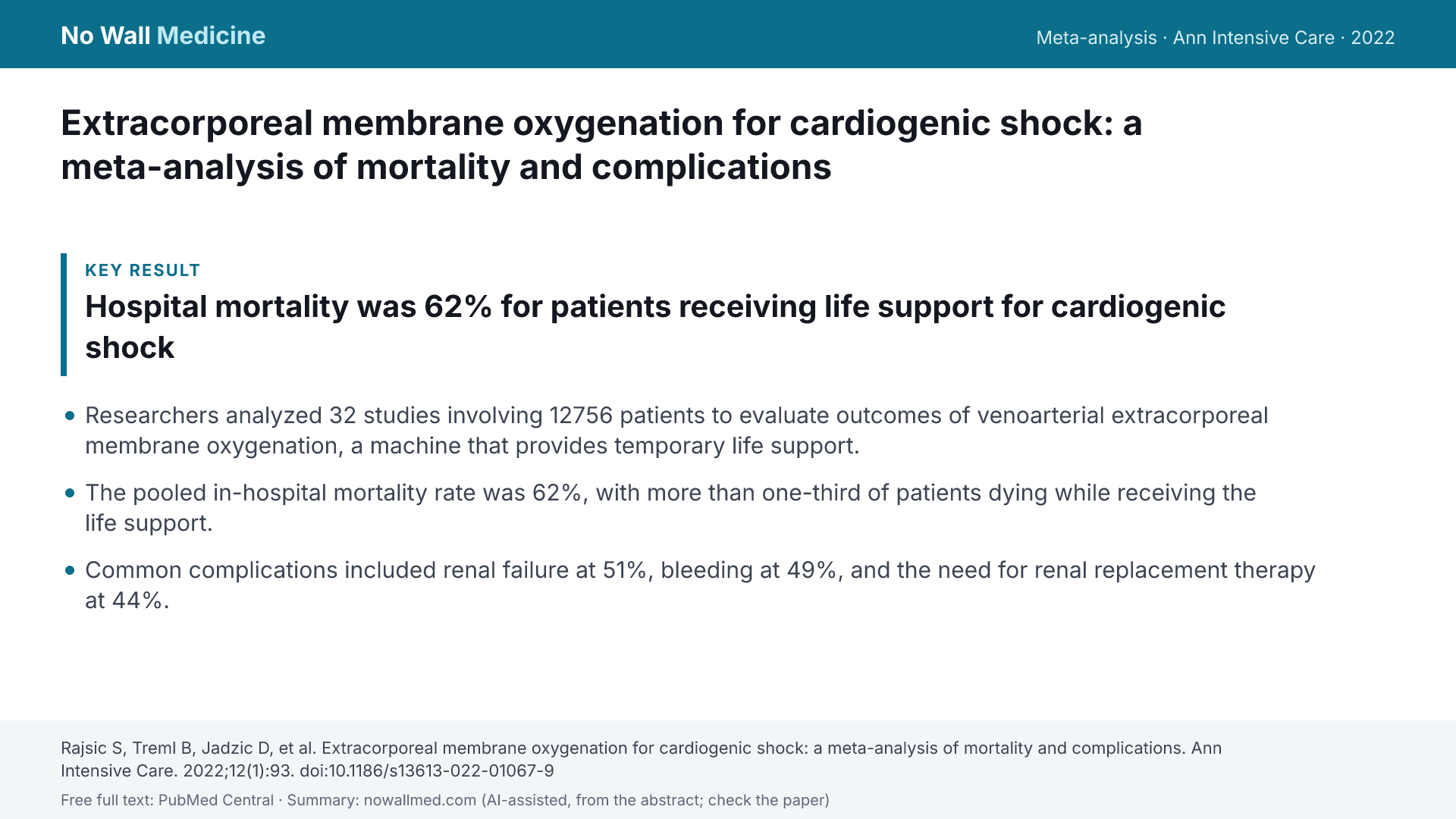
Key result: Hospital mortality was 62% for patients receiving life support for cardiogenic shock
Key points
- Researchers analyzed 32 studies involving 12756 patients to evaluate outcomes of venoarterial extracorporeal membrane oxygenation, a machine that provides temporary life support.
- The pooled in-hospital mortality rate was 62%, with more than one-third of patients dying while receiving the life support.
- Common complications included renal failure at 51%, bleeding at 49%, and the need for renal replacement therapy at 44%.
Why it matters: The benefit of using venoarterial extracorporeal membrane oxygenation for patients with severe cardiogenic shock remains a subject of discussion.
Discussion prompts
- Would these patients look like yours? Who was left out?
- Is the main outcome one that matters to patients?
- Is the difference large enough to change what you do?
Cite: Rajsic S, Treml B, Jadzic D, et al. Extracorporeal membrane oxygenation for cardiogenic shock: a meta-analysis of mortality and complications. Ann Intensive Care. 2022. doi:10.1186/s13613-022-01067-9
Free full text: PubMed Central · Summary and visual abstract: nowallmed.com/a/extracorporeal-membrane-oxygenation-for-cardiogenic-shock-a-meta-ru06ku/ (AI-assisted from the abstract; check the paper before relying on it).