Extracorporeal membrane oxygenation use occurs in 18.1% of infants following the Norwood procedure
Extracorporeal Membrane Oxygenation in the Interstage Period After Norwood and Related Stage I Palliations in Infants With Single Ventricle: A Systematic Review of Incidence, Risk Factors, and Outcomes
Systematic reviewHarm found
What are the incidence, risk factors, and outcomes of post-Norwood extracorporeal membrane oxygenation?
Who
4030
Infants with single ventricle following Norwood or related stage I palliations
Compared
18.1%Patients receiving extracorporeal membrane oxygenation (685/3775 patients)
In-hospital survival among ECMO patients: 28.6% to 50%
Main outcome
Incidence, risk factors, and outcomes of extracorporeal membrane oxygenation
Bottom line: Post-Norwood extracorporeal membrane oxygenation has an 18.1% incidence and survival outcomes remain poor.
J Am Heart Assoc · 2026-06-15Download image
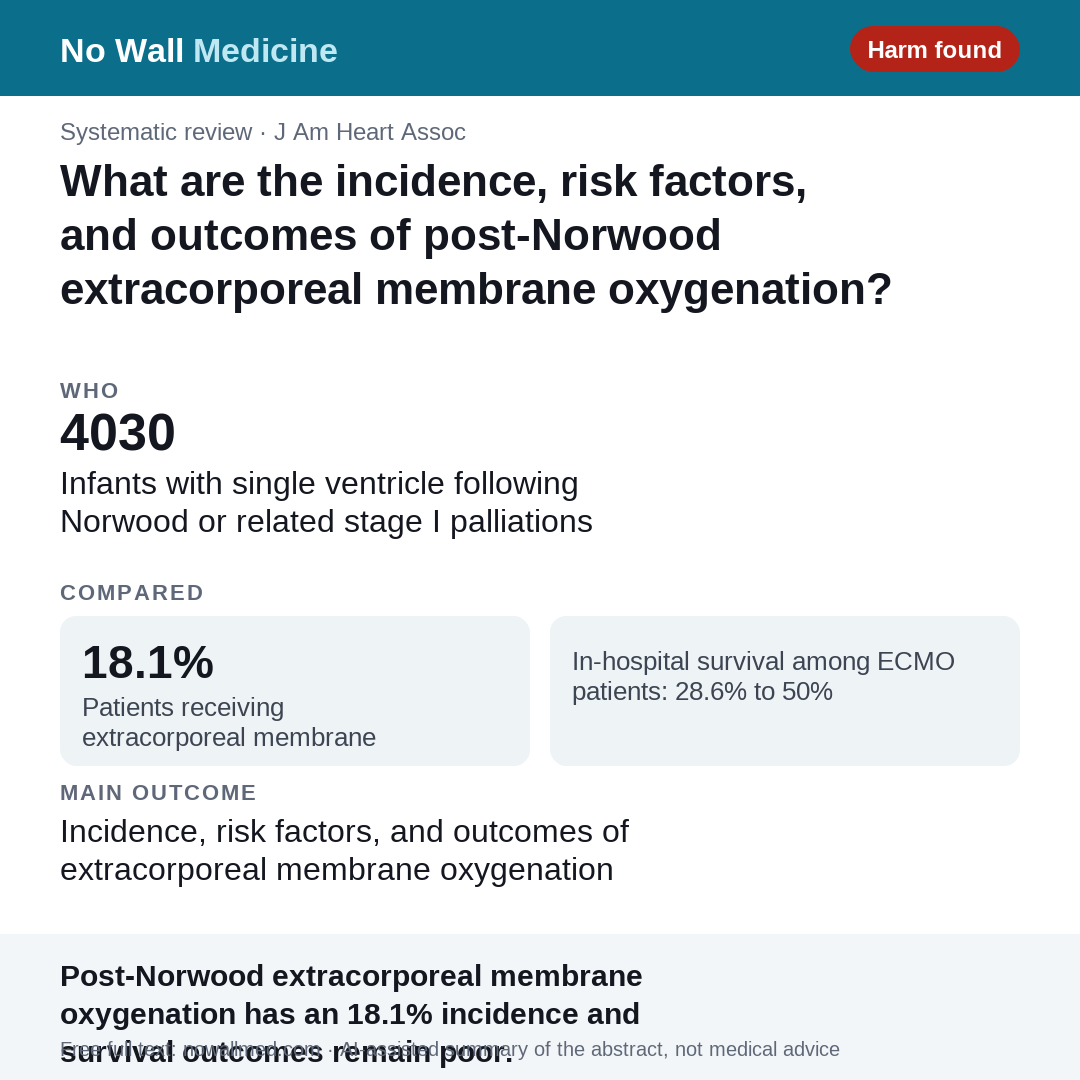
Clinical question: What are the incidence, risk factors, and outcomes of post-Norwood extracorporeal membrane oxygenation?
Why it matters: Infants with single ventricle conditions often require the Norwood procedure, which carries a high risk of heart dysfunction necessitating extracorporeal membrane oxygenation support.
Key points
- Researchers reviewed 15 studies involving 4030 patients to examine the incidence and outcomes of extracorporeal membrane oxygenation, a machine that provides heart and lung support, after the Norwood procedure.
- The pooled incidence of using this support was 18.1% (685/3775 patients), with in-hospital survival rates ranging from 28.6% to 50%.
- Risk factors for needing support included low birth weight under 2.5 kg, long cardiopulmonary bypass times, and complex cardiac anatomy.
Headline and key points written with AI from the paper’s abstract, with every number checked against it. Read the paper before relying on them.
Topics
Cite this article
Li D, Bottrell SJ, Horton SB, Brizard CP, Pepe S. Extracorporeal Membrane Oxygenation in the Interstage Period After Norwood and Related Stage I Palliations in Infants With Single Ventricle: A Systematic Review of Incidence, Risk Factors, and Outcomes. J Am Heart Assoc. 2026. doi:10.1161/JAHA.125.047642
Spotted a mistake? Suggest a correction